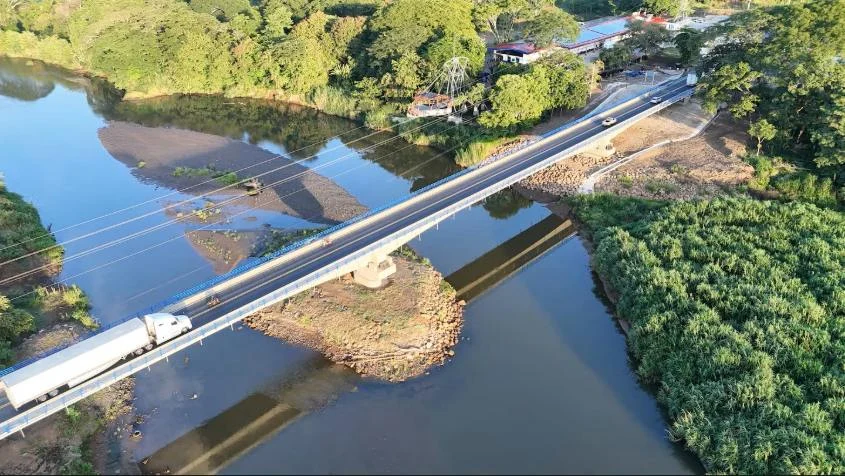
The province of Córdoba, Argentina, is currently witnessing a significant leap in infrastructure development. At the heart of this transformation is the construction of a new, state-of-the-art bridge over the Ctalamochita River, specifically located on the Ruta Provincial A179. Designed to replace an aging metallic structure that has long served as a bottleneck for the region, this project stands as a testament to the provincial government’s commitment to modernizing rural connectivity and boosting economic efficiency in the department of Unión.
As the project reaches a critical milestone—surpassing the 55% completion mark—it has become a focal point for regional logistics and local mobility. The new bridge is not merely a concrete replacement; it is a high-capacity engineering solution engineered to handle the demands of 21st-century traffic, ensuring that the municipality of Ballesteros Sud remains firmly integrated into the provincial and national supply chains.
Main Facts: A New Milestone for Regional Infrastructure
The new bridge over the Ctalamochita River is being executed under the rigorous oversight of the Directorate of Roads (Dirección de Vialidad), a core branch of the provincial Ministry of Infrastructure and Public Services. With a total projected length of 102.28 meters, the bridge is designed to provide a durable, stable, and high-capacity crossing that will significantly improve the ingress and egress for the local population.
The technical specifications of the project reflect a transition from outdated infrastructure to modern standards. The design utilizes a "bridge-beam" (tablero puente-viga) system, reinforced by longitudinal prestressed beams. This specific structural methodology is chosen for its superior load-bearing capabilities, resistance to environmental erosion, and long-term durability. By replacing the existing metallic structure—which has reached the end of its operational lifespan—the new crossing will facilitate safer travel for daily commuters, emergency services, and heavy agricultural transport vehicles, which are vital to the economy of the Córdoba region.
Chronology: From Planning to Structural Realization
The journey toward this new bridge began with an extensive diagnostic phase, where the provincial government identified the aging metal bridge on the Ruta Provincial A179 as a structural liability. The old crossing, while historically significant, could no longer support the weight and volume of modern agricultural and industrial machinery, leading to recurring concerns regarding traffic safety and structural integrity.

- Preliminary Phase (Planning & Design): The initial design phase focused on hydraulic studies of the Ctalamochita River and structural simulations to ensure the new bridge could withstand high-water events and heavy load cycles.
- Commencement of Works: Once the tender process concluded, site mobilization began. The initial phase focused on foundation work, including the sinking of deep piles into the riverbed to ensure the structure’s stability against the unpredictable nature of the Ctalamochita’s flow.
- The 55% Milestone: As of October 2026, the construction has successfully reached the 55% completion mark. This phase represents the successful installation of the foundational support systems and the commencement of the superstructure assembly.
- Upcoming Phases: The remaining 45% of the project will involve the final placement of the deck segments, the installation of safety barriers, asphalt paving, and the integration of the bridge into the existing road network of the A179 route.
Supporting Data: Why Engineering Matters
The transition to a 102.28-meter structure is not a matter of aesthetics but of engineering necessity. The province of Córdoba is a major agricultural hub, and the transport of commodities requires infrastructure that is both resilient and reliable.
The use of prestressed concrete beams is a calculated choice. Unlike standard concrete, prestressed beams are subjected to internal compressive forces before they are loaded, allowing them to span longer distances without the need for excessive central support columns. This design feature is particularly advantageous for the Ctalamochita River, as it minimizes the number of piers required in the riverbed, thereby reducing the risk of debris accumulation during heavy rain seasons—a common cause of structural instability in rural bridges.
Furthermore, the increased width of the new bridge will allow for better separation between opposing lanes of traffic, significantly reducing the risk of head-on collisions. For the local community of Ballesteros Sud, this means a more predictable and safer travel experience, even during periods of heavy congestion or inclement weather.
Official Perspectives: The Strategic Vision
The project is widely viewed as a cornerstone of the provincial government’s "Connectivity Plan." According to representatives from the Ministry of Infrastructure and Public Services, the investment is designed to be future-proof.
"We are not building for the next five years; we are building for the next fifty," noted a project spokesperson. The government’s emphasis has been on reducing the ‘logistics tax’ that rural communities face when their transport routes are compromised by poor infrastructure. By upgrading the Ruta Provincial A179, the province is effectively lowering the costs associated with transporting agricultural goods, thereby increasing the competitiveness of the Unión department’s producers.

Local authorities in Ballesteros Sud have also expressed optimism. The bridge is seen as a lifeline that connects residents to essential services, schools, and health facilities in neighboring urban centers. The current progress rate has bolstered confidence that the project will meet its target completion date, providing much-needed relief to a community that has navigated the limitations of the old metallic crossing for decades.
Implications: Socioeconomic and Regional Impact
The implications of this infrastructure project extend far beyond the mere physical structure. When a region improves its transportation backbone, the ripple effects are felt across several sectors:
1. Economic Resilience
For the farming communities surrounding the Ctalamochita River, time is money. A more robust, reliable route ensures that harvests can be moved to processing plants or export terminals without the risk of detours or load restrictions. This consistency is essential for the economic stability of the province.
2. Enhanced Safety and Emergency Response
Old, narrow bridges are notoriously difficult for emergency vehicles to navigate. The new structure, built to modern highway standards, will ensure that ambulances, fire trucks, and police units can access the Ballesteros Sud area rapidly and safely, regardless of the time of day or weather conditions.
3. Long-Term Maintenance Savings
While the initial investment in modern infrastructure is substantial, the long-term maintenance costs are significantly lower compared to the constant repairs required for a deteriorating metal bridge. By opting for high-durability materials and advanced construction techniques, the Ministry of Infrastructure is effectively optimizing public spending.

4. Regional Integration
The bridge serves as a vital node in the network of provincial roads. By connecting rural zones more efficiently to the major arteries of Córdoba, the province is fostering a more cohesive regional geography. This prevents the isolation of smaller municipalities and ensures that economic growth is distributed more equitably across the department of Unión.
Conclusion: A Pathway to the Future
The construction of the new bridge over the Ctalamochita River is a microcosm of the broader infrastructure challenges and successes faced by Argentina’s provinces. By prioritizing technical rigor and sustainable design, the government of Córdoba is addressing the immediate needs of the Ballesteros Sud community while laying the groundwork for future development.
As the construction crews move toward the final phases of the project, the focus will remain on maintaining the current pace of work while ensuring that all safety and environmental regulations are strictly observed. For the residents of the region, the bridge represents a physical link to a more efficient and connected future. As the 55% progress mark turns into 60, 70, and eventually 100%, the new bridge will stand as a landmark of progress, proving that strategic infrastructure investment is the most effective way to drive regional growth and improve the quality of life for all citizens.