Executive Summary: A Delicate Legislative Balancing Act
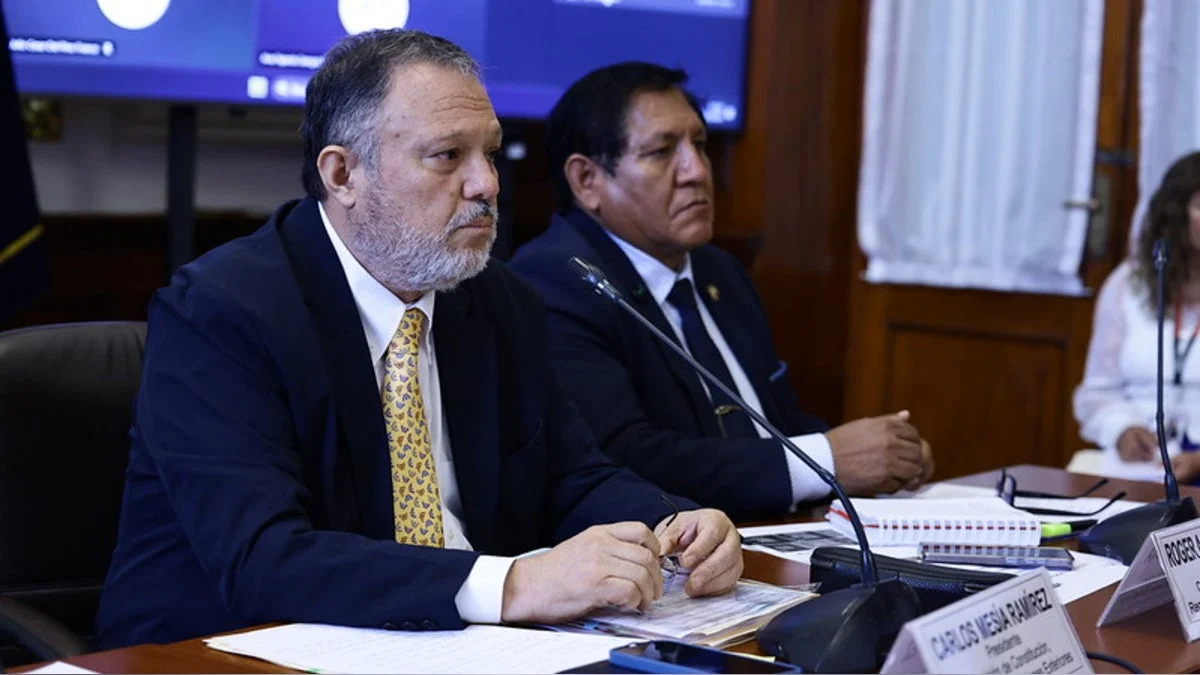
The legislative landscape in the Senate has reached a critical juncture. Carlos Mesía Ramírez, Chairman of the Senate’s Constitution Commission, has signaled a strategic pivot in the ongoing negotiations regarding the delegation of legislative powers requested by the Executive branch. Following a week marked by intense parliamentary friction and high-stakes debate, Mesía has confirmed that active, back-channel dialogues with Renovación Popular and other key legislative factions are underway.
The primary objective is to forge a cross-party consensus that strengthens the Executive’s capacity to address the dual challenges of the El Niño weather phenomenon and the burgeoning national security crisis. Crucially, the Commission aims to achieve this without undermining the foundational framework established by the Chamber of Deputies, which previously approved a restricted version of the Executive’s initial request. As the Senate prepares to resume technical debates on October 14, the pressure to deliver a cohesive legislative package has never been greater.
Chronology of the Legislative Conflict
The path to the current stalemate has been paved with institutional friction and political maneuvering. The request for legislative powers—intended to empower the government to enact decrees bypassing standard legislative cycles—has been a point of contention since its inception.
- Initial Submission: The Executive branch presented a comprehensive request for legislative powers, aiming for broad authority in economic, infrastructure, and security sectors.
- Chamber of Deputies Review: The lower house performed a rigorous trimming of the proposal, arguing that the government’s request was overly broad and lacked sufficient oversight mechanisms. The resulting "dictamen" (dictamen) was sent to the Senate with significant cuts.
- The October 10 Incident: Tensions boiled over during a Commission of Constitution session this past Saturday. An altercation between Senator Iber Maraví and Interior Minister César Astudillo necessitated a total suspension of proceedings, highlighting the volatile atmosphere surrounding the debate.
- The Path Forward: Following the cooling-off period, Chairman Mesía has signaled that the technical debate is slated to resume on Wednesday, October 14, at 10:00 AM, with the goal of finalizing a report for the Senate floor.
Strategic Realignment: The Search for Consensus
In a candid interview on the political program Panorama, Senator Carlos Mesía (Fuerza Popular) acknowledged that while a consensus has not yet been fully solidified, the trajectory of the negotiations is positive.
"We are in the midst of complex conversations," Mesía stated. "The core concern, shared by our colleagues in Renovación Popular and across the aisle, is that we must not desnaturalize (strip the essence of) the legislation that has been sent to us from the Chamber of Deputies. We intend to be deeply respectful of their legislative process while addressing the functional gaps that remain."
The strategy focuses on two pillars: Security and Infrastructure. By carving out specific, non-negotiable areas for modification, the Commission hopes to bypass the broader ideological clashes that have paralyzed the committee.
The Security Paradigm: Defining "Hostile Groups"
Perhaps the most significant aspect of the proposed adjustments concerns the definition of internal security threats. Senator Mesía has been vocal about the inadequacy of current legal frameworks to deal with the rapid evolution of organized crime.
The Rise of Transnational Criminal Entities
Mesía emphasized that the Senate must incorporate the legal classification of "hostile groups" into the final legislative decree. Unlike traditional local gangs, these transnational criminal entities now possess military-grade weaponry and advanced technological capabilities, effectively challenging the sovereignty of the state in specific regions.
"Establishing the figure of ‘hostile groups’ is essential," Mesía argued. "These are not mere petty criminals; they are syndicates that occupy territory. We must differentiate them from common delinquency and implement a distinct legal and operational response."
Re-empowering Intelligence and Defense
The Commission is exploring the restoration of operational faculties to the National Directorate of Intelligence (DINI). Furthermore, there is a push to allow the Armed Forces to provide logistical and strategic support to the National Police in zones where criminal mafias have established de facto control. This move, while controversial due to historical sensitivities regarding the role of the military in domestic policing, is being framed as an emergency measure necessitated by the overwhelming power of modern criminal organizations.
Economic and Social Infrastructure: The "Water" Dispute
Beyond security, the debate has centered on the government’s ability to execute public works, particularly in the realm of water and sanitation. The Chamber of Deputies’ decision to restrict infrastructure spending exclusively to populations directly affected by the El Niño phenomenon has been met with harsh criticism from the Senate.
Senator Mesía did not mince words when discussing these restrictions, labeling them a "meanness" (mezquindad) that ignores the broader reality of the country.
"To limit water and sanitation projects only to those immediately impacted by El Niño is to ignore the fourteen million citizens who suffer from chronic water scarcity across the nation," Mesía noted. He argues that the government needs broader legislative powers to address structural deficiencies in public utilities, rather than just reactive, climate-driven interventions. The Senate commission is now evaluating whether to expand these faculties to ensure that long-term infrastructure goals are not sacrificed on the altar of short-term budget oversight.
Implications for the Executive and the State
The potential success or failure of these negotiations carries profound implications for the stability of the current administration.
- Executive Efficacy: Should the Senate approve the expanded powers, the Executive will gain the tools necessary to tackle the security crisis with more force, potentially reclaiming territory from criminal syndicates. However, this also centralizes power, creating a risk of future abuse if oversight is not adequately integrated into the final decree.
- Parliamentary Relations: The collaborative approach adopted by Mesía represents a shift in the Senate’s relationship with the Chamber of Deputies. If the Senate successfully amends the dictamen without causing a rift with the lower house, it will demonstrate a rare instance of bicameral maturity.
- The Political Fallout: The tensions between the Executive and the Legislature—exemplified by the clash involving Minister Astudillo—remain a structural threat to governance. If the upcoming sessions on October 14 fail to produce a consensus, the government may find itself forced to govern through a period of legislative paralysis, leaving the country vulnerable to both the climate emergency and the rising tide of organized crime.
Conclusion: The October 14 Deadline
As the Senate Commission of Constitution prepares to reconvene, the eyes of the political establishment are fixed on the potential for a "middle path." Senator Mesía’s assertion that "we are going to arrive at a consensus" serves as both a promise and a warning. The task ahead is to balance the urgent, often desperate need for state action against the necessity of democratic checks and balances.
The coming days will reveal whether the political factions in the Senate can transcend their partisan identities to address the existential threats facing the nation, or if the legislative process will remain ensnared in the cycle of confrontation that has defined the last week of parliamentary activity. The final report, once it reaches the Senate floor, will likely define the effectiveness of the government’s response to the most pressing crises of the year.