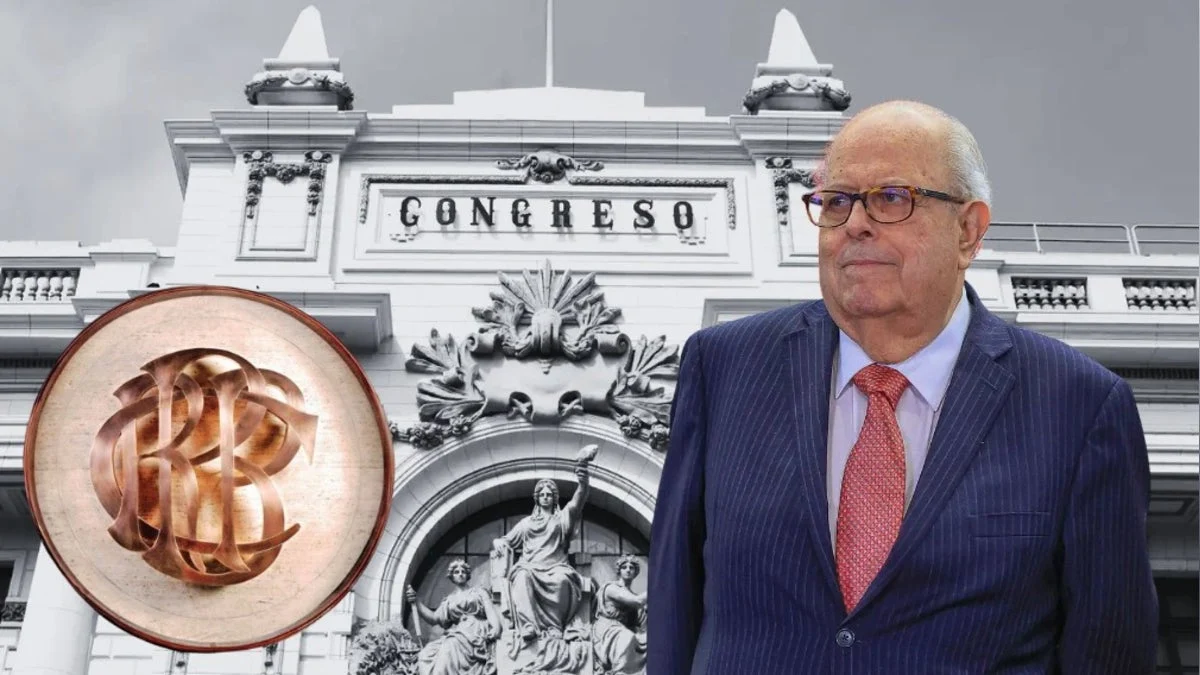
The inauguration of Peru’s new bicameral legislature has ushered in a significant shift in the country’s institutional framework. While the newly formed Senate will not dictate the technical minutiae of monetary policy—such as the manipulation of interest rates or the stabilization of the sol against the dollar—it has been granted substantial authority over the human capital that constitutes the Board of Directors of the Central Reserve Bank of Peru (BCRP).
This development marks a departure from previous legislative arrangements, positioning the Senate as the ultimate gatekeeper for the BCRP’s leadership. By controlling the appointment, ratification, and potential removal of key officials, the Senate now holds a pivotal role in ensuring the continuity and integrity of one of the most respected institutions in the Peruvian state.
Main Facts: The Scope of Senatorial Power
The core of the Senate’s influence lies in its oversight of the BCRP’s governance structure. Although the BCRP remains an autonomous body with a mandate to preserve monetary stability, its board composition is now subject to rigorous legislative scrutiny.
The Senate’s involvement is three-pronged:
- Ratification of the Presidency: While the Executive branch retains the power to nominate the President of the BCRP, this appointment is no longer unilateral. The Senate must ratify the nomination, turning a traditionally executive decision into a collaborative process requiring parliamentary legitimacy.
- Appointment of Directors: The Senate is constitutionally and procedurally tasked with the direct selection of three members of the BCRP Board of Directors.
- Disciplinary Oversight: The Senate possesses the power to initiate and execute the removal of directors in cases of "grave misconduct," provided that due process and the principles of proportionality are strictly observed.
The Ratification Process: A Check on Executive Power
A common misconception regarding the new legislative architecture is that the Senate will act as a nominating body for the presidency of the BCRP. In reality, the power remains with the Executive branch, but the check-and-balance mechanism has been significantly strengthened.
When the President of the Republic selects a candidate to lead the Central Bank, that candidate must navigate a formal ratification process in the Senate. According to the internal regulations of the chamber (specifically Article 203), the procedure is as follows:
- Initial Review: Upon receiving the nomination, the Presidency of the Senate transfers the proposal to the Commission of Special Procedures.
- Due Diligence: This Commission is granted ten business days to conduct a thorough vetting process. This includes verifying legal requirements, examining the candidate’s professional background, and, significantly, summoning the candidate for public questioning.
- Plenary Vote: If the Commission issues a favorable report, the nomination moves to the Plenary. To be ratified, the candidate requires an absolute majority—at least 31 votes in a 60-member chamber.
- Negative Findings: Should the Commission determine that a candidate is unsuitable, the report is communicated back to the Executive, forcing a reassessment of the proposal.
This process ensures that the leadership of the BCRP is not merely a political appointment but a vetted position that commands the confidence of the legislative branch.
Chronology and Selection of Directors
The mandate for the Senate to select three directors of the BCRP is not an open-ended authority; it is bound by a strict timeline. The regulations mandate that these selections must occur within the first 60 days of the first ordinary legislative session of the new parliamentary term.
The Selection Roadmap:
- Public Call: The process begins with a formal, public invitation for political groups to present their candidates. This is designed to move away from "backroom" deals and toward a more transparent evaluation of credentials.
- Meritocratic Evaluation: The Commission of Special Procedures is tasked with verifying that all candidates meet stringent criteria: they must be Peruvian citizens, possess recognized moral solvency, and demonstrate extensive, verifiable experience in economics and finance.
- The Interview Phase: Candidates are summoned to appear before the Commission within three business days of their selection to undergo a rigorous evaluation of their academic and professional trajectories.
- Individual Voting: Unlike many legislative processes where candidates are presented in blocks, the Senate will vote on each candidate individually. This ensures that every director carries the weight of a specific majority (at least 31 votes) rather than being carried by a party-list vote.
Supporting Data and Institutional Stability
The BCRP has long been considered the "jewel in the crown" of Peruvian institutions, maintaining a long-standing reputation for technical independence, particularly under the leadership of figures like Julio Velarde. The challenge for the new Senate is to maintain this stability while exercising its new oversight duties.
Economic analysts have pointed out that the current macroeconomic environment—characterized by low inflation relative to regional peers—is largely a result of the BCRP’s autonomy. The Senate’s role in selecting three directors, therefore, carries the responsibility of safeguarding this legacy.
Data from the BCRP’s recent history suggests that the market reacts sharply to any perceived threat to the institution’s independence. By requiring a 31-vote threshold for directors, the regulations inherently encourage the formation of a cross-party consensus, making it difficult for a single political faction to "capture" the Board of Directors for partisan ends.
Official Responses and Procedural Safeguards
The implementation of these new rules has been accompanied by a strong emphasis on the "due process" of officials. Article 204, which outlines the removal process for directors, is carefully crafted to prevent arbitrary political purges.
Legislative leaders have emphasized that any removal procedure must be predicated on a "grave fault" or "serious misconduct." This process can be initiated either by a formal complaint from the BCRP itself or by a political group within the Senate. However, the requirement for a 31-vote majority to remove a director serves as a significant hurdle, protecting the institution from frivolous or retaliatory removals during periods of political turbulence.
The inclusion of the principle of "reasonableness" in the regulations ensures that any disciplinary action must be proportionate to the offense. This is a critical safeguard for the BCRP, as it prevents the Senate from using its power of removal as a weapon to intimidate board members who may hold views contrary to the current parliamentary majority.

Implications for the Future of Peru’s Economy
The shift toward a Senate-led confirmation and oversight model for the BCRP has profound implications for the country’s economic stability.
1. Increased Political Transparency: By mandating public interviews and individual votes, the Senate is moving the appointment of economic technocrats into the public eye. This forces political parties to present high-caliber candidates who can withstand public and legislative scrutiny.
2. Institutionalization of Consensus: The 31-vote requirement for the ratification of the President and the election of directors effectively forces the Senate to move beyond simple party-line voting. It requires that the appointees be broadly acceptable to a diverse range of political perspectives, which in turn favors the appointment of moderate, experienced, and highly qualified experts.
3. The Risk of Politicization: Critics argue that any time the legislature is given control over an autonomous body, there is a latent risk of politicization. The success of this new system will depend entirely on the rigor with which the Commission of Special Procedures applies its vetting standards. If the Commission acts as a genuine filter for merit rather than a rubber stamp for political allies, the institution will be strengthened. If the standards are lowered, the independence of the BCRP—a pillar of Peru’s economic success—could be compromised.
4. A New Standard for Oversight: As the Senate begins its first term, the eyes of the financial markets will be on the selection process. The international community, which views the BCRP as the primary anchor of the Peruvian economy, will be looking for signals that the Senate intends to respect the technical, apolitical nature of the Bank’s mandate.
Conclusion
The new Senate’s role in managing the BCRP represents a sophisticated attempt to balance democratic oversight with the necessity of technical independence. While the Senate does not hold the reins of the national interest rate, it holds the power to appoint those who do. By formalizing the selection process, requiring individual votes, and establishing clear, transparent rules for oversight and removal, the Peruvian legislature has created a framework that, if managed with integrity, can preserve the BCRP’s standing as one of the most stable and credible institutions in the region.
The coming months, marked by the selection of three new directors, will serve as a definitive test for the new Senate. The outcome of these appointments will determine whether the institution remains a beacon of economic stability or becomes a new arena for political maneuvering. For now, the legal safeguards are in place; the challenge remains in the hands of the Senators to act as responsible custodians of Peru’s economic future.