Introduction: A Region Under Siege
The Cusco region, a crown jewel of Peru’s cultural and natural heritage, is currently grappling with a series of aggressive forest fires that threaten both its biodiversity and the livelihoods of its rural population. As the flames spread across multiple provinces, the Ministry of Agrarian Development and Irrigation (Midagri) has shifted into emergency mode. Under the leadership of Minister Marco Vinelli, the government is executing a high-stakes, multi-agency operation to contain the infernos, protect the surrounding ecosystems, and provide immediate relief to the affected agricultural communities.
The situation remains fluid and critical. The fires, which have broken out in geographically disparate locations, are being exacerbated by dry conditions and challenging, high-altitude terrain that complicates the efforts of emergency personnel. The response involves a delicate balance between aerial suppression, ground-based containment, and the long-term planning required to rehabilitate the damaged landscape.
The Crisis at a Glance: Geography of the Flames
The current emergency is not limited to a single front. Authorities have identified four distinct, major active fire zones that have demanded the immediate deployment of state resources:
- Calca Province: The communities of Accha Baja and Rayampata are the most visible points of concern. These areas have been the primary focus of aerial surveillance due to their proximity to high-value agricultural land and protected natural zones.
- Anta Province: A significant fire has broken out in the district of Limatambo, an area known for its archaeological importance and steep topography, which creates significant hurdles for ground crews.
- La Convención Province: Two separate fires are raging in the districts of Inkahuasi and Maranura. These fires are particularly difficult to manage due to the dense vegetation and the remote nature of the terrain, which restricts the movement of heavy machinery and large firefighting units.
Chronology of the Response
The government’s response began in earnest with the personal arrival of Minister Marco Vinelli in Cusco. Upon touching down, Vinelli met with the Regional Governor, Werner Salcedo, to synchronize local and national efforts.
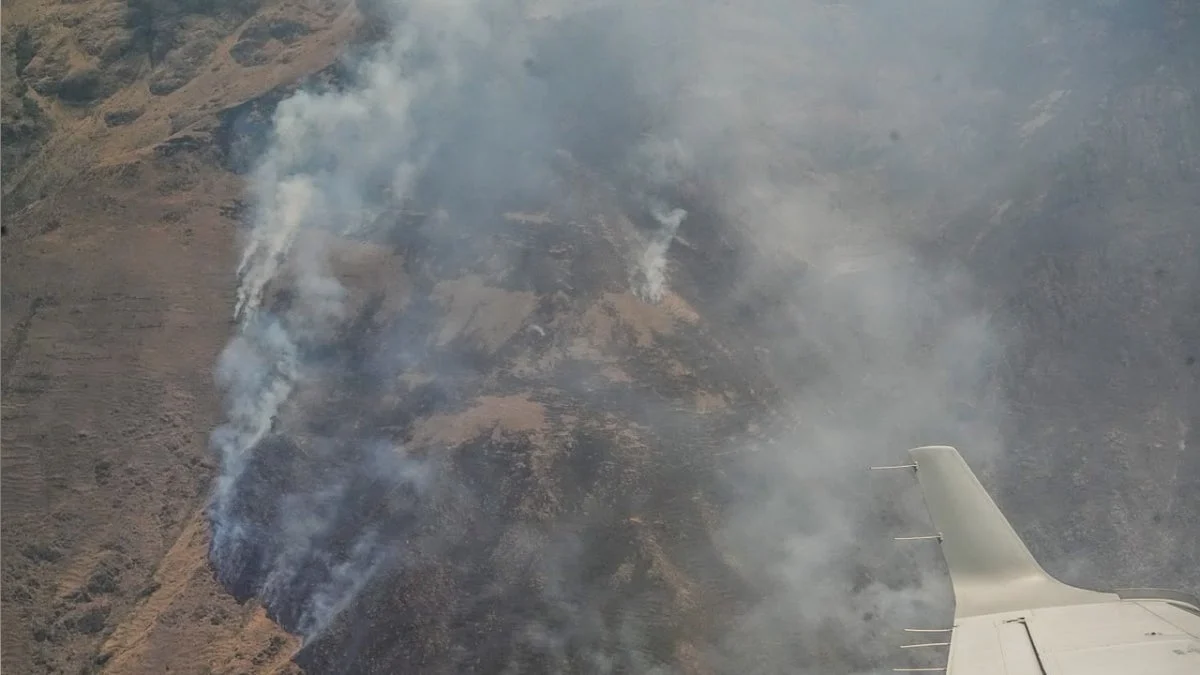
- Aerial Assessment: Minister Vinelli and Governor Salcedo conducted an extensive overflight of the Calca province. This reconnaissance mission was crucial for identifying the "hot spots" that required immediate aerial support versus those where ground crews could be deployed effectively.
- Tactical Deployment: Following the assessment, the government mobilized 29 members of the Peruvian Army and 40 specialized firefighters from the General Corps of Volunteer Firefighters of Peru.
- The Air Bridge: Recognizing that manual firefighting was insufficient for the higher altitudes of the affected zones, the government initiated an air bridge. A tactical helicopter was dispatched to transport an additional 14 elite firefighters to the high-altitude fronts, while the Peruvian Air Force (FAP) provided fixed-wing support to drop water containers.
- Helibalde Operations: The most potent tool in the current arsenal is a specialized helicopter equipped with a "helibalde" (fire bucket), capable of dropping 1,200 liters of water per pass. This unit is working in tandem with the National Civil Defense Institute (Indeci) to systematically extinguish the most dangerous sections of the fire.
Supporting Data and Institutional Coordination
The scale of this crisis requires more than just water drops; it requires a sophisticated data-driven approach to disaster management. The Servicio Nacional Forestal y de Fauna Silvestre (Serfor) has emerged as the central nervous system of this operation.
The Role of Serfor and Monitoring
Serfor is currently maintaining a 24-hour monitoring cycle, tracking thermal anomalies and potential "foci of heat" across the region. By utilizing satellite imagery and local reports, the agency feeds real-time data to Indeci and regional risk management offices. This rapid information flow allows for the preemptive evacuation of vulnerable communities and the strategic repositioning of firefighting brigades before new fires can escalate.
Capacity Building
Beyond immediate containment, the government is focusing on the "prevention culture." Through technical assistance programs, Serfor is working with local farmers to implement early warning systems. These systems are designed to detect smoke or unusual heat signatures early, allowing local brigades—trained by the state—to intervene before a small fire turns into a wildfire.
Official Responses and Strategic Recovery
The economic implications for the Cusco region are severe. Agriculture is the backbone of the local economy, and the loss of crops, grazing land, and livestock fodder represents a significant blow to the regional GDP. To mitigate this, Midagri and its subsidiary institutions have launched a recovery plan.
INIA: Rebuilding the Agricultural Base
The National Institute for Agricultural Innovation (INIA) has taken the lead in providing the biological resources necessary for recovery. Recent deliveries include:
- 400 kg of Tayko Andenes oats delivered to Calca to jumpstart fodder production for livestock that have lost their pastures.
- A massive seed distribution in Paruro: This included 500 kg of INIA 904 Vilcanota I oats, 500 kg of INIA 440 Kanchareq wheat, and 300 kg of INIA 444 Siwina fava beans. These certified seeds are designed to be high-yield and resilient, providing farmers with the best chance of a successful harvest in the next cycle.
Agro Rural and Midagri’s Holistic Support
Starting October 12, Agro Rural will begin a comprehensive distribution program. The aid package is not limited to seeds; it includes:
- Animal Nutrition: Kits for livestock maintenance and large quantities of hay bales to bridge the gap during the recovery phase.
- Infrastructure: Modern irrigation systems that are more efficient and less susceptible to heat damage.
- Technical Assistance: Perhaps the most important aspect is the education component. The Ministry is deploying technicians to teach farmers how to restore their soil health after the fires and how to manage their pastures more sustainably to prevent future disasters.
Implications: The Long-Term Challenge
The current fires in Cusco serve as a stark reminder of the environmental pressures facing the Andean region. Climate change, characterized by longer, drier seasons, has created a "perfect storm" for wildfires.
Ecological Impact
The loss of vegetation in these high-altitude areas has immediate consequences for water retention. When forest cover is burned away, the soil becomes more susceptible to erosion, which can lead to sediment buildup in irrigation channels and a reduction in the natural water-capturing ability of the high Andean grasslands.
Socio-Economic Vulnerability
The rural farmers of Cusco are among the most vulnerable to climate-related shocks. When a fire consumes a field, it isn’t just one harvest that is lost; it is the entire capital of the smallholder farmer. The government’s decision to provide not just immediate relief, but also long-term agricultural infrastructure and training, reflects a transition toward "resilient recovery."
The Call for Vigilance
Minister Vinelli’s presence in the field signals that the government recognizes this crisis as a systemic threat rather than an isolated incident. The collaboration between the Ministry, the Regional Government, and local communities is a template that the administration hopes to refine for future climate-related emergencies.
As the operations continue, the focus will gradually shift from suppression to investigation and long-term restoration. Authorities are already looking into the origins of these fires, with many suspected to be the result of traditional, yet dangerous, agricultural burning practices that have spiraled out of control due to the extreme drought conditions.
Conclusion: A United Front
The struggle against the fires in Cusco is far from over. However, the coordinated response by the Ministry of Agrarian Development and Irrigation, bolstered by the logistical support of the Army, FAP, and specialized firefighters, provides a glimmer of hope. By integrating high-tech surveillance, aerial firefighting, and substantial agricultural aid, the government is not only battling the flames but also laying the foundation for a more resilient, better-prepared Andean agricultural sector.
The resilience of the people of Cusco, combined with a robust and well-funded state response, will be the decisive factors in overcoming this environmental challenge. As the smoke clears in the coming days, the real work—rebuilding, replanting, and rethinking how the region interacts with its environment—will begin in earnest.