The dream of a high-capacity commuter rail linking the heart of Lima with the growing suburbs of the east is transitioning from a bureaucratic proposal to a tangible infrastructure project. ProInversión, the Peruvian agency for private investment, is currently steering the final negotiations for the "Addendum 11" to the existing concession contract for the Ferrocarril del Centro. This critical legal step aims to authorize the long-awaited passenger service, repurposing the railway line to alleviate the chronic congestion that plagues the Carretera Central.
By utilizing the existing Ferrovías Central Andina S.A. rail network, authorities hope to provide a reliable, efficient alternative for thousands of commuters who spend hours daily navigating the chaotic traffic between the capital and the Huarochirí province.
Main Facts: The Scope of the Project
The proposed commuter rail service is designed as a strategic response to the urbanization of the Rímac Valley. The first phase of the project spans 45.6 kilometers, connecting the busy Alfonso Ugarte station in the heart of Lima with Ricardo Palma in Huarochirí.
Operational Structure
- Frequency: The system will operate with 10 daily frequencies, strategically timed to serve peak demand.
- Service Windows: Five departures will take place during the morning rush (5:30 a.m. to 7:30 a.m.) and five during the evening commute (5:00 p.m. to 7:30 p.m.).
- Travel Time: A full-length journey from the capital to the end-of-line in Ricardo Palma is estimated at 1 hour and 51 minutes, maintaining a commercial speed of 30 kilometers per hour.
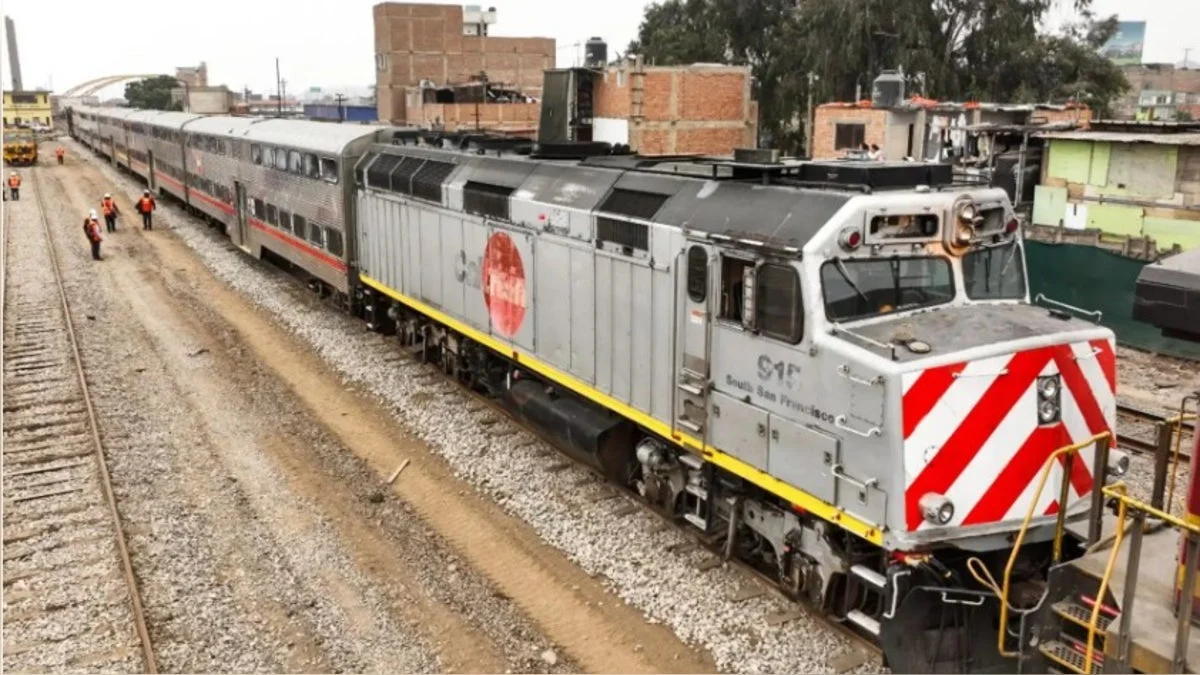
- Capacity: The fleet will consist of locomotives paired with five passenger carriages each. The logistical plan involves seven locomotives and 29 carriages, with a portion of the fleet reserved for maintenance and standby capacity.
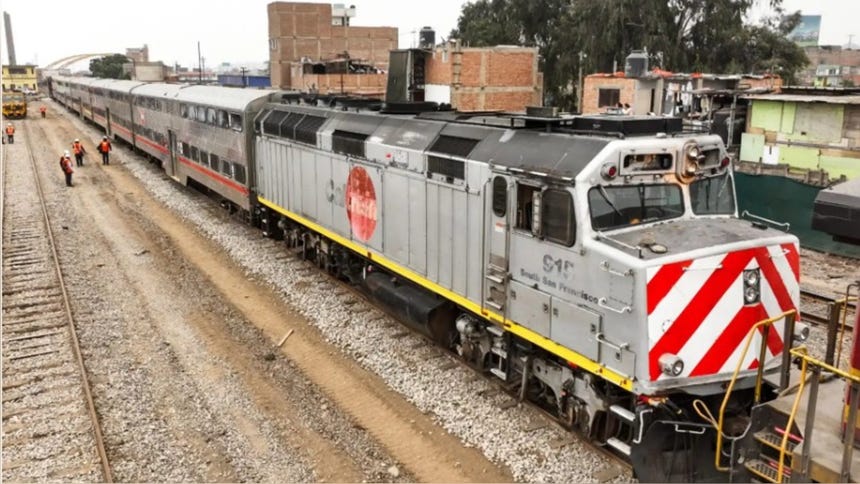
The project relies on the significant investment made by the Metropolitan Municipality of Lima in purchasing retired rolling stock from the American operator Caltrain. These trains, once iconic in California, are currently undergoing a rigorous adaptation process to ensure they meet the technical requirements of the Andean rail gauge and local safety regulations.
A Strategic Chronology: From Concept to Implementation
The journey to establish the Lima-Chosica line has been marked by years of technical studies and complex negotiations.
- Initial Acquisition: The process gained momentum when the Municipality of Lima finalized the acquisition of the Caltrain carriages, signaling a move toward rail-based public transit.
- Concession Review: Over the past year, Ferrovías Central Andina S.A. submitted technical proposals to the Ministry of Transport and Communications (MTC) and ProInversión.
- The Regulatory Hurdle: The current phase centers on the "Addendum 11." This is not merely paperwork; it is a fundamental reconfiguration of the concession contract that allows for the mixed use of freight and passenger traffic.
- Infrastructure Lead Times: ProInversión’s current roadmap identifies two major technical timelines:
- 302 Days: The estimated time required to construct and properly equip the 11 designated stations.
- 360 Days: The timeline required to finish the technical conditioning of the locomotives and carriages, ensuring the American-built fleet is ready for the unique challenges of the Peruvian climate and terrain.
The Route: Connecting the East to the Capital
The proposed rail line is not intended to operate in isolation. A critical design feature of the project is its integration with existing mass transit systems in Lima. By creating intermodal hubs, the project aims to turn the rail line into the backbone of the city’s eastern transit corridor.
The 11-station route includes:
- Alfonso Ugarte (Cercado de Lima): The primary hub, featuring a direct connection to the Metropolitano bus rapid transit system.
- Muralla/Desamparados: Serving the historic center.
- Martinete (Barrios Altos): An essential interchange point for the Line 1 of the Lima Metro.
- Mercado Santa Anita: A high-traffic commercial area.
- Vitarte: Featuring a strategic connection to the newly inaugurated Line 2 of the Lima Metro.
- Santa Clara.
- Huaycán.
- Ñaña.
- Chaclacayo.
- Chosica.
- Ricardo Palma: The terminal station in the Huarochirí province.
The integration with Metro Line 2 at Vitarte is particularly significant, as it will allow commuters from the eastern periphery to switch from rail to the modern subway system, significantly reducing transit times into the financial districts of the city.
Supporting Data: Technology and Modernization
The project is moving away from archaic manual ticketing systems, opting instead for a modern, digital-first approach to fare collection. The proposed system includes:
- Contactless Technology: Implementation of smart cards compatible with other transit systems in the city.
- Automated Validation: Automatic turnstiles at every station to maintain passenger flow.
- Digital Payment Integration: Users will be able to manage their transit credits via dedicated mobile applications and web portals, ensuring that the rail service reflects the technological standards of the 21st century.
Regarding the physical infrastructure, the project will utilize the 477-kilometer Ferrocarril del Centro network. While the initial phase focuses on 45.6 kilometers, the design leaves the door open for future expansion. Engineers have noted that the current single-track layout will be sufficient for the initial ten daily frequencies, but long-term growth will likely require the construction of a second track to allow for simultaneous two-way traffic.
Official Responses and Stakeholder Perspectives
The project has received varying degrees of scrutiny. While the Metropolitan Municipality of Lima has championed the acquisition of the Caltrain carriages, ProInversión has been the entity responsible for balancing the legal and economic viability of the operation.
"The goal is to sign the addendum this year," a representative from ProInversión noted in recent statements, highlighting that the agency is prioritizing the technical audit of the carriages and the track safety requirements. The MTC, for its part, has emphasized that while the municipality owns the rolling stock, the operational safety and coordination with the rail concessionaire fall under the purview of national oversight bodies.
Critics of the project have pointed to the limited service hours. By focusing only on peak morning and evening times, the train acts as a commuter shuttle rather than a 24/7 public service. Proponents, however, argue that this "phased approach" is the only fiscally responsible way to introduce rail services into an existing, congested freight corridor without disrupting current logistical supply chains.
Socio-Economic Implications
The implementation of the Lima-Chosica rail line carries profound implications for the social fabric of the capital:

1. Mitigation of the "Carretera Central" Bottleneck
The Carretera Central is arguably the most problematic transit artery in Peru. Frequent accidents and high traffic volume often result in multi-hour delays for heavy cargo and public buses alike. By shifting thousands of passengers to rail, the city expects a measurable reduction in the number of buses required on this route, potentially decreasing carbon emissions and noise pollution.
2. Economic Development in the East
Improved connectivity is a well-documented catalyst for economic growth. The stations at Huaycán, Vitarte, and Chosica are expected to see a rise in commercial activity. As access to the city center becomes more predictable, the value of residential properties in these areas is likely to increase, encouraging investment in local services and infrastructure.
3. Urban Integration
By connecting the historic, central, and eastern districts of Lima, the rail line effectively acts as a bridge between the metropolitan core and the suburban fringe. This integration reduces the "geographic isolation" often felt by residents of Huarochirí and the eastern outskirts of the city, providing them with reliable access to employment and educational opportunities in the capital.
4. Future Challenges
The project is not without its risks. The success of the venture depends on the seamless integration of ticketing systems, the reliability of the older (though refurbished) rolling stock, and the willingness of commuters to adapt to a strict schedule. Furthermore, the reliance on a single track means that any mechanical failure or freight delay could cascade into significant service interruptions.
Conclusion
The Lima-Chosica commuter rail represents a pivotal shift in Peru’s approach to public transit. By leveraging existing assets—the Ferrocarril del Centro and the Caltrain fleet—the project offers a pragmatic, cost-effective solution to a historic problem. As ProInversión moves toward the finalization of the concession addendum, the focus must remain on rigorous safety standards, seamless intermodal connectivity, and a steadfast commitment to the proposed timelines.
If successful, this line will do more than just transport passengers; it will redefine the geography of Lima, proving that rail-based transit is a viable, necessary pillar for the future of the nation’s capital. The upcoming year will be decisive, as stakeholders work to transform these plans into the daily reality of thousands of Limeños.