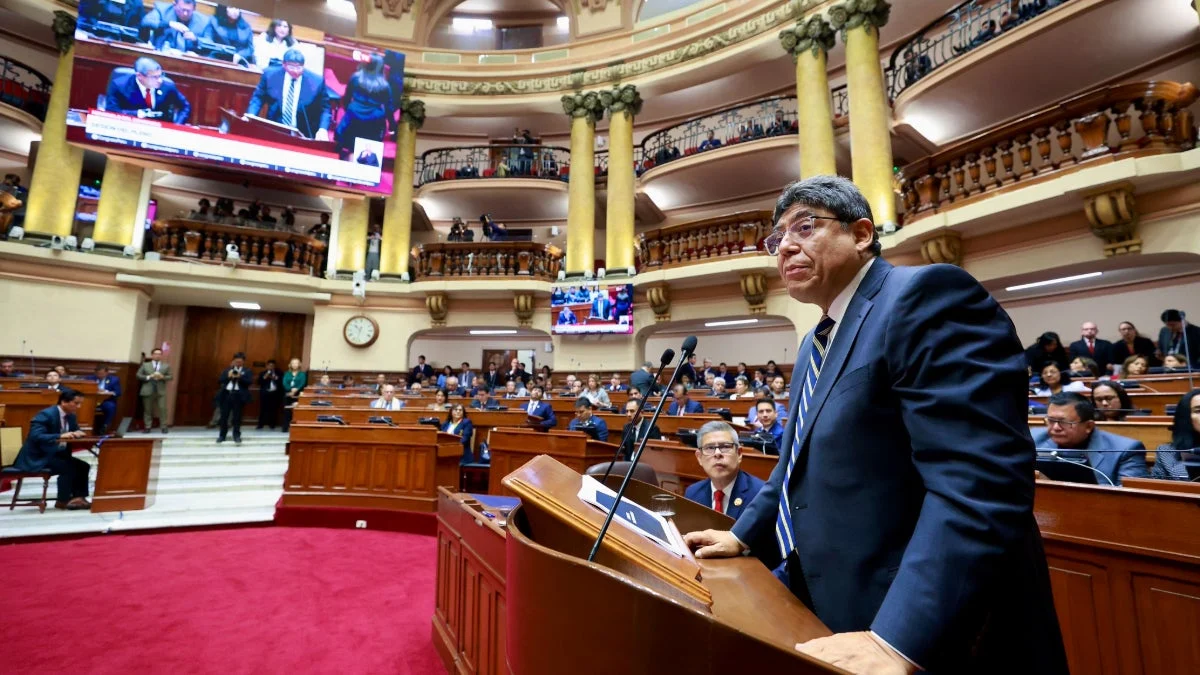
LIMA, Peru – As the nation stands at a pivotal political and economic crossroads, the Sociedad Nacional de Minería, Petróleo y Energía (SNMPE) is set to host the XVI SIMPOSIO, the International Mining Meeting, from May 26 to May 28 at the JW Marriott Hotel in Lima. This year’s edition, arguably the most significant in the event’s history, serves as a high-level forum designed to harmonize technical evidence with long-term national policy.
With the country navigating a transformative presidential transition, the XVI SIMPOSIO has emerged as a crucial theater for discourse. It brings together a formidable roster of authorities, global corporate leaders, academic experts, and international investors to define the trajectory of the Peruvian mining sector—a sector that remains the backbone of the national economy.
1. Core Objectives: Evidence-Based Policy and Long-Term Vision
The primary mission of the XVI SIMPOSIO is to move beyond short-term political rhetoric and ground the national conversation in technical rigor. Diego Ortega, president of the Executive Committee of the XVI SIMPOSIO, has been clear about the event’s mandate: "The country needs to discuss public policies on mining with seriousness, evidence, and a sense of responsibility."
The event seeks to address the friction between the immense potential of the mining industry and the current hurdles to development, such as legal informality, regulatory uncertainty, and social conflict. By fostering a dialogue between the public and private sectors, the SNMPE aims to present a comprehensive "roadmap" that the incoming administration can utilize to bolster investment, enhance governance, and ensure that the wealth generated by mineral extraction translates into tangible social and economic development for all Peruvians.
2. Chronology of the XVI SIMPOSIO
Since its inception in 1994, the SIMPOSIO has served as an uninterrupted annual bridge between industry stakeholders and the state. The schedule for this three-day summit is structured to facilitate both deep-dive technical sessions and strategic high-level networking:
- May 26: The Opening. The event officially kicks off with an inaugural ceremony featuring Carlos Pareja Ríos, the Chancellor of the Republic, alongside Diego Ortega. The day will focus on setting the stage for the global macroeconomic climate and the role of mining in the energy transition.
- May 27: Strategic Deep-Dives. The second day is dedicated to the core pillars of the industry: global market competition for critical minerals, technological innovation—including the integration of Artificial Intelligence (AI) in extraction—and the financial frameworks necessary to maintain investor confidence.
- May 28: Institutional Integrity and Future Horizons. The final day shifts toward governance, the rule of law, and the social contract. This includes a critical analysis of the impact of illegal economies on human rights and a final roundtable regarding the financial conditions required for sustainable, long-term growth.
3. Key Themes and Supporting Data
The XVI SIMPOSIO has curated an agenda that spans the entire value chain of the modern mining industry. The breadth of topics reflects the changing nature of the sector, which is no longer solely defined by extraction, but by its integration into global supply chains for the green energy revolution.
The Macroeconomic Perspective
One of the most anticipated segments is the keynote address by renowned international economist Dambisa Moyo. Her presentation, titled "A Country of Opportunities: How to Transform Resources into Progress," will provide a global lens on the "resource curse" versus "resource blessing" dilemma. Moyo will explore how resource-rich nations can leverage their natural endowments to build competitive, diversified economies. Her insights will be further debated in a high-level panel with Diego Macera, director of the Peruvian Institute of Economics (IPE), and Carolina Trivelli, a member of the Fiscal Council of the Ministry of Economy and Finance (MEF).
Critical Minerals and Geopolitics
As the global economy moves toward decarbonization, the demand for "critical minerals"—such as copper, silver, and lithium—has reached record highs. The XVI SIMPOSIO will host a dedicated block, "Latin America in the Framework of Global Competition for Critical Minerals," featuring analysis from EY Global’s Paul Mitchell and Plusmining’s Juan Carlos Guajardo. The session will dissect the region’s geopolitical position and the urgent need for competitive investment frameworks to ensure that Latin America remains a preferred supplier in the international market.
Technological and Financial Integration
The inclusion of Google and other technology leaders underscores the industry’s push toward digitalization. The summit will examine how AI and digital automation can drive productivity and improve safety standards. Simultaneously, the financial panel, headlined by Julio Velarde, president of the Central Reserve Bank of Peru (BCRP), will address the macroeconomic stability and fiscal policies required to de-risk projects and attract the next generation of international capital.
4. Official Responses and Industry Leadership
The event has drawn an elite group of speakers and executives, signaling strong confidence in the Peruvian market despite the current political volatility.
Global Executive Insights
Roque Benavides, chairman of the board of Compañía de Minas Buenaventura, will moderate a high-stakes roundtable: "Global Mining Executives: Strategy, Markets, and Perspectives." This session will feature leadership from major international players including:
- Ruben Fernandes (Anglo American)
- Andrea Vaccari (Freeport-McMoRan Inc.)
- Gong Yu (China Minmetals)
- Isaac Franklin Unkind (Mining Corporation)
- Juan Pablo Garrido (Rio Tinto)
Their presence serves as a vote of confidence in the underlying strength of the Peruvian mining sector, provided that the government can maintain a stable and predictable investment climate.
Local Industry Strategy
The "Peruvian Mining: Strategies to Boost Production and Investment" block will feature local CEOs who are at the front lines of the sector’s challenges, including Víctor Gobitz (Quilla Resources), Raúl Jacob (Southern Peru Copper Corporation), Juan Luis Kruger (Minsur), and Pablo Carvallo (Glencore). Their contributions are expected to highlight the importance of streamlining permitting processes and fostering stronger community relations.
5. Implications: Navigating the Path Forward
The XVI SIMPOSIO arrives at a moment of significant systemic risk and opportunity for Peru. The internal debate regarding the role of the state in the mining sector is at a boiling point. By inviting experts to present data on the impacts of illegal mining and the role of formal, regulated mining as a catalyst for sustainable development, the SNMPE is attempting to reset the narrative.
The Rule of Law and Social Impact
A particularly significant addition to this year’s program is the presentation of the study, "Impact of Illegal Economies on Human Rights," presented by Nicolás Zevallos of the Institute of Criminology and Studies on Violence. This session is designed to highlight the hidden costs of the informal sector, which often operates outside the oversight of environmental and labor laws. By documenting these impacts, the organizers hope to force a conversation about the necessity of strengthening the rule of law as a prerequisite for social license.
Toward a New Social Contract
The implications of the XVI SIMPOSIO extend far beyond the conference walls. The organizers envision this meeting as the beginning of a "national agreement" on mining. For the next administration, the insights gathered at the JW Marriott will serve as a foundational document for policy design.
If the government can successfully integrate the suggestions regarding technological adoption, fiscal predictability, and the formalization of artisanal mining, Peru stands to solidify its position as a global mining leader for the next several decades. However, failure to address these systemic issues could risk the competitiveness of the nation’s most important industry.
As the XVI SIMPOSIO concludes, the consensus remains that while the global demand for minerals offers a golden opportunity, the conversion of that potential into national development is entirely dependent on the quality of governance and the clarity of the public-private partnership.
For more information and a complete schedule of the events, please visit www.simposio.pe.