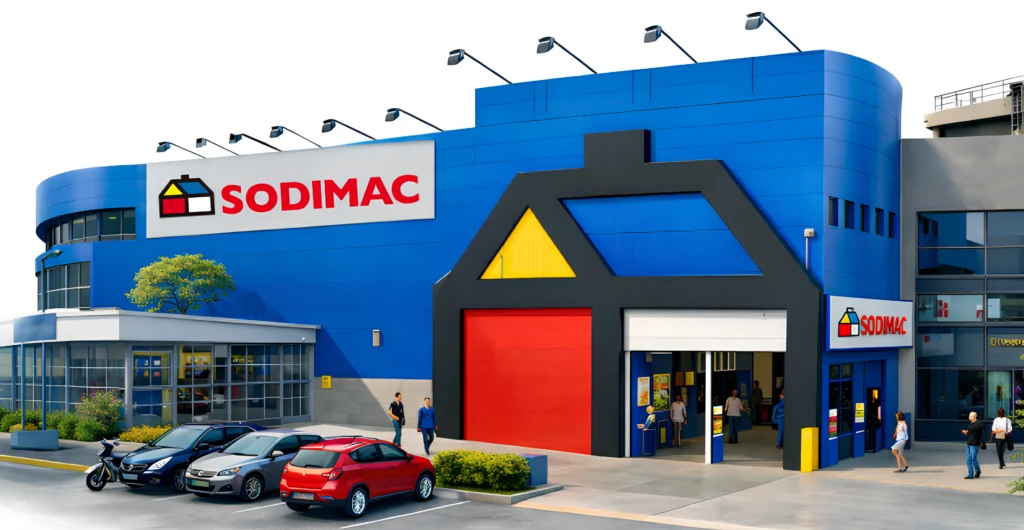
The retail landscape in Latin America is witnessing a definitive transformation. Sodimac, the home improvement giant that has long operated as a pillar of the Falabella ecosystem, is embarking on a new chapter. As of June 8, a strategic reorganization of its corporate governance will effectively pull the retailer closer to its parent company, Falabella, in a move designed to navigate a period defined by sluggish consumer demand, tepid investment, and significant headwinds in the construction sector.
This consolidation of power is not merely a bureaucratic reshuffling; it is a calculated response to a challenging macroeconomic environment. By integrating the highest echelons of Falabella’s leadership into the day-to-day governance of Sodimac, the group aims to streamline operations, enhance agility, and ensure that the home improvement subsidiary remains resilient in the face of persistent volatility.
The Core Strategic Realignment: A New Governance Structure
The upcoming extraordinary shareholders’ meeting of Homecenter (Sodimac) marks a watershed moment for the company. The most immediate impact of this reorganization is the reduction of the board of directors from nine members to seven. This leaner structure is intended to foster faster decision-making and closer alignment with the parent holding’s vision.
Leadership at the Helm
The most significant change is the infusion of top-tier Falabella leadership into the subsidiary’s boardroom. Fernando de Peña, the current president of Falabella, will assume the presidency of the Sodimac board, while Falabella CEO Alejandro González will take the role of vice president. This direct intervention by the parent company’s executive core signals a shift toward a more centralized command structure.
The Changing of the Guard
The transition also marks the departure of Juan Pablo del Río Goudie from the presidency of Sodimac. While he will retain his position as a director within the wider Falabella holding, his exit from the top spot at Sodimac is symbolic of the end of an era. Of the current board members, only Sandro Solari will remain, providing a bridge between the old guard and the incoming strategic team.
To fill the remaining seats, Falabella has recruited individuals with diverse and high-impact backgrounds. Notable appointments include Adolfo Villagómez, an executive with extensive experience at The Home Depot—a global industry benchmark—and a specialized focus on digital retail transformation. Joining him is Alfonso Márquez de la Plata, whose leadership pedigree spans major corporate entities such as Derco and Inchcape. Alejandro Puentes and Diego del Río complete the new roster, bringing a mix of financial acumen and operational expertise that will be essential for the company’s next phase.
A Chronology of Transformation
The shift in governance is the culmination of a series of strategic pivots taken over the last several years, reflecting the company’s struggle to adapt to a changing retail climate.
- 2023 – The Leadership Transition: In October, the company announced the departure of Eduardo Mizón, who had led Sodimac for two decades. Mizón was widely credited as the architect of the brand’s regional expansion. His exit marked the first significant crack in the established status quo.
- January 1, 2026 – A New General Manager: Sebastián Simonetti, former general manager of Tottus (another Falabella subsidiary), stepped into the top management role, signaling an intent to leverage cross-retail expertise.
- March 2026 – Financial Prudence: Facing tightening margins, the company made the difficult decision to withhold dividend distributions from 2025 earnings, choosing instead to prioritize cash flow and strengthen its financial position against future market shocks.
- June 8, 2026 – The Governance Overhaul: The extraordinary shareholders’ meeting marks the formal implementation of the new, leaner board structure.
Market Dynamics: A Sector Under Pressure
The challenges facing Sodimac are multifaceted, stemming from both local macroeconomic factors and broader international trends in the retail and construction industries.
Macroeconomic Headwinds
In Chile, and across its regional operations, Sodimac continues to feel the sting of persistent inflation. According to recent financial analysis, administrative and sales expenses have climbed by 2.3% year-on-year. This increase is primarily attributed to rising personnel costs and the necessary inflationary adjustments to salaries. When combined with the high cost of capital, these factors place a significant burden on operating margins.
The Construction Dilemma
The construction sector, the primary engine of demand for Sodimac’s professional and retail segments, is experiencing a period of "mixed signals." While there is an expectation that government infrastructure spending may provide a future boost, the industry index (IMACON) has consistently trended downward throughout 2026. This stagnation in the construction pipeline directly correlates to reduced foot traffic and lower sales volumes for home improvement materials.
The Home Depot Mirror
The global retail market is struggling with similar issues. The Home Depot, the world’s largest home improvement retailer, recently reported a 4% decline in quarterly sales. Their strategic pivot toward the "professional" market—focusing heavily on contractors and construction firms—provides a blueprint for how companies like Sodimac might navigate the current downturn. The inclusion of Adolfo Villagómez on the new board is a clear nod to this strategy, as the company looks to replicate the professional-grade success seen in the U.S. market.
Human Capital and Operational Efficiency
The transition is not limited to the boardroom; it is being felt across the entire organization. In a climate of uncertainty, the company has had to balance the need for growth with the necessity of cost-cutting.
Voluntary Retirements and Lean Operations
Internal reports from labor unions indicate that approximately 200 employees accepted voluntary retirement programs this year—a figure notably higher than in previous years. The company has characterized these departures as part of a broader strategy to refine its internal structure, focusing on a more "agile and efficient" organization. These cuts have been focused on corporate offices and secondary operations to protect the core customer-facing retail experience.
Official Stance on Efficiency
Falabella has been transparent about its intent: the goal is to create a leaner, more responsive organization that can survive in a high-interest-rate environment. By reducing the complexity of the reporting structure and bringing the board closer to the parent company’s executive team, the company hopes to eliminate redundancies that may have built up during the two decades of rapid, pre-pandemic expansion.
Future Implications: What Lies Ahead?
The implications of this restructuring are far-reaching. By centralizing power, Falabella is signaling that it is no longer willing to let its subsidiaries operate in silos. In the new, tighter retail economy, every asset must be optimized, and every brand must be aligned with the group’s overarching digital and financial goals.
Potential Strategic Directions
- Digital-First Retail: With the appointment of digital-native leadership, expect an accelerated integration of e-commerce and omnichannel strategies. The goal is to make the "click-and-mortar" experience seamless, allowing Sodimac to compete not just with local hardware stores, but with global e-commerce platforms.
- Focus on the "Pro" Segment: As retail consumer spending remains constrained by inflation, the B2B and professional contractor segment offers more stability. The new board will likely double down on loyalty programs and supply chain advantages for professional builders.
- Regional Integration: The proximity of Falabella’s CEO to the Sodimac board suggests that future expansion or contraction plans will be handled with a much higher degree of regional coordination, rather than individual country-by-country decisions.
A Test of Resilience
Analysts are cautiously optimistic. While the macroeconomic environment remains, as one analyst noted, "the most hostile in a decade," the fundamental strength of the Falabella group remains intact. The company’s ability to generate cash and its deep-rooted market share in Chile and across Latin America provide a buffer that few competitors possess.
However, the success of this transition will depend on the new board’s ability to balance cost-cutting with innovation. If the company becomes too lean, it risks losing the customer service excellence that made it a leader in the first place. If it fails to innovate, it risks being marginalized by more nimble, digitally-native competitors.
As the company enters this new era, all eyes will be on the first meeting of the new board. The decisions made there will set the tone for the next decade of home improvement retail in the region. For Sodimac, the message is clear: the era of decentralized, independent growth is over. The era of the "Falabella-integrated" powerhouse has begun.