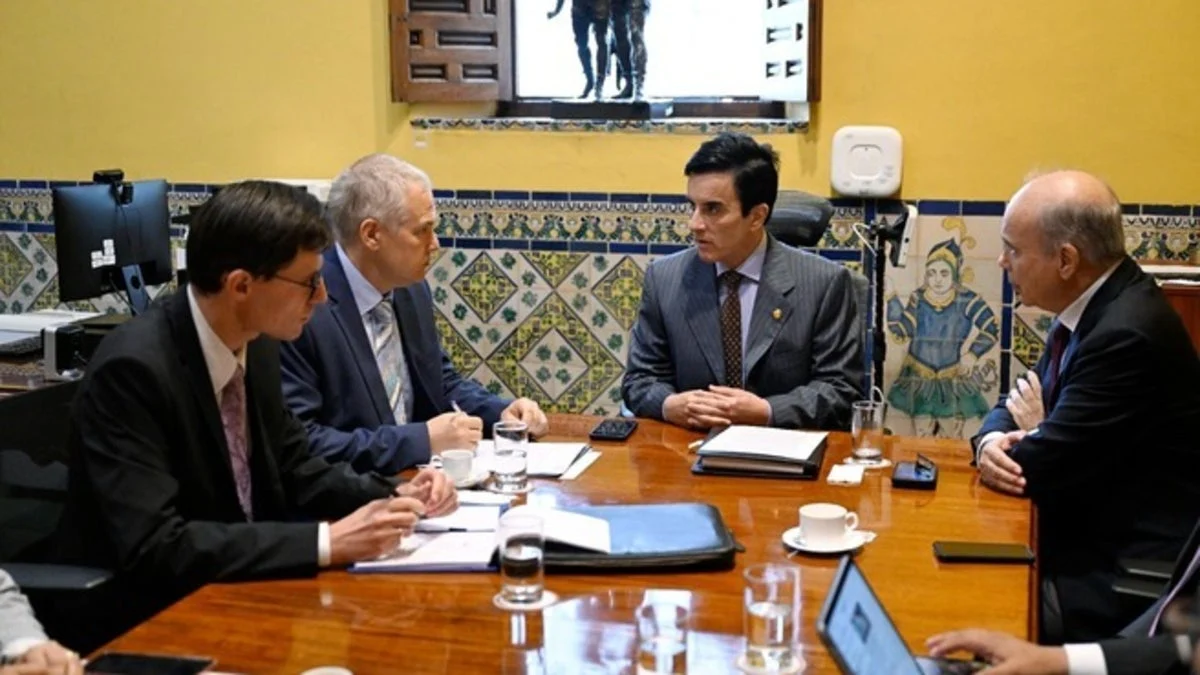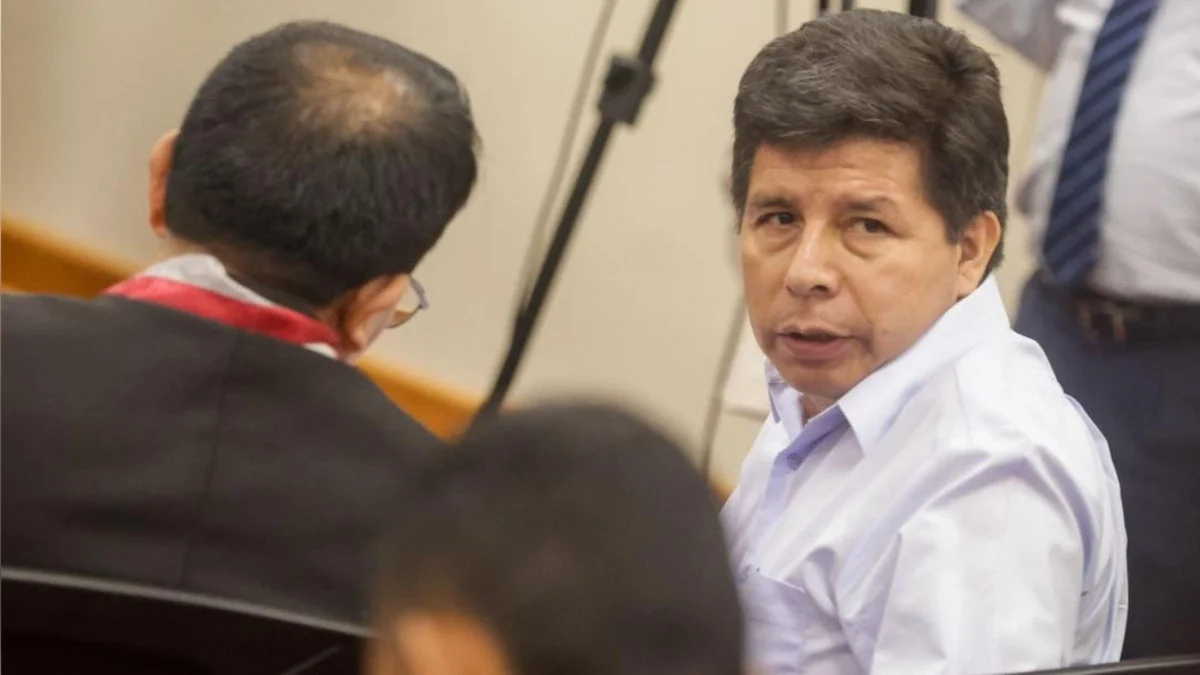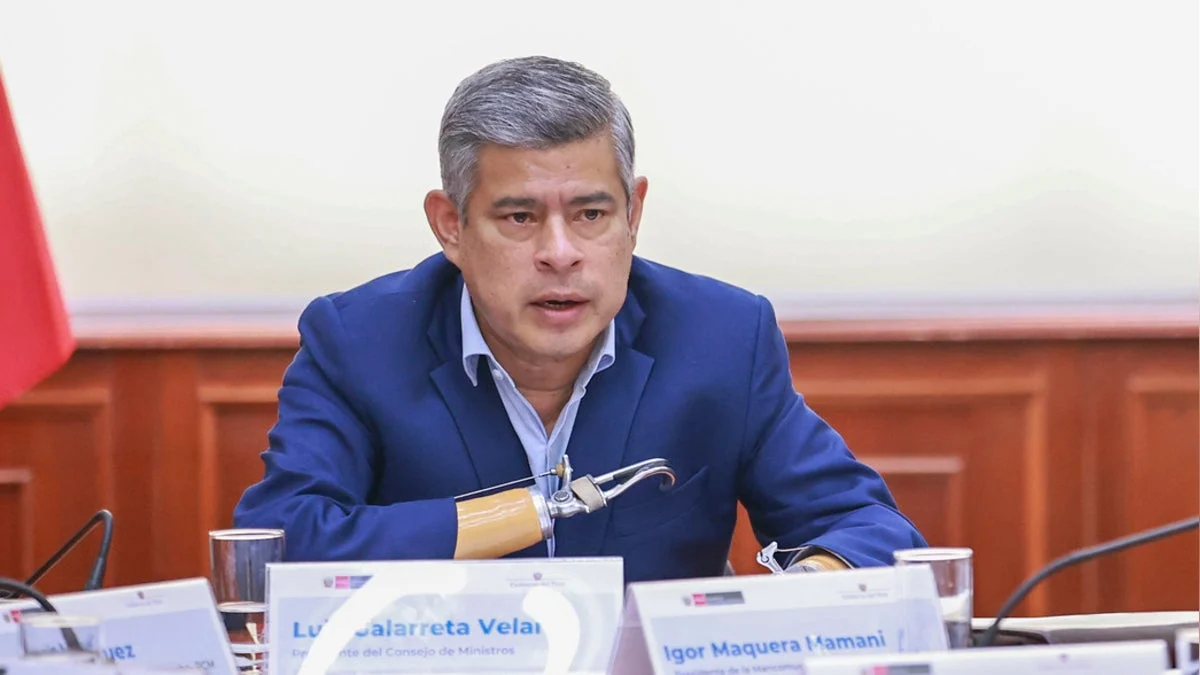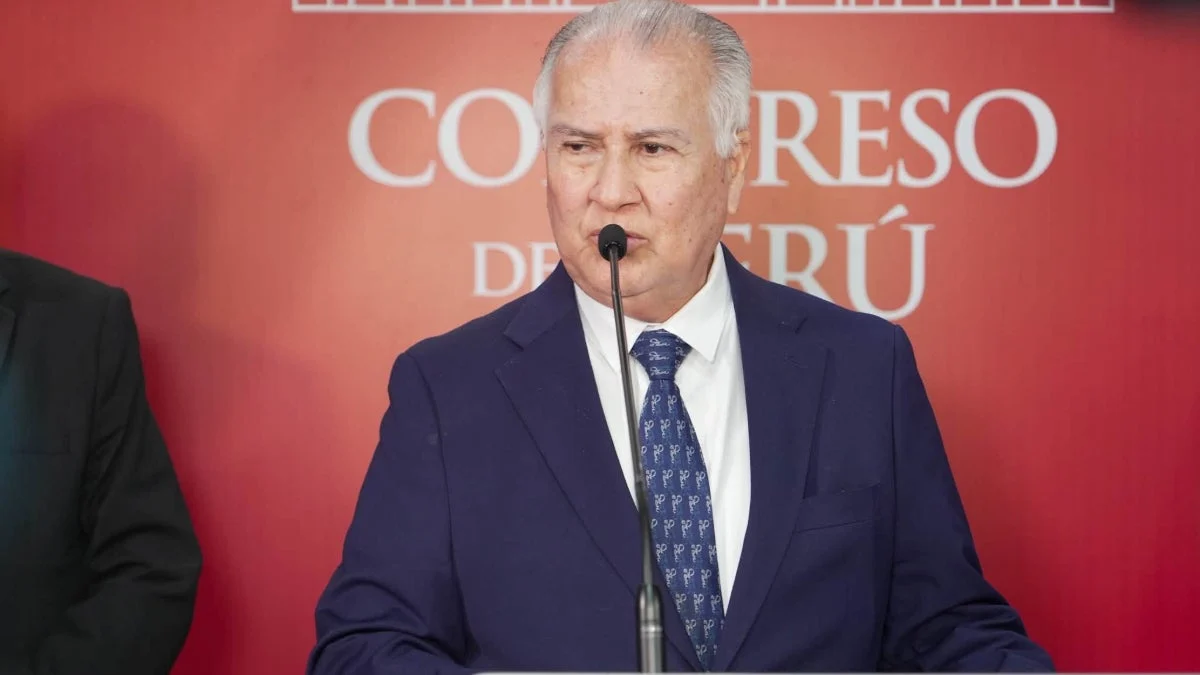
The political climate in the Senate has reached a boiling point following a volatile confrontation within the Constitution Committee this past Saturday. Alfonso López Chau, the prominent leader and spokesperson for the Ahora Nación caucus, announced this Tuesday that he is actively evaluating the presentation of a formal motion of interpellation against the Minister of the Interior, César Astudillo. This potential legislative strike comes in direct response to the Minister’s conduct during a high-stakes committee hearing, where an exchange with Senator Iber Maraví devolved into a public impasse, raising significant questions regarding the decorum and executive-legislative relationship currently governing the nation.
The Catalyst: A Breakdown of Parliamentary Protocol
The tensions that culminated in López Chau’s announcement were ignited during a session of the Constitution Committee, a body tasked with the most sensitive aspects of the nation’s legal framework. According to reports from the session, the incident was triggered when Minister Astudillo interrupted Senator Ruth Luque while she was in the middle of her allotted floor time.
Senator Iber Maraví, acting in his capacity as a legislator, intervened to urge the committee chair to enforce parliamentary protocol and protect the right of his colleague to speak without being obstructed by executive branch officials. What began as a procedural objection quickly spiraled into a heated personal confrontation.
Maraví later denounced the Minister’s conduct, stating, "Minister Astudillo engaged in bodily attitudes, gestures, and even used language that was deeply discourteous toward my person." The atmosphere grew increasingly toxic as the verbal exchange escalated, eventually drawing in other members of the chamber. Reports further indicate that the altercation was compounded by an alleged attempt at physical aggression involving a lawmaker from the Renovación Popular bench, who inserted themselves into the fray. This multifaceted clash has now become the epicenter of a broader debate regarding the boundaries of respect between the government’s ministers and the legislative branch.
Internal Deliberations: The Shifting Stance of Ahora Nación
Alfonso López Chau has made it clear that while the impulse for an interpellation originates with him, it does not yet represent a consolidated mandate from his caucus. The internal dynamics within Ahora Nación remain complex, as the party previously took a more conciliatory approach toward the Interior Minister.
"I have been reflecting on this given the current behavior of the Minister of the Interior; I am tempted to request his interpellation," López Chau stated during a press briefing at the Congress building. "It does not seem right to me that, having received the agreement of the Chamber of Deputies not to censure him—a position I supported—we now find ourselves in this position. We have not lost; we have instead gained the moral authority to look at the Minister and say, ‘You acted incorrectly.’"
This statement highlights a significant strategic pivot. In late September, the Ahora Nación caucus had voted by a clear majority to decline support for a censure motion against Astudillo. At that time, they had aligned themselves with the position of Deputy Harvey Colchado, arguing that a censure would be premature and reactionary. By invoking "moral authority," López Chau is signaling that the Minister’s recent behavior has exhausted the legislative branch’s patience, shifting the conversation from policy disagreements to the fundamental issue of institutional respect.
Chronology of the Conflict
To understand the severity of the current situation, one must look at the timeline of the growing friction between the executive and the legislature:
- Late September: The Ahora Nación caucus formally decides against supporting a motion of censure against Minister César Astudillo, effectively granting the Minister a period of political breathing room. This decision was rooted in a strategic desire to avoid premature executive destabilization.
- Saturday (The Incident): During a standard Constitution Committee hearing, Minister Astudillo disrupts the testimony of Senator Ruth Luque. Senator Iber Maraví intervenes to maintain order, leading to a direct, hostile confrontation between the two.
- Post-Incident (Sunday/Monday): Claims of unprofessionalism, discourteous gestures, and attempted physical aggression emerge in the media, drawing condemnation from various political factions.
- Tuesday (The Announcement): Alfonso López Chau publicly announces that he is weighing the possibility of a formal interpellation, citing the Minister’s lack of respect for the legislative process as the primary driver for his change of heart.
Implications for Executive-Legislative Relations
The potential interpellation of Minister Astudillo serves as a litmus test for the current administration’s ability to manage its relationship with the Congress. Interpellation is a powerful parliamentary tool; it compels a minister to appear before the chamber to respond to a set of questions, effectively placing their performance and conduct under public scrutiny.
If López Chau succeeds in rallying his caucus—or if other opposition parties decide to join his initiative—the resulting hearing could have profound implications. Beyond the specific incident with Senator Maraví, the interpellation would likely expand to cover broader critiques of Astudillo’s management of the Interior Ministry, including public security policies and the internal handling of protests.
The involvement of members from Renovación Popular in the fracas adds another layer of instability. The participation of diverse parties in the conflict suggests that the incident was not merely a personal clash between two men, but a reflection of the deep-seated ideological and partisan divisions that currently characterize the legislative floor.
The Broader Context: A Crisis of Decorum?
Political analysts suggest that this event is symptomatic of a "crisis of decorum" in the national political arena. When executive ministers, who are technically accountable to the legislative branch for their actions, engage in confrontational or dismissive behavior toward senators, it erodes the checks and balances necessary for a functional democracy.
The Ahora Nación party, led by López Chau, finds itself in a precarious position. By distancing themselves from their previous stance of restraint, they risk being seen as opportunistic by the administration, while simultaneously facing pressure from their constituents to uphold the dignity of the Senate.
Furthermore, the involvement of Deputy Harvey Colchado, whose previous position served as the foundation for the caucus’s initial support of the Minister, will be critical. If key figures like Colchado shift their support in favor of the interpellation, the Minister may face a genuine threat to his continuity in office. The coming days will be defined by back-channel negotiations and the formal drafting of the motion, as the Congress decides whether the Minister’s "bodily attitudes and discourteous words" constitute a bridge too far.
Official Responses and Next Steps
As of Tuesday afternoon, the Ministry of the Interior had not released a formal statement addressing the specific accusations of unprofessional behavior during the Saturday committee meeting. The silence from the Minister’s office has, according to some legislative observers, only served to amplify the frustration within the corridors of Congress.
Senator Iber Maraví has indicated that he intends to pursue formal complaints within the Ethics Committee, arguing that the alleged attempt at physical aggression by an opposing legislator must be investigated with the same rigor as the Minister’s conduct.
The path forward is now twofold:
- The Interpellation Motion: López Chau must secure enough signatures within his own caucus and build a cross-party coalition to ensure the motion is admitted for debate.
- The Ethics Review: The broader committee system must determine if the physical and verbal aggression reported on Saturday requires sanctions, which could further damage the Minister’s standing.
For now, the political establishment remains in a state of watchful waiting. The legislative calendar is expected to be dominated by this issue as the Senate prepares for its next plenary session. Whether this leads to a formal censure or a negotiated apology remains to be seen, but one thing is clear: the relationship between the Minister of the Interior and the Senate has undergone a irreparable shift. The "moral authority" invoked by López Chau has become the rallying cry for a legislature seeking to reassert its influence over an executive branch that, in the eyes of many, has forgotten the gravity of its role.