By Editorial Staff
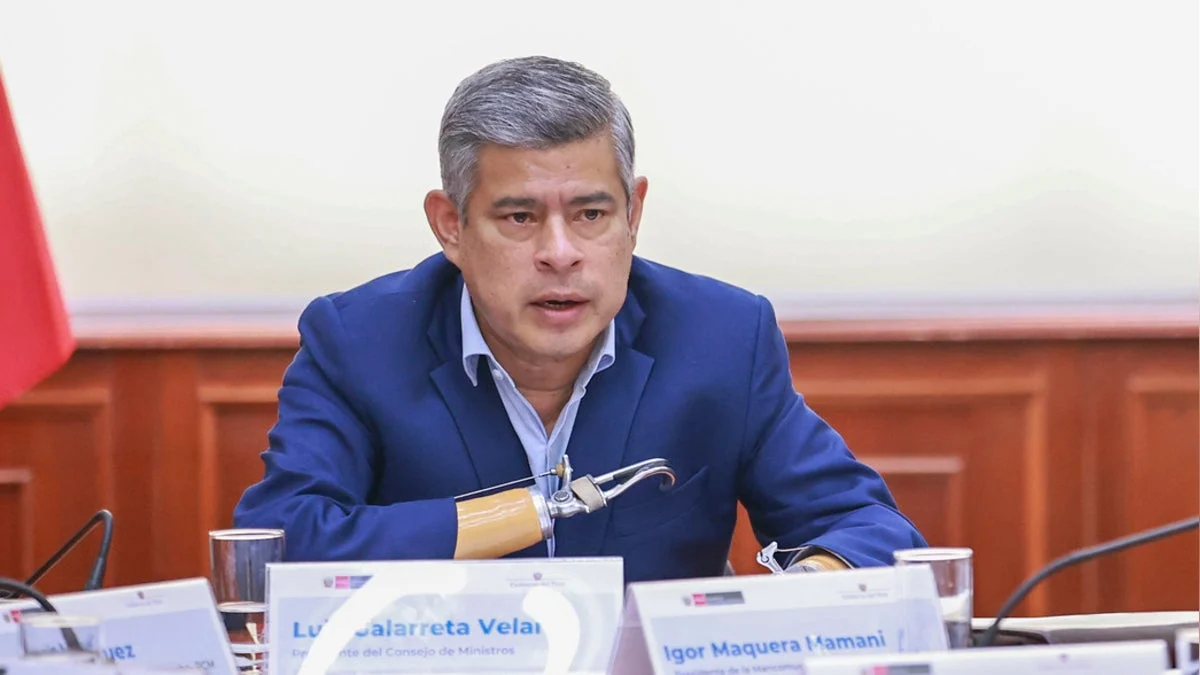
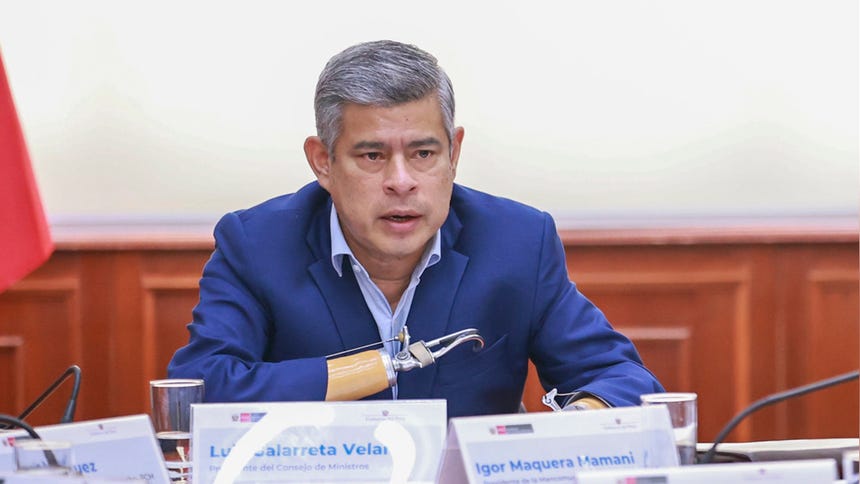
In a decisive move to address the spiraling insecurity currently gripping the nation, the Peruvian Executive branch has launched an urgent appeal to the Legislative assembly. Prime Minister Luis Galarreta, speaking from the Government Palace, has formally requested a 120-day delegation of legislative powers aimed at providing the government with the legal tools necessary to dismantle criminal organizations. This request arrives at a critical juncture, directly fueled by the public outcry following a violent abduction and mass murder in the city of Trujillo, which has left the nation in shock.
The proposed measures seek to fundamentally alter the state’s approach to public security, shifting from reactive policing to proactive, intelligence-led operations. However, the proposal has reignited a fierce national debate regarding the balance between civil liberties and the state’s duty to maintain order, particularly as the administration of President Keiko Fujimori pushes for a more militarized response to domestic crime.
The Trujillo Attrition: A Chronology of a Planned Assault
The impetus for this legislative push is the brutal incident that unfolded in the early hours of Sunday in Trujillo. The details emerging from the investigation paint a picture of a highly coordinated, professional operation that exploited the vulnerability of its target.
Sunday, Early Morning: Businessman Jens Marty Lara Tantaquilla was departing a local discotheque accompanied by four associates. As their vehicle navigated the streets of Trujillo, they were intercepted by a group of assailants disguised as police officers.
The Confrontation: The perpetrators, leveraging the disguise to lower the victims’ defenses, forced the vehicle to a halt. When the passengers resisted the abduction of Lara Tantaquilla, the assailants opened fire with automatic weapons. All four companions were killed at the scene, and the suspects successfully abducted the businessman, vanishing before local authorities could mount a perimeter.
Monday and Beyond: The investigation, led by the National Police of Peru (PNP), quickly turned its focus toward the notorious criminal gang known as "Los Pulpos." According to General Ricardo Espinoza, head of the La Libertad Police Region, the attack was not a random act of violence but a calculated strike. Investigators suggest the gang, currently facing severe financial and operational pressure due to the recent capture of key lieutenant Andy Quispe Cruz, staged the abduction as a desperate attempt to regain influence and resources.
General Víctor Revoredo, head of the Dirincri, has identified the intellectual author behind the operation as Nilton Cruz Arce, a high-profile criminal currently incarcerated in the La Capilla prison. Authorities are now investigating how such a complex operation could be directed from within the walls of a high-security facility.
The Executive Proposal: Strategic Tools or Overreach?
Prime Minister Luis Galarreta, supported by Interior Minister César Astudillo and Defense Minister Rafael Belaúnde, argued that the current legal framework is insufficient to counter the evolution of criminal syndicates in Peru. The request for 120 days of legislative powers focuses on three primary pillars of reform:
1. Intelligence and Information Sharing
The government is seeking the authority to mandate deeper integration between civilian police intelligence and military intelligence units. Galarreta emphasized that the current "siloed" nature of information gathering allows criminal gangs to operate in the shadows. "Our intelligence services need the capability to conduct operations that are currently restricted," the Prime Minister stated. "Identifying these bands before they strike is the only way to prevent tragedies like the one in Trujillo."
2. Militarization of Prison Perimeters
Perhaps the most controversial aspect of the proposal is the plan to deploy the Armed Forces to secure the perimeters of the nation’s prisons. The government argues that prisons have become command-and-control centers for criminal enterprises. By transferring the perimeter security of these facilities to the military, the government hopes to cut off communication lines and illicit supply chains that facilitate operations like the Trujillo kidnapping.
3. Redefining Criminality
The administration is exploring a legal reclassification of certain organized crime syndicates. By labeling specific groups as "hostile entities" or "terrorist organizations," the government aims to lower the legal threshold for the Armed Forces to engage in domestic law enforcement. This shift would provide the military with broader Rules of Engagement (ROE) when encountering these groups, a move the administration claims is necessary to "neutralize" the threat rather than simply arresting its members.
Official Responses and Political Implications
The government’s request has prompted immediate, though polarized, responses from the political spectrum.
Defense Minister Rafael Belaúnde, who traveled to Trujillo immediately following the incident to oversee the police response, stated that the state must regain control of the streets. "We are facing a new breed of criminal—one that does not hesitate to use military-grade tactics against civilians," Belaúnde noted. "Our presence in the field is a signal that the state is not yielding."

However, civil rights advocates and some opposition members in Congress have expressed deep concerns. Critics argue that the proposed "hostile group" classification is a dangerous precedent that could lead to the over-militarization of civilian life. They point to the potential for human rights abuses if the military, which is trained for external defense, is deployed in internal security roles without adequate civilian oversight.
The Legislative assembly is now tasked with evaluating whether the "urgency" described by Galarreta justifies the broad delegation of power. While there is broad consensus that the current level of violence is unsustainable, the mechanism of the delegation remains a point of intense negotiation.
Supporting Data: The Surge in Criminality
The Trujillo attack is not an isolated event but a manifestation of a broader trend. National crime statistics indicate a sharp rise in extortion, kidnapping, and contract killings in northern Peru.
- Regional Concentration: La Libertad, where Trujillo is located, has seen a 30% increase in violent crime reports over the last 18 months.
- Targeting the Private Sector: The mining and construction sectors have become primary targets for extortion syndicates. "Los Pulpos" and similar gangs are known to demand "quotas" from local businessmen, with kidnapping serving as a tool for enforcement when these demands are not met.
- The Prison Connection: Independent security audits suggest that up to 70% of major criminal operations in Peru are orchestrated from within the penitentiary system, highlighting the urgent need for the prison perimeter reforms proposed by the Executive.
Implications for the Future of Public Security
The outcome of the debate in the Peruvian Congress will define the character of the nation’s security policy for the foreseeable future. If the powers are granted, the administration will have a short, intense window to demonstrate that increased state intervention can effectively reduce crime.
Failure to curb these incidents, however, could lead to a permanent shift in how the Peruvian state interacts with its citizens. The move toward declaring criminal gangs as "terrorists" effectively bridges the gap between domestic law enforcement and national defense. While this may provide the tactical advantage required to stop immediate bloodshed, it raises long-term questions about the role of the military in a democratic society.
As the nation watches the situation in Trujillo, the message from the government is clear: the status quo is over. Whether the proposed solution is the right one, or if it risks further destabilizing an already fragile social fabric, remains to be seen. For now, the focus remains on the manhunt for those responsible for the Trujillo massacre, as the government pushes for the legislative tools it claims are essential to prevent the next tragedy.
The coming weeks will be a test of political will and institutional resilience. With public fear at an all-time high, the pressure on the Legislative branch to act is immense, yet the responsibility to ensure that such powers are not abused is equally significant. The eyes of the nation are fixed on the Government Palace and the Congress, awaiting a response to what many now call the most significant security challenge of the decade.