Executive Summary: A Conflict of Sovereignty and Survival
The Peruvian Amazon, specifically within the Loreto region, has become the epicenter of a protracted battle between indigenous sovereignty and extractive industrial interests. Following intense advocacy by the Federation of the Achuar Nationality of Peru (FENAP) and the Autonomous Territorial Government of the Wampis Nation (GTANW), the Agency for Environmental Assessment and Enforcement (OEFA) has committed to initiating oversight actions in the controversial "Lote 64" during the first quarter of 2019.
This decision follows years of mounting pressure from indigenous leaders who argue that the area is plagued by unremediated environmental liabilities dating back to 2012, when the company Talismán first began operations in the region. The conflict highlights a systemic failure in environmental governance, indigenous rights, and public health management in the Peruvian rainforest.
Chronology of Environmental Neglect: The Lote 64 Crisis
To understand the current urgency, one must look at the historical timeline of industrial activity in the Achuar territory:
- 2012: The company Talismán initiates operations in Lote 64, specifically in the sector of Situche Central. Indigenous communities report significant oil spills near wells 2x and 3x in the Putuntsa community.
- 2012–2018: Despite reports of environmental degradation, these spills remain largely unaddressed. The contamination permeates soil and water sources, directly impacting the subsistence lifestyle of the Achuar people.
- August 2018: The Wampis and Achuar nations formally intensify their campaign, demanding the outright annulment of Lote 64, which is currently under concession to the oil company Geopark. The central argument is the lack of "prior consultation," a violation of both national law and international human rights treaties.
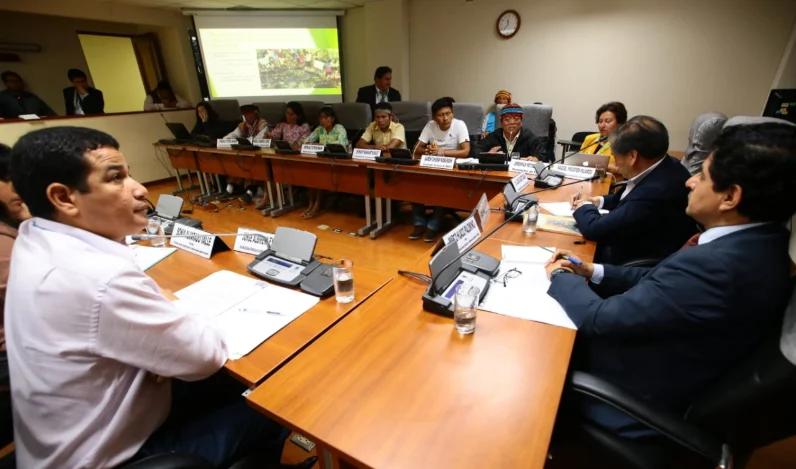
- December 2018: A pivotal working meeting is convened by the Congressional Commission of Andean, Amazonian and Afro-Peruvian Peoples, Environment and Ecology (CPAAAAE). Indigenous leaders present evidence of ongoing contamination, prompting the OEFA to finally pledge an official inspection.
The Human Toll: Evidence from the Ground
The environmental degradation is not merely a statistical issue; it is a public health emergency. During the December 2018 congressional session, Shiwiant Mashiant, president of the AIM basin organization (affiliated with FENAP), provided harrowing testimony regarding the reach of the pollution. He explained that the contamination has migrated from the primary spill sites to the water sources that supply both the local animal population and the community members themselves.
The Health Crisis in Chuintar and Uwinsta
Jeremías Petsein Peas, president of FENAP, expanded the scope of the crisis by highlighting the ongoing liabilities associated with the Norperuano Pipeline. He noted that communities such as Chuintar and Uwinsta are suffering from direct exposure to pollutants that have not been remediated by the state-run company, Petroperú.
The health symptoms described by community leaders are consistent with chronic heavy metal and hydrocarbon exposure:
- Dermatological conditions: Widespread reports of skin lesions and "spots."
- Gastrointestinal distress: Persistent stomach issues linked to contaminated water consumption.
- Neurological impacts: Recurring headaches and systemic weakness.
- Vulnerable populations: Indigenous leaders specifically highlighted that children and women are the most severely affected, facing the brunt of the toxic exposure.
Institutional Responses and Official Accountability
The response from the Peruvian government has been characterized by a slow, reactive approach that indigenous leaders claim is insufficient to address the scale of the damage.
The Role of OEFA
The OEFA’s pledge to conduct fiscalization in 2019 is a significant, albeit delayed, step. The agency is under immense pressure to prove that it can act independently of industry influence. Critics argue that "fiscalization" is often a bureaucratic hurdle that stops short of actual, meaningful remediation. The indigenous nations are demanding that these inspections lead to immediate restorative action and the cessation of operations that threaten their ancestral lands.
The Ministry of Health (MINSA)
Also present at the December 2018 meeting, representatives from the Ministry of Health promised to conduct a diagnostic study and provide medical assistance. While welcomed, this promise is met with skepticism by leaders like Wrays Pérez, the president of the Wampis Nation. Pérez pointedly remarked that while health diagnostics are necessary, the fundamental problem is the continued existence of the pollution source. He argued that the state’s failure to hold Petroperú accountable for the Norperuano Pipeline is a dereliction of duty that no amount of medical care can resolve.
Implications: The Fight for Autonomy and "Social License"
The core of the struggle for the Wampis and Achuar nations is the concept of "social license to operate." In the context of Lote 64, Geopark and its predecessors have operated without the formal consent of the indigenous peoples who hold ancestral title to these lands.
Legal and Territorial Challenges
Supported by the International Institute of Law and Society (IIDS) and the organization Peru EQUIDAD, the indigenous nations are building a robust legal case centered on two pillars:
- Right to Consultation: The lack of prior consultation violates the ILO Convention 169, which mandates that indigenous peoples must be consulted on projects that affect their territories.
- Lack of Social License: The communities have explicitly rejected the presence of oil companies on their lands, citing the irreversible damage to their culture, ecology, and health.
Wrays Pérez of the Wampis Nation emphasized the hypocrisy of the state: "Petroperú knows it must remediate the Norperuano Pipeline, yet nothing is done. There is no money allocated to fix the massive impact of these environmental liabilities."
Future Outlook: A Turning Point?
The upcoming 2019 inspections will serve as a litmus test for the relationship between the Peruvian state and its Amazonian nations. If the government continues to prioritize the extraction of hydrocarbons over the health and sovereignty of the Achuar and Wampis, the conflict is likely to escalate into further protests and international legal action.
The indigenous nations have made their stance clear: they are not interested in better regulation of an inherently destructive industry; they are interested in the annulment of the Lote 64 contract. For the Wampis and Achuar, the fight is not just about environmental cleanup—it is about the right to exist on their own terms, free from the toxic legacy of external corporate interests.
As the global community increasingly looks toward the Amazon as a critical climate regulator, the struggle of the Wampis and Achuar nations takes on a broader significance. Protecting the sovereignty of these indigenous nations is synonymous with protecting the integrity of the Amazonian ecosystem. Whether the Peruvian government chooses to side with the health of its people or the profits of the energy sector remains the central question of this ongoing crisis.
Key Demands Summary:
- Immediate Inspection: Thorough, independent assessment of all sites in Lote 64 and the Norperuano Pipeline.
- Comprehensive Remediation: Full financial and operational responsibility from Petroperú and the current holders of Lote 64.
- Health Intervention: Long-term, specialized medical monitoring and care for affected communities.
- Contract Annulment: The permanent cancellation of the Lote 64 concession due to the lack of prior consultation and social license.
This case serves as a stark reminder that the "green" promises of the global energy market often leave behind a blackened, poisoned reality for the most vulnerable populations on the frontlines of extraction. The world waits to see if the commitments made in the halls of the Peruvian Congress will manifest as justice in the rainforest.