Executive Summary: Bridging the Divide
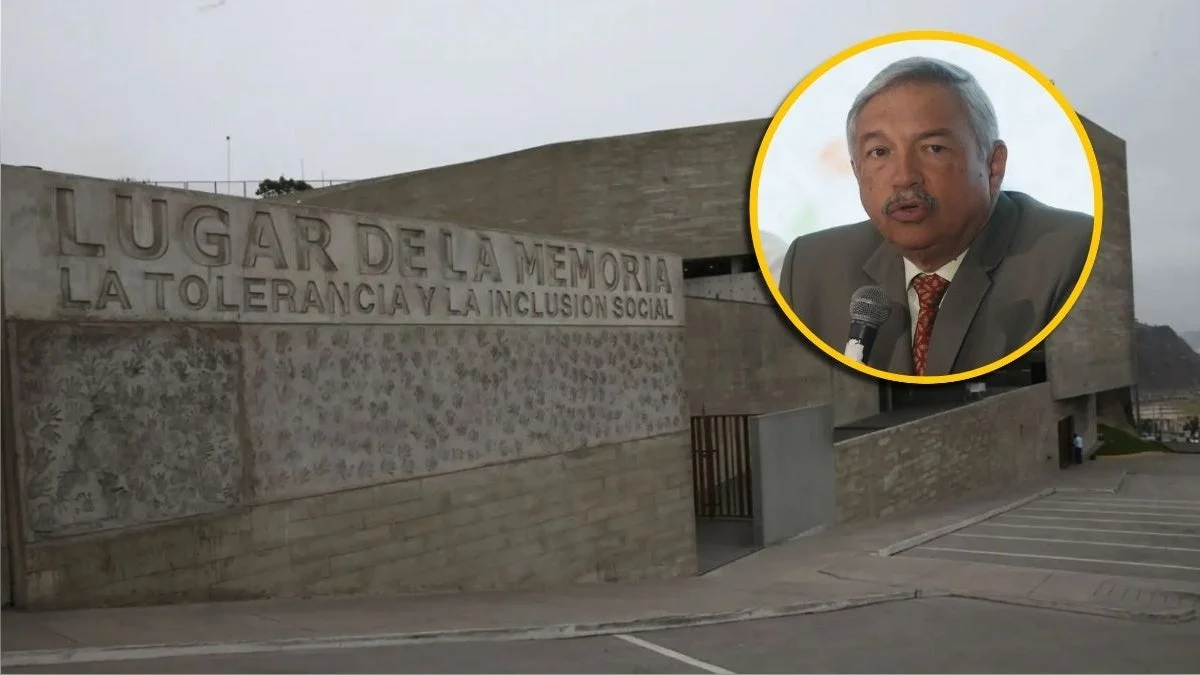
The Lugar de la Memoria, la Tolerancia y la Inclusión Social (LUM), one of Peru’s most significant cultural institutions, has recently become the center of a heated political debate. Following public comments by the Minister of Justice and Human Rights, Ernesto Álvarez, who suggested a complete, top-to-bottom reorganization of the LUM, Minister of Culture Alberto Beingolea has stepped forward to clarify the government’s position.
In a series of statements, Beingolea firmly rejected any notion of an internal rift within the executive branch, labeling Álvarez’s remarks as mere personal "opinion" rather than official policy. The Minister of Culture reiterated that the LUM remains under the administrative jurisdiction of his ministry, effectively quashing rumors of a potential transfer of the facility to the Ministry of Justice and Human Rights (Minjusdh). While Beingolea underscored that no closure is planned, he emphasized a pressing need for a critical review of the museum’s current operational philosophy, which he argues has failed to foster the national reconciliation it was originally intended to promote.
Chronology of the Controversy
To understand the current tension, one must look at the sequence of events that brought the LUM into the crosshairs of the current administration.
- Initial Proposal: Minister of Justice Ernesto Álvarez triggered public scrutiny by stating that the LUM must be developed "technically" and subjected to a comprehensive reorganization from "start to finish." This was interpreted by many stakeholders as a precursor to significant institutional changes or ideological shifts.
- Cabinet Discussions: Reports surfaced suggesting friction between the Ministry of Culture and the Ministry of Justice regarding the oversight of memory-related institutions.
- Official Clarification: Minister Alberto Beingolea addressed the matter in a recent interview with RPP, clarifying that the cabinet discussed the topic in a lighthearted manner, dismissing claims of a serious political confrontation.
- Administrative Reaffirmation: Beingolea moved to finalize the debate by explaining the structural hierarchy of Peruvian state museums, confirming that the LUM falls strictly under the Directorate of Museums and the Vice Ministry of Cultural Heritage, both of which are tethered to the Ministry of Culture.
Institutional Framework and Governance
The debate regarding the LUM’s administration is not merely semantic; it touches upon the fundamental structure of state-sponsored cultural management in Peru. Minister Beingolea emphasized that the governance of national museums is clearly defined by administrative law.
The Role of the Ministry of Culture
Beingolea’s argument centers on the legal and operational framework of the state. He noted that the LUM is, by definition, a "museum of the nation." Under current state organization, all national museums report to the Directorate of Museums. Beingolea, as the sitting Minister of Culture, maintains direct authority over these entities. By asserting his role as the sole regulator, he has effectively sidelined the possibility of the Ministry of Justice assuming control over the LUM’s curation, exhibition policies, or administrative operations.
The Ideological Pivot: "Opening the Sector"
Perhaps the most significant aspect of Beingolea’s response is his critique of the current narrative displayed within the LUM. While he has categorically denied any plans for closure, he has signaled a clear intent to "open the sector."
The "Capture" of Cultural Narrative
Beingolea contends that the cultural sector in Peru has, for too long, been "captured" by a specific ideological segment of the population. While he expressed respect for those whose ideas differ from his own, he stated that he does not share them. His stated goal is to pivot the LUM toward a more inclusive approach, one where "everyone feels represented" and where historical narratives are not filtered through a single, narrow prism.
The Objective of Reconciliation
The Minister posited a bold critique of the LUM’s current impact on society. He argued that while the institution was founded with the noble objective of fostering forgiveness and the reunification of the Peruvian people, it has, in practice, achieved the opposite. According to Beingolea, the LUM has become a "point of disagreement, disunity, and constant confrontation." He insists that the museum must be steered toward its original purpose: to serve as a space for genuine national dialogue rather than a platform for polarizing political agendas.
Supporting Data and Context: Why the LUM Matters
The LUM, inaugurated in 2015, stands as a memorial to the victims of the internal armed conflict that ravaged Peru between 1980 and 2000. It is a site of immense emotional and political weight, housing exhibits that detail the violence perpetrated by both the Shining Path and state forces.
The Significance of Memory
For many civil society organizations, the LUM is a sanctuary of truth. Any move to reorganize it is often viewed with suspicion, as it may imply a revisionist approach to the history of the conflict. The challenge for the current government is to navigate the delicate balance between "reorganizing" the administrative technicalities and avoiding the perception of "whitewashing" historical atrocities.
International Scrutiny
Given that the LUM has received international recognition and funding, any significant changes to its curatorial independence will likely draw attention from international human rights observers and academic institutions. The Ministry of Culture is aware that the "reorganization" must be handled with extreme care to avoid damaging Peru’s international reputation regarding its commitment to historical memory.
Official Responses and Implications
The reaction to Beingolea’s comments has been mixed, reflecting the deep polarization that currently characterizes Peruvian political discourse.
Reactions from the Executive
Beingolea’s insistence that there is no "inter-ministerial war" serves as a strategic attempt to project stability. By framing the Minister of Justice’s comments as an "opinion," he is attempting to maintain the integrity of the cabinet while acknowledging the concerns of his peers.
The View from Congress and Civil Society
Opposition lawmakers and human rights advocates have expressed concern that "reorganization" is a euphemism for political interference. Representative Ruth Luque, among others, has been vocal about the precarious nature of the current government’s approach to public policy, suggesting that the administration is struggling to find a coherent path forward in both security and cultural management.
The Path Forward
The implications of this episode suggest a transition period for the LUM. While the museum will remain under the Ministry of Culture, the administration has signaled that the status quo is unacceptable. The "technical" review proposed by the Justice Minister may be absorbed into a broader administrative audit under Beingolea’s supervision.
Analyzing the "Technical" Reorganization
The term "technical" has been used repeatedly by government officials, yet it remains ill-defined. In bureaucratic terms, a technical reorganization could include:
- Budgetary Audits: Reviewing how funds are allocated for exhibitions and educational programs.
- Governance Reform: Changing the oversight committee or the appointment process for the museum’s directors.
- Curatorial Review: Assessing whether the current exhibits align with a "balanced" view of history, a move that critics fear could lead to the censorship of narratives critical of the state’s role in the conflict.
Beingolea has promised that any changes will be made "with all calm and without a flag." This indicates a desire to depoliticize the process, though, in the current climate of Peruvian politics, "depoliticization" is itself a highly political act.
Conclusion: A Test of Democratic Resilience
The controversy surrounding the LUM is emblematic of the broader struggle in Peru to define its collective memory. As the nation grapples with the lingering trauma of the 1980s and 90s, the institutions tasked with preserving that history are under intense pressure.
Minister Alberto Beingolea’s stance is one of calculated moderation. By asserting authority over the museum while simultaneously promising a review of its ideological direction, he is attempting to satisfy his base while attempting to avoid a full-scale institutional crisis. Whether this approach will succeed in transforming the LUM into a space of "unity" or merely deepen the existing divisions remains to be seen.
As the Ministry of Culture begins its review, all eyes will be on how "technical" these changes actually are, and whether the essence of the LUM as a site of memory—for both the victims and the nation at large—can be preserved in an increasingly polarized political environment. The government’s challenge is to prove that "reorganization" does not mean "erasure," and that the goal of national reconciliation can be pursued without compromising the historical truths that the LUM was created to uphold.