As the countdown to Sunday, October 4, 2026, reaches its final hours, over 26 million Peruvian citizens are preparing to head to the polls. The upcoming Regional and Municipal Elections represent a pivotal moment for the nation, as voters will select the regional governors, provincial mayors, and district mayors who will shape the administrative and political future of their communities for the next term.
With the democratic process being the cornerstone of local governance, the National Office of Electoral Processes (ONPE) has ramped up its communication efforts to ensure that every eligible voter is prepared. From verifying polling locations to understanding the penalties for absenteeism, the following guide provides a comprehensive breakdown of everything you need to know to cast your vote effectively and responsibly this Sunday.
Main Facts: What You Need to Know for Election Day
The 2026 Regional and Municipal Elections are not merely a civic duty; they are an essential exercise in decentralizing power and ensuring local representation. The ONPE has emphasized that with such a massive electorate, efficiency and preparation are key to avoiding long lines and confusion.
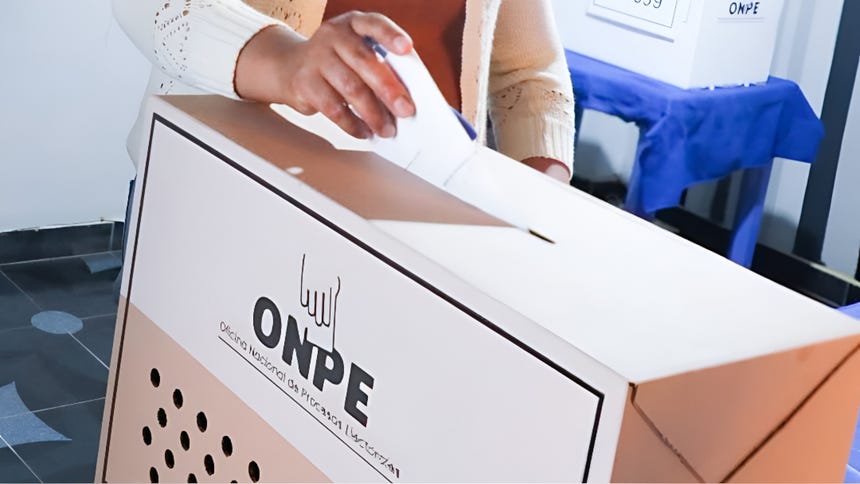
Key Details for Voters:
- Date: Sunday, October 4, 2026.
- Voting Hours: Polls open at 7:00 a.m. and close at 5:00 p.m.
- Identification: The National Identity Document (DNI) is mandatory. Ensure your DNI is valid or check if your expired DNI is accepted under current electoral emergency rulings.
- Verification: It is critical to confirm your polling place, even if you voted at the same location in previous years. Changes can occur due to infrastructure updates or unforeseen logistical adjustments.
Chronology of the Electoral Process
The road to the 2026 elections has been marked by careful planning by the JNE (National Jury of Elections) and the ONPE. Understanding the timeline helps voters grasp the gravity of the process.
- Preparation Phase (Months prior): Political parties registered candidates, and the JNE reviewed qualifications to ensure transparency and compliance with legal requirements.
- The "Dry Law" (Ley Seca) Implementation: Starting 48 hours before the election, specific restrictions on alcohol sales and public meetings come into effect to maintain order and public safety.
- October 4, 6:00 a.m.: Members of the voting tables (miembros de mesa) must report to their assigned stations for the installation of the polling booths.
- October 4, 7:00 a.m.: Official commencement of voting across the country.
- October 4, 5:00 p.m.: Closing of the polls. Any voter still in line at 5:00 p.m. will be allowed to vote, but no new arrivals will be permitted to enter the facility.
- November 29, 2026 (Provisional): The JNE has already established this date for a potential second round of regional elections, should no candidate achieve the required threshold in specific jurisdictions.
Supporting Data: How to Verify Your Polling Station
The ONPE has streamlined the verification process through a centralized digital portal. Given that polling locations can change due to "reasons beyond the agency’s control," voters are strongly advised to check the portal within 24 hours of the election.
Step-by-Step Verification:
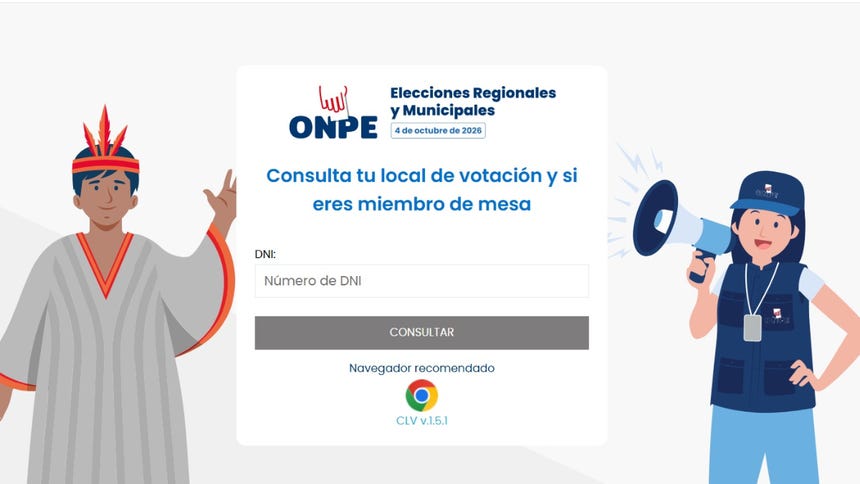
- Access the Portal: Navigate to the official ONPE consultation website at https://consultaelectoral.onpe.gob.pe/inicio.
- Input Credentials: You will be prompted to enter your DNI number.
- Review Information: The system will display the exact address of your polling place, your specific table number (número de mesa), and your order number (número de orden).
- Check for "Miembro de Mesa": The same portal will notify you if you have been selected to serve as a member of the voting table. This is a civic obligation, and failure to fulfill this duty carries significant financial penalties.
Pro-tip: Take a screenshot or write down your table and order number. This significantly reduces the time spent searching for your name on the lists posted outside the classroom doors at the polling station.
Official Responses and Administrative Guidance
The ONPE has issued several reminders to ensure the day proceeds without incident.
The Role of Members of Table
Being a member of a polling table is a high-responsibility role. These citizens are responsible for the installation of the table, the verification of identities, and the subsequent count of ballots. The ONPE stresses that members must be present at 6:00 a.m. sharp. Those who fail to show up face a fine of S/ 275, which is equivalent to 5% of a Tax Unit (UIT).
Potential Last-Minute Changes
The agency warns that although rare, circumstances such as natural events, structural issues in schools, or logistical failures may force a change of polling station. If you arrive at your designated spot and find it closed or relocated, the ONPE has help desks at all major voting centers to guide citizens to their correct location. Always check the official website one final time on Sunday morning before leaving your home.
Implications: Penalties, Fines, and Civic Responsibility
Democracy in Peru is sustained by the participation of its citizens. To ensure high turnout, the law mandates voting, and the failure to do so results in administrative fines.
Understanding the Fine Structure
Fines are not uniform across the country; they are categorized based on the poverty level of the district where the voter resides, as classified by the National Institute of Statistics and Informatics (INEI).
- Non-Poverty Districts: Fines are higher for residents of districts categorized as having low poverty levels.
- Moderate Poverty Districts: A mid-tier fine applies.
- Extreme Poverty Districts: Fines are minimized to ensure they do not become an excessive burden on vulnerable populations.
Consequences of Non-Compliance
Beyond the monetary fine, failing to vote can result in difficulties when conducting administrative procedures with the state. This includes issues with banking, renewing official documents, or participating in public contracts.
Furthermore, if a citizen is chosen as a member of the table and chooses not to serve, and additionally fails to vote, they will be subject to two separate fines: one for abandoning their post as a member of the table and another for failing to cast their vote.
Preparing for a Smooth Voting Day
As the election approaches, the tone from government officials is one of unity and civic duty. While the administrative aspects of the election—the fines, the online portals, and the scheduling—are necessary, the ultimate goal is the health of the local democratic system.
Final Checklist for Voters:
- Documentation: Carry your DNI. Do not forget it at home.
- Dress Code: While there is no official dress code, keep in mind that you may be standing in line for a significant period.
- Health and Safety: Follow all local health guidelines provided at the entrance of the polling station.
- Information: Know your candidates. Research their proposals on the official JNE website to ensure your vote is informed.
- Timing: Try to vote during off-peak hours (usually mid-morning or mid-afternoon) to avoid the early morning and late afternoon rush.
By following these guidelines, you not only fulfill your legal obligation but also contribute to the stability and progress of your region. The 2026 Regional and Municipal Elections are an opportunity to hold leaders accountable and participate in the direct governance of your district. Remember: your vote is your voice, and your participation defines the future of Peru.