The Peruvian government, under the administration of President Keiko Fujimori, has recently unveiled an ambitious economic intervention aimed at mitigating the impact of soaring fuel prices. The proposed policy centers on a targeted subsidy, ranging from 15% to 20%, on the purchase of diesel for public transportation, river transit, and mototaxi operators. While the administration frames this as a necessary buffer against international market volatility, the proposal has ignited a fierce debate regarding its long-term fiscal sustainability and administrative feasibility.
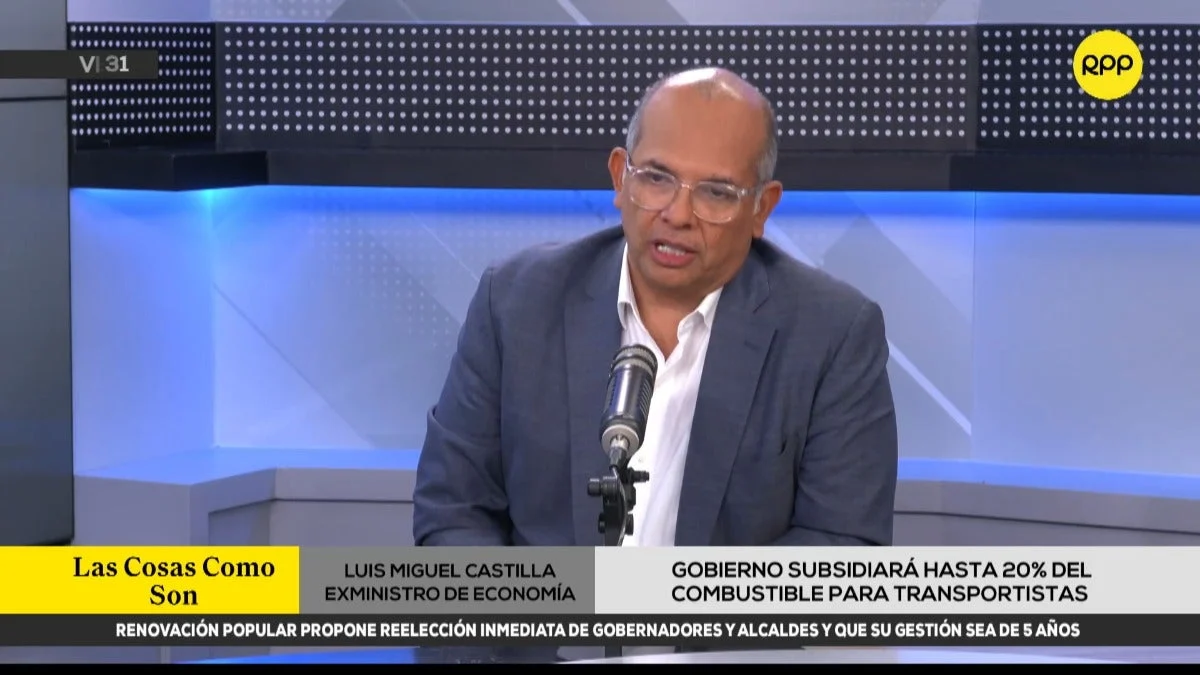
Luis Miguel Castilla, former Minister of Economy and Finance, has emerged as a prominent voice of caution, questioning the technical capacity of the state to implement such a measure without succumbing to the "permanent subsidy trap."
Main Facts: The Scope of the Subsidy
The government’s plan, intended to span an initial period of three months, seeks to provide financial relief to transport sectors that are currently bearing the brunt of rising diesel costs. These costs have been exacerbated by geopolitical tensions in the Middle East, which have disrupted global oil supply chains and pushed fuel prices to historic highs.
The subsidy is specifically targeted at:
- Public Urban Transportation: Operators providing essential bus and transit services in major metropolitan areas.
- River Transportation: Essential for connectivity in the Amazonian regions, where fuel is a primary operational cost.
- Mototaxis: A vital segment of the informal and semi-formal transport network that serves millions of citizens daily.
The fiscal cost of this intervention is estimated at approximately 120 million soles for the full three-month period. Government officials argue that this injection of funds is essential to prevent the collapse of transit services and to curb the wave of social protests currently unfolding in regions such as Ucayali, Loreto, Arequipa, and Tacna.
Chronology of the Crisis and Policy Response
The path to this policy announcement has been marked by mounting social unrest and economic pressure.
- Early Phase: As global oil prices began their steady climb, transport unions across various Peruvian regions initiated localized strikes, citing the inability to maintain current ticket prices while diesel costs consumed their profit margins.
- Escalation: The crisis deepened as protests spread from the provinces to the outskirts of major cities. Disruptions in transportation networks began to threaten the supply chain of basic goods, leading to inflationary pressures on food and essential commodities.
- The Government Announcement: Facing a potential national standstill, the Fujimori administration proposed the focalized subsidy as a "temporary" measure to stabilize the market.
- Expert Intervention: Following the announcement, former Minister Luis Miguel Castilla appeared on RPP TV’s Las cosas como son, challenging the technical design of the initiative and warning of potential long-term macroeconomic consequences.
Supporting Data and Fiscal Implications
The economic math behind the subsidy is a point of significant concern for fiscal analysts. While 120 million soles might appear manageable in the context of the national budget, economists argue that the opportunity cost of these funds is high.
The Fiscal Burden
According to Castilla, the cost is front-loaded, with approximately 75 million soles allocated for the first two months, scaling to 120 million by the end of the third. However, the risk lies in the "variable" nature of the subsidy. If international oil prices continue to rise, the government may find itself forced to increase the subsidy amount to maintain the promised 15–20% discount.
As Castilla noted, "When you provide this type of subsidy to mitigate international market volatility, the sky is the limit." If the price differential widens, the government will either have to absorb the additional costs—straining the treasury—or renege on its promise, which could trigger renewed social unrest.
Official Responses and Administrative Hurdles
The Ministry of Transportation and Communications (MTC) faces a daunting challenge: the creation of a reliable beneficiary registry.
The Problem of Informal Actors
The Peruvian transport sector is notoriously fragmented. A significant portion of the "mototaxi" and river-transit fleets operate in the informal sector, meaning they are not registered in standard tax or transit databases.
Castilla emphasized that the success of any focalized subsidy is entirely dependent on the quality of the beneficiary list. "I don’t know if we even have an accurate registry of mototaxis or peque-peques (small river boats) in the country," the former minister remarked. Without a robust, audited database, the risk of "leakage"—where the subsidy is claimed by ineligible parties or diverted through corrupt intermediaries—becomes extremely high.
Implications: The "Permanent Subsidy" Trap
One of the most profound concerns voiced by economic experts is the psychological and political difficulty of removing a subsidy once it has been established.
The Political Economy of Retraction
"It is very easy to give subsidies, but it is very difficult to withdraw them," Castilla warned. Historically, in Peru and globally, temporary subsidies often become entrenched. When the three-month period expires, the government will likely face intense political pressure from transport unions to extend the support. If the administration yields, what was meant to be a short-term fiscal adjustment could become a permanent, recurring drain on public finances.
Social Stability vs. Economic Discipline
The government is caught in a classic dilemma:
- Short-term stability: Providing the subsidy pacifies the transport unions, prevents immediate fare hikes, and restores order in protesting regions.
- Long-term fiscal health: Withdrawing from the market allows prices to reach their true equilibrium, encouraging efficiency and preventing the state from becoming a guarantor for private sector volatility.
By choosing the former, the government buys itself time, but it also creates an expectation of state intervention that may prove unsustainable if the geopolitical climate in the Middle East does not improve.
Critical Analysis: Is There a Better Way?
While the current government insists that this measure is essential, economists suggest that alternative strategies should have been prioritized. These include:
- Direct Income Transfers: Instead of subsidizing fuel, which benefits both the operator and the consumer unevenly, the government could have utilized existing social programs to provide direct cash transfers to the most vulnerable transport workers.
- Infrastructure Investment: Long-term reduction in fuel consumption can only be achieved through the modernization of the transport fleet. Promoting the transition to electric or natural gas-powered vehicles would provide a structural solution to fuel price volatility.
- Formalization Incentives: Rather than subsidizing the current informal state, the government could have tied the subsidy to strict formalization requirements, thereby using the crisis as a lever to bring informal operators into the tax system.
Conclusion
The government’s proposal to subsidize diesel is a high-stakes gamble. It reflects the immediate pressure of an administration attempting to maintain social peace in a volatile global economic environment. However, the lack of a clear, verifiable registry and the historical tendency for such "temporary" measures to become permanent suggest that the policy could have significant negative repercussions for Peru’s fiscal health.
As Luis Miguel Castilla correctly pointed out, the government must move beyond the "easy" path of providing subsidies and address the structural weaknesses of the transportation sector. Without a clear exit strategy and a rigorous system to ensure that the aid reaches the intended beneficiaries, the policy risks becoming a recurring fiscal burden that neither the transport sector nor the national economy can afford in the long run. The coming months will be decisive: either the government manages to phase out the aid while the market corrects itself, or it will be forced to confront the harsh reality of fiscal deficit management as the temporary subsidy turns into a permanent fixture.