Executive Summary: The Dawn of a Unified Andean Capital Market
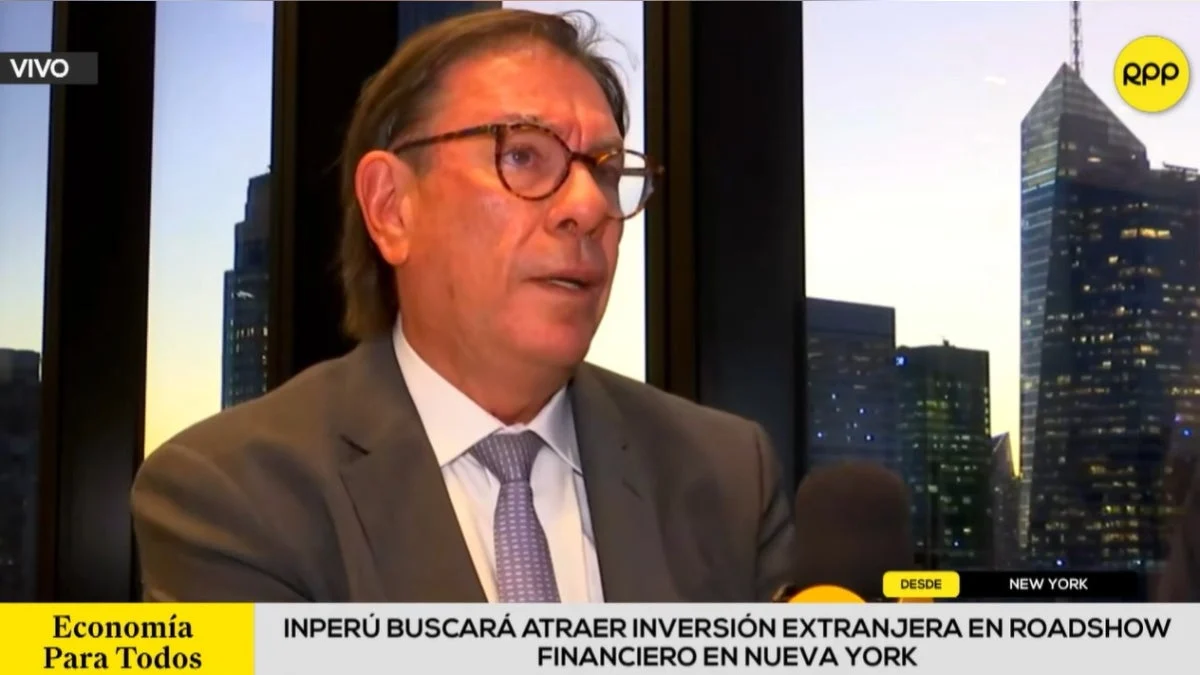
In a landmark move for Latin American finance, the regional market powerhouse known as nuam exchange—a strategic alliance between the stock exchanges of Peru, Chile, and Colombia—is accelerating its roadmap toward full operational interoperability. Rafael Carranza, President of the Lima Stock Exchange (BVL), recently announced from New York that the regulatory infrastructure required to bridge these three markets is nearing completion.
By 2027, the fragmented nature of Andean capital markets will effectively vanish for the average investor. Through this integration, investors will gain seamless access to a broader array of financial instruments across the three nations without the friction of direct foreign market accounts. This shift represents a pivotal moment in the region’s financial history, aiming to boost liquidity, democratize investment access, and attract significant international capital flows to the Andean region.
The Chronology of a Regional Vision
The path toward a unified stock exchange has been a multi-year project involving complex legal harmonization and technological integration.
- 2021-2022: Foundations of the Alliance: The leadership of the Lima, Santiago, and Colombia stock exchanges initiated discussions to form a regional entity. The vision was clear: create a robust, unified market capable of competing on the global stage.
- 2023: Branding and Structural Consolidation: The launch of the "nuam" brand marked the formalization of the holding company. This phase focused on standardizing operational protocols and governance models.
- 2024: Regulatory Milestones: Throughout the current year, regulatory bodies in the three countries have been working to harmonize securities laws. The recent finalization of the "Clearing House" (Cámara de Compensación) regulations is the most significant hurdle cleared to date.
- 2025-2026: Testing and Implementation: These years are designated for rigorous technical testing of the interoperability systems, ensuring that Society Agent of Brokerage (SAB) platforms can communicate across borders in real-time.
- 2027: The Go-Live Date: The target for full market interoperability. Investors will see the integration of platforms, allowing for the simultaneous trading of assets listed in Lima, Santiago, and Bogota.
The Mechanism: How Interoperability Transforms Investing
The fundamental innovation of this project lies in the "interoperability" of the three exchanges. Currently, a Peruvian investor wishing to purchase a stock listed exclusively on the Santiago Stock Exchange faces significant bureaucratic and operational barriers.
Breaking Down the Barriers
Under the current system, local brokerage firms (Sociedades Agentes de Bolsa – SAB) are generally limited to the instruments listed on their home exchange. With the integration, these brokers will act as gateways to the entire tri-national network.
- Seamless Access: Investors will use their existing brokerage accounts to place orders for assets in Chile or Colombia.
- Simultaneous Trading: Brokers will be able to offer a diversified portfolio of regional stocks, bonds, and other financial instruments as if they were listed on a single, consolidated exchange.
- Unified Clearing: The new Clearing House regulation acts as the "plumbing" of this system, ensuring that the settlement of trades—the actual exchange of cash for securities—is secure and instantaneous across jurisdictions.
"Instead of a brokerage firm only being able to offer values listed on the Lima Stock Exchange, they will be able to offer values from the Colombian and Santiago markets in parallel," explained Rafael Carranza. This simplification is expected to attract retail investors who were previously deterred by the complexity of international trading.
Implications for Market Participants
The integration is not merely a convenience for investors; it is a structural evolution for the entire regional economy.
Benefits for Issuers (Corporations)
For companies looking to raise capital, the market size effectively triples. By accessing a larger pool of potential investors, firms can achieve better price discovery and potentially lower their cost of capital. This is particularly vital for companies in the Andean region that are seeking to scale operations but find local markets too thin or illiquid.
A Beacon for International Capital
Global institutional investors have historically viewed the Andean region as a collection of smaller, fragmented markets. By presenting a unified front, nuam exchange becomes a significantly more attractive proposition for large-scale pension funds and investment banks based in New York, London, and Tokyo.
Carranza noted that several Peruvian companies already successfully list on the New York Stock Exchange (NYSE), demonstrating the appetite for Peruvian assets abroad. The regional integration acts as a stepping stone, providing a deeper "home market" that prepares local companies for eventual global listings.
Supporting Data: Why the Region is Ripe for Investment
The announcement of this integration coincides with a renewed focus on Peru’s investment climate. During the recent InPerú promotion tour in New York, industry leaders highlighted a growing sentiment of stability and optimism among international financiers.
The View from the Field
Luis Vargas, Managing Director at the global law firm DLA Piper, provided a bullish outlook on the Peruvian market. He noted that despite global volatility, there is a distinct shift in how foreign investors perceive the Andean region:
- Macroeconomic Predictability: Investors are increasingly valuing the potential for long-term stability in the coming years.
- Sector-Specific Opportunities: Infrastructure and energy have emerged as the primary sectors of interest. These sectors require long-term capital, which the integrated stock exchange will be better positioned to provide.
- Legal and Compliance Interest: As investment activity increases, there is a concomitant rise in demand for sophisticated legal services regarding litigation and regulatory compliance, signaling an increase in complex deal-making.
"Peru has become ‘fashionable’ again," remarked Vargas, noting the increasing volume of inquiries regarding market entry and local expansion.
Official Responses and Strategic Outlook
The consensus among regulators and financial leaders is that the integration is no longer a "future project" but an active, ongoing implementation.
Addressing Regulatory Challenges
The integration has required years of meticulous coordination between three different national securities commissions. The primary challenge was aligning the "Clearing House" operations, as these entities are responsible for the most sensitive part of the trade: the guarantee of delivery. With the regulations now ready for approval, the risk of technical failure or legal discrepancy has been significantly mitigated.
Strategic Vision: Beyond 2027
The ultimate goal of nuam is to create a regional financial hub that can compete with the likes of B3 (Brazil) or the Mexican Stock Exchange. By consolidating the liquidity of three stable economies, the region is positioning itself to be a primary destination for emerging market funds.
The integration serves as a dual-purpose tool:
- Domestic Growth: Providing local citizens with better, more diversified investment vehicles to protect their savings and generate wealth.
- Global Integration: Anchoring the Andean region into the global financial system through a robust, transparent, and highly liquid marketplace.
Conclusion: A New Era for Andean Finance
As the 2027 deadline approaches, the financial sector in Peru, Chile, and Colombia is preparing for a paradigm shift. The integration of the three exchanges represents a commitment to modernization and regional cooperation that has been long sought by market participants.
For the investor, the promise is simple: a wider world of opportunity, accessible through the familiar interface of their local broker. For the region, it is an essential step toward economic maturity, promising to unlock value that has been hidden by fragmented borders and regulatory silos. As Rafael Carranza and his counterparts continue to lay the groundwork, the message to the international community is clear: the Andean capital markets are open, unified, and ready for growth.