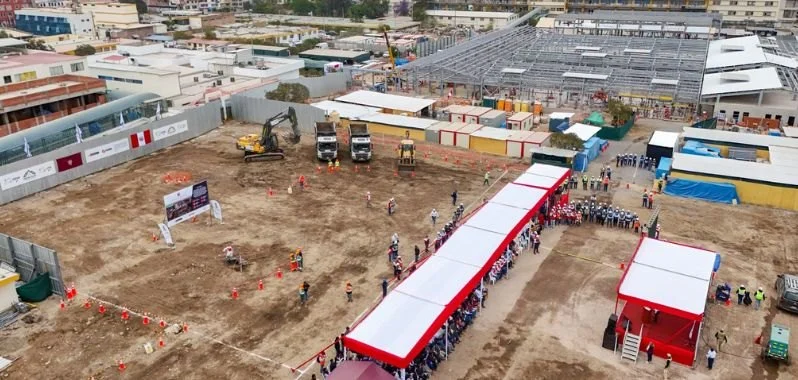
The construction of the Hospital de Apoyo Pomabamba II-1 "Antonio Caldas Domínguez" has become a stark symbol of administrative inefficiency and infrastructure mismanagement in Peru. What began in 2021 as a vital initiative to provide modern healthcare to over 49,000 residents in the Ancash region has devolved into a multi-million-sol debacle. With construction lagging significantly behind schedule and costs ballooning to nearly four times the original budget, the project is now under the intense scrutiny of the Comptroller General of the Republic (CGR).
The Core Facts: A Project in Peril
The project, currently under the jurisdiction of the National Infrastructure Authority (ANIN), has failed to meet critical milestones, despite five years of development. As of June 2026, the physical progress of the hospital stands at a meager 58%. The original timeline, which projected a fully operational facility by December 2025, has been discarded, leaving the local population in a state of uncertainty regarding their access to essential medical services.
The financial trajectory of the project is equally alarming. Initiated with a budget of S/ 140.5 million, the total investment required for the completion of the facility—including infrastructure, medical equipment, and technical supervision—has surged to a staggering S/ 599.9 million as of June 2024. This massive discrepancy between the initial estimation and the current expenditure highlights significant failures in project planning, scope definition, and budgetary oversight.
Chronology of a Stalled Development
To understand the gravity of the current situation, one must look at the timeline of the Pomabamba Hospital project:
- 2021: The project officially commences, framed as a pillar of regional health development with an initial budget of S/ 140.5 million.
- 2022–2023: During these years, the project undergoes various modifications, with scope expansions and logistical challenges contributing to the steady climb in costs.
- 2024: By June, the investment ceiling is officially adjusted to S/ 599.9 million, a 327% increase from the starting figure.
- January 2026: The scheduled deadline for the installation of medical equipment and the formal handover of the facility to the end-user passes without fulfillment.
- June 2–22, 2026: The Comptroller General conducts a Concurrent Control Audit (Report No. 10434-2026-CG/MPROY-SCC), which formally documents the systemic failures and the lack of progress on critical infrastructure.
The Comptroller’s Findings: Structural and Operational Failures
The most recent report from the CGR serves as a damning indictment of the current management of the project. During a field inspection conducted on June 10 and 11, 2026, inspectors identified severe anomalies that jeopardize both the timeline and the structural integrity of the facility.
Structural Negligence
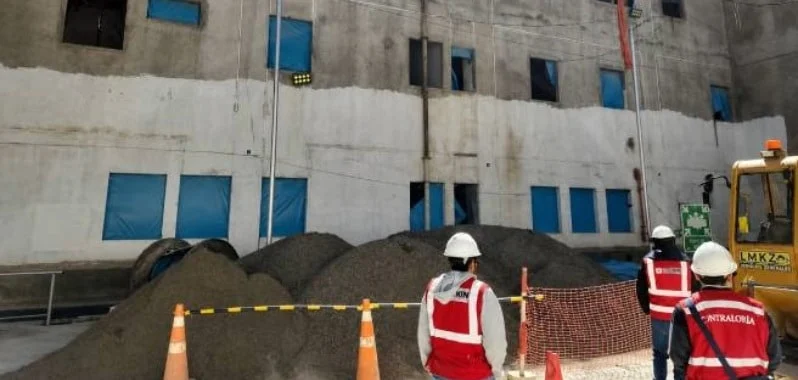
Perhaps the most concerning observation relates to the structural reinforcement works. The audit revealed that between January and April 2026, there was zero progress on several key blocks of the main hospital building. Similarly, construction on the retaining wall—a vital component for the site’s stability—remained inactive for months.

Compounding these delays are concerns regarding material preservation. Inspectors found high-value equipment, including components for hospital elevators, stored in deteriorating conditions. Furthermore, steel reinforcement bars were found exposed to the elements, leading to premature oxidation, while cement bags were stored outdoors without proper protection from moisture. Such negligence suggests a lack of professional oversight on the construction site, which could lead to future maintenance costs or, worse, structural defects that compromise patient safety.
The Contingency Hospital Crisis
Because the main facility remains unfinished, the project relies on a "contingency hospital" to serve the population. However, the audit revealed that this temporary facility is itself failing. The inspection found:
- Structural degradation: Significant sinking and detachment of floor tiles in various patient-care areas.
- Sanitary failures: Facilities intended for the management of bio-contaminated waste lack basic water, sewage, and drainage connections, posing a severe public health risk.
- Human Capital Deficit: The project is suffering from a lack of key personnel, a recurring issue that has stalled technical decision-making and project execution.
Economic and Social Implications
The implications of this delay extend far beyond the construction site. For the 49,000 residents of the Pomabamba province, the lack of a functioning hospital means traveling long distances to access specialized medical care. In a region like Ancash, where geographic and weather-related factors can complicate transport, the absence of a II-1 level hospital is a matter of life and death.
Economically, the quadrupling of the budget places an undue burden on the national treasury. Every sol spent on cost overruns is a sol diverted from other essential infrastructure projects in the country. The "sunk cost" fallacy often applied to such projects—where governments continue to pour money into a failing venture simply because they have already invested so much—appears to be playing out in Pomabamba.
Official Responses and Future Outlook
The Comptroller General has officially notified the ANIN of these findings, demanding immediate corrective and preventive measures. The onus is now on the ANIN to present a remedial plan that addresses the lack of personnel, the preservation of materials, and the urgent structural reinforcement required to get the project back on track.
However, historical patterns in public works in Peru suggest that "corrective measures" are often slow to materialize. The transition from the original vision to the current state of decay indicates a failure of the initial feasibility studies and subsequent supervision.

As the project moves into the second half of 2026, stakeholders—including local authorities, civil society, and the Ministry of Health—are calling for greater transparency. The public expects not just an explanation for why the budget ballooned by nearly S/ 460 million, but a hard, realistic deadline for when the Antonio Caldas Domínguez Hospital will finally open its doors.
Conclusion: A Lesson in Governance
The Pomabamba Hospital case is more than a story of construction delays; it is a case study in the fragility of public infrastructure management. When a project meant to save lives becomes trapped in a cycle of administrative inertia and budgetary inflation, it is the most vulnerable citizens who pay the price.
For the ANIN, the coming months are critical. They must demonstrate that they can manage the complexities of this project, rectify the technical errors identified by the Comptroller, and restore the trust of the Ancash community. Until then, the unfinished structure remains a hollow monument to a vision that, despite the massive investment, remains tragically out of reach for those who need it most.
The path forward requires not just more funding, but a fundamental overhaul in how these projects are supervised. Without accountability, the Pomabamba Hospital risks becoming a permanent fixture on the list of "white elephants" that plague Peru’s public investment landscape. The residents of Pomabamba continue to wait, hoping that the next audit brings not just a list of failures, but a plan for completion.