The Arequipa Regional Government has officially commenced the construction of the new Regional Institute of Neoplastic Diseases of the South (IREN Sur), a monumental healthcare infrastructure project poised to revolutionize cancer treatment for over 9.7 million citizens across Southern Peru.
In a move described by local authorities as a "historic milestone" for public health, the project represents a significant leap forward in the decentralization of specialized medical care. By injecting over S/ 1,188 million into the construction and equipping of this state-of-the-art facility, the government aims to address the long-standing diagnostic and treatment gap that has historically forced patients to travel to the capital, Lima, for advanced oncological interventions.
Main Facts: A Hub of Modern Medicine
The scope of the IREN Sur project is vast, encompassing a comprehensive approach to cancer care that ranges from early diagnosis to complex surgical interventions and palliative support. The facility is designed not merely as a hospital, but as a specialized regional hub for the macrorregion.
The core infrastructure features a robust capacity designed to handle the growing demand for oncological services in Southern Peru:
- Hospitalization and Critical Care: The complex will house 228 specialized hospitalization beds, 23 Intensive Care Unit (ICU) beds, and 20 Neonatal Intensive Care Unit (NICU) beds, ensuring that patients with complex comorbidities or those recovering from major surgeries receive round-the-clock specialized monitoring.
- Surgical and Diagnostic Capacity: With 10 high-tech operating rooms, the institute is equipped to handle a high volume of surgical procedures. Furthermore, the inclusion of 16 integrated laboratories will allow for rapid diagnostic turnaround times, which are critical for effective cancer staging and treatment planning.
- Ambulatory and Specialized Care: The facility includes 57 specialized consulting rooms. A standout feature of the project is the dedicated chemotherapy wing, which will feature 62 specialized chairs, significantly reducing waiting times for outpatient infusions.
Chronology of the Project
The journey to the commencement of IREN Sur has been characterized by years of planning, lobbying, and administrative hurdles.

- Project Conception (Pre-2024): Recognizing the rising incidence of oncological diseases in the southern provinces, health officials identified the need for a modern facility that could operate independently of general hospitals.
- Feasibility and Funding Approval (2024–2025): The regional government, led by Governor Rohel Sánchez Sánchez, prioritized the project in the multi-annual investment plan. The budget of S/ 1,188 million was secured through a mix of regional and central government coordination, reflecting the project’s strategic importance.
- Procurement and Planning (Early 2026): After rigorous public bidding processes to ensure transparency and technical competence, the contracts for the main infrastructure and the contingency facility were awarded.
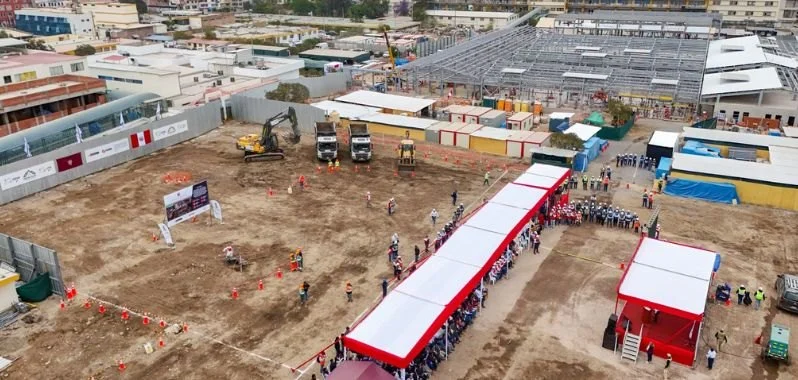
- Groundbreaking (August 2026): With the formal commencement of site preparation and foundation work, the project officially entered the construction phase.
- Future Milestones: The coming months will focus on the vertical construction of the main blocks, followed by the procurement of advanced imaging equipment (such as linear accelerators and PET-CT scanners) and the training of specialized medical personnel.
Supporting Data: The Need for IREN Sur
The necessity for this facility is underscored by demographic and health data. The macrorregion of Southern Peru—including Arequipa, Cusco, Puno, Moquegua, and Tacna—has seen a steady increase in cancer incidence.
Current health statistics indicate that early detection remains the greatest challenge in the region. By providing a centralized location for specialized oncology, IREN Sur aims to increase the early-stage detection rate by at least 30% within its first five years of operation. The design of the hospital, with its 62 chemotherapy chairs and 10 operating theaters, is calculated to manage the current backlog of patients while accounting for projected population growth in the Arequipa metropolitan area.
The economic impact is equally significant. Beyond the construction jobs created during the building phase, the institute will serve as a major employer for oncologists, radiologists, specialized nurses, and medical technicians, effectively creating a "health cluster" in Arequipa that will attract medical tourism and retain talent that would otherwise migrate to Lima or abroad.
Official Responses and Strategic Vision
Governor Rohel Sánchez Sánchez has been the primary advocate for this infrastructure, framing it as a social imperative. "This is not just a building; it is a promise of life," the Governor stated during the groundbreaking ceremony. "For too many years, our people have had to leave their families and their homes to fight the toughest battle of their lives in the capital. With IREN Sur, we are bringing that battle home, armed with the best technology and the best specialists in the country."
The regional health authorities have emphasized that the construction process will not disrupt existing services. This is where the Hospital of Contingency comes into play. With an investment of S/ 66.4 million, this facility has been established to ensure that patients currently undergoing treatment continue their protocols without interruption. This parallel infrastructure is a critical component of the project’s management, ensuring that the transition to the new, larger facility is seamless.

Implications for the Southern Macrorregion
The completion of IREN Sur will have profound implications for the Peruvian healthcare landscape:
1. Decentralization of Healthcare
The project is a flagship example of the government’s push for decentralization. By moving specialized tertiary care out of Lima, the state is reducing the "geographical lottery" that currently dictates the quality of cancer care in Peru.
2. Improving Survival Rates
Survival rates in oncology are directly linked to the time between diagnosis and treatment. By placing state-of-the-art diagnostic and treatment technology within the reach of millions in the south, the institute is expected to significantly improve prognosis for thousands of patients.
3. Training and Research
IREN Sur is designed to be more than a treatment center; it is intended to be a hub for oncological research and academic training. By partnering with local universities, the institute will help cultivate a new generation of oncologists and researchers in Southern Peru, creating a sustainable ecosystem of medical expertise.
4. Economic Development
Large-scale infrastructure projects like IREN Sur stimulate the local economy. From the supply chain of construction materials to the service industry that will grow around the hospital to support staff and patient families, the investment will yield dividends well beyond the healthcare sector.

Looking Forward: A Commitment to Sustainability
As construction moves forward, the focus will shift toward the operational sustainability of the facility. The Regional Government has expressed its commitment to securing a stable budget for the maintenance of high-tech equipment and the recruitment of specialized staff.
The successful implementation of IREN Sur will serve as a benchmark for future regional healthcare projects. If the transition from the contingency hospital to the new, permanent facility is managed with the same rigor applied to the planning stages, Arequipa will cement its position as the premier medical destination in the Peruvian south.
For the millions of residents across the region, the rising structure of IREN Sur is a tangible symbol of progress—a promise that when they face the greatest challenges to their health, the system will be ready to support them with the highest standard of care, right in their own backyard.