The dream of democratizing natural gas access in Peru, a nation paradoxically defined by its vast hydrocarbon wealth and localized energy poverty, is nearing a critical juncture. The "Siete Regiones" (Seven Regions) project, a massive infrastructure initiative designed to bridge the chasm between the gas-rich south and the rest of the country, is currently moving through the final stages of regulatory approval. As the government eyes a September deadline to submit the project’s technical dossier to the Ministry of Economy and Finance (MEF), the specter of historical neglect finally seems to be fading in favor of a pragmatic, albeit complex, engineering solution.
The Core Facts: A Shift Toward Pragmatic Infrastructure
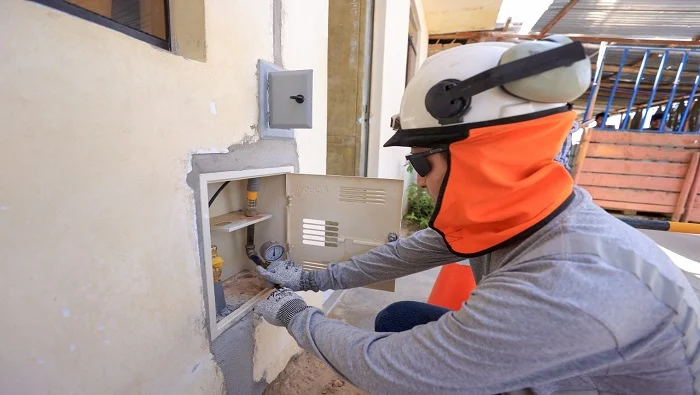
The Siete Regiones project represents a private investment exceeding S/ 1,600 million (approximately US$ 550 million). Its technical scope is extensive: the construction of 3,700 kilometers of distribution networks, the establishment of four primary distribution substations, and the deployment of 12 regasification plants. This initiative aims to benefit an initial cohort of 300,000 households—translating into between 1.2 and 1.5 million citizens—across 15 cities in seven departments.
At its heart, the project is a response to a glaring statistical inequality. Currently, Lima and Callao command 2.1 million natural gas connections, representing 80% of the national total. In stark contrast, Cusco, the very heartland of the Camisea gas fields, has remained largely disconnected, save for a meager handful of pilot-project households. The Siete Regiones project aims to reverse this, signaling a transition from the failed grandiosity of previous decades to a more modular, "virtual" distribution strategy.
A Chronology of Stalled Ambitions and New Directions
The history of natural gas in Peru is marked by the shadow of the Gasoducto Sur Peruano (Southern Gas Pipeline). Conceived over a decade ago with the ambitious goal of transporting gas directly from the Amazonian jungles of Camisea to the industrial and residential centers of the south, the project became a cautionary tale of institutional failure. Plagued by allegations of corruption, escalating costs, and contractual disputes, the pipeline project was abandoned with only 35% of its physical infrastructure completed.
For years, the rusting steel pipes that dot the southern landscape served as a monument to political paralysis. The current administration has opted for a "clean slate" approach, pivoting toward the "virtual gas pipeline" model. This strategy eschews the need for massive, high-pressure, long-distance pipelines in favor of a logistics-heavy model: Liquefied Natural Gas (LNG) is transported via cryogenic tankers to local regasification plants, where it is converted back into gas and fed into urban distribution networks. While this model is less efficient than a direct pipeline for massive volumes, it is significantly more flexible and faster to deploy in geographically challenging terrain.
Supporting Data: Mapping the Reach of the Project
The 15 cities selected for this initial phase are strategically positioned to create a regional energy hub. The breakdown of the project’s footprint is as follows:
- Ayacucho: Huamanga and Huanta. These areas are slated to connect to a "City Gate" directly linked to the existing Camisea pipeline, providing a more direct supply route.
- Ucayali: Pucallpa, Aguaytía, and Curimaná. Here, the project will utilize local gas from the 31-C block, bolstered by a satellite regasification plant in Pucallpa.
- Junín: Huancayo and Jauja.
- Puno: Puno and Juliaca.
- Cusco: Cusco, Quillabamba, and Calca.
- Apurímac: Abancay and Andahuaylas.
- Huancavelica: The city of Huancavelica.
In the regions outside of the primary pipeline connection in Ayacucho and the local gas field in Ucayali, the project will rely on the "virtual" model—a fleet of specialized trucks ensuring that even the most remote, high-altitude cities can benefit from the nation’s energy reserves.
Official Responses and Regulatory Hurdles
The project’s progress is currently overseen by the Vice Minister of Hydrocarbons, Iris Cárdenas, who has been the primary face of the administration’s push to revitalize the initiative. In recent statements, Cárdenas confirmed that the ministry is working in tandem with the energy regulator, Osinergmin, to resolve outstanding administrative bottlenecks.
"We expect to conclude the evaluation in September and send the document to the Ministry of Economy and Finance for their endorsement," Cárdenas stated. The primary obstacles identified by Osinergmin involve complex accounting matters, specifically concerning the net book value of assets and the interpretation of specific contractual clauses. These are not insurmountable barriers, but they require precise legal and financial alignment.
The government’s position is clear: once the addendum to the contract is signed, the project will move to the implementation phase immediately. "If the addendum is signed, there is already a work schedule, and activities would begin immediately. In Cusco, for example, we could see rapid expansion because the pilot plant is already operational," Cárdenas added.
The Cusco Paradox: From Extraction to Consumption
Cusco remains the most symbolic battleground in this energy saga. As the source of the country’s natural gas, the region’s historical lack of access has been a source of significant social and political tension. The fact that the city of Cusco is now the priority for the Siete Regiones project is an attempt to correct a long-standing grievance.
Because a regasification plant was already built in Cusco as part of a pilot project, the "starting cost" in terms of infrastructure is lower. This pre-existing base allows the government to demonstrate early success, potentially fostering public support for the project as it expands into more difficult, mountainous terrain. The administration anticipates that the first new connections in the Cusco region could be active before the end of 2026, serving as a tangible proof-of-concept for the remaining six regions.
Socio-Economic and Political Implications
The implications of the Siete Regiones project extend far beyond the kitchen stove. For the families in these 15 cities, natural gas represents a significant reduction in monthly energy costs compared to traditional LPG (propane) cylinders, which are often subject to volatile global prices and expensive transport costs in rural areas.
Furthermore, the environmental impact of shifting from wood, kerosene, or high-cost LPG to cleaner-burning natural gas is substantial. Public health outcomes, particularly in high-altitude regions where respiratory issues are exacerbated by indoor cooking smoke, are expected to improve.
From a political standpoint, the project serves as a crucial test for the administration. By moving away from the "megaproject" mentality—which historically has been the birthplace of corruption and stalled progress in Peru—the government is betting on the idea that "pragmatism pays." The "virtual pipeline" model is inherently more scalable and less prone to the massive, single-point failures that doomed the Gasoducto Sur Peruano.
Conclusion: A New Era of Energy Integration?
The path ahead for the Siete Regiones project is not entirely clear of risks. The reliance on road transport for LNG implies a vulnerability to climate events, such as landslides or strikes, which frequently disrupt highway traffic in the Peruvian Andes. Critics argue that this dependency on logistics is a "second-best" solution compared to the original, permanent pipeline vision.
However, the prevailing consensus among energy experts and government officials is that the luxury of waiting for the "perfect" solution has expired. After decades of promises, the residents of the southern and central highlands require an immediate, functional, and affordable energy source. By leveraging existing infrastructure, focusing on modular expansion, and prioritizing the regions that have paid the highest price for energy inequality, the Siete Regiones project offers a realistic blueprint for national integration.
If the September deadline is met and the MEF provides the necessary fiscal green light, the project will not only ignite the stoves of 300,000 households—it will also ignite a long-overdue conversation about how Peru manages its natural resources for the benefit of its own people. The era of the "gas that passes through but never stays" may finally be coming to an end.