By Mónica Belling
The mining supply sector in Peru is currently navigating a period of profound transformation. As global pressure mounts for industries to align with Environmental, Social, and Governance (ESG) criteria, the role of service providers has shifted from mere equipment suppliers to strategic partners in decarbonization and social development. Standing at the forefront of this evolution is Komatsu-Mitsui Maquinarias Perú (KMMP), which recently unveiled its 2025 Sustainability Report, signaling a clear roadmap for the company’s future.
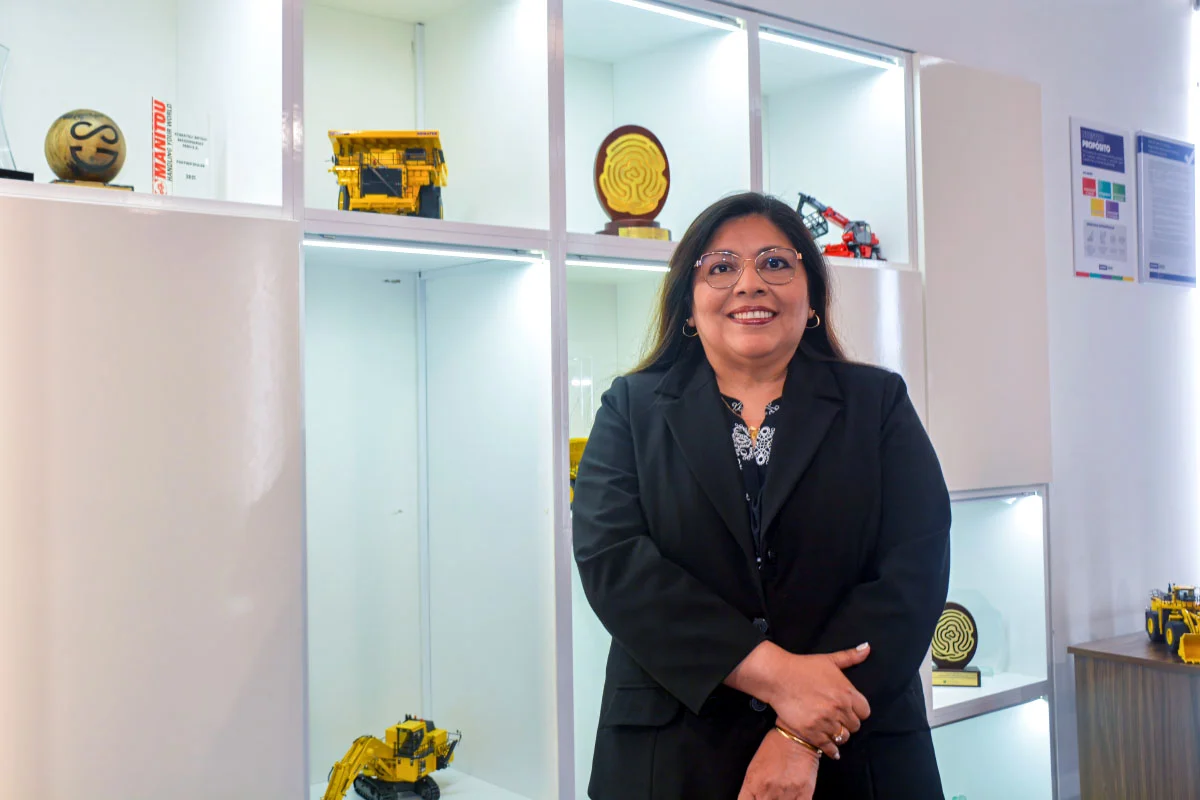
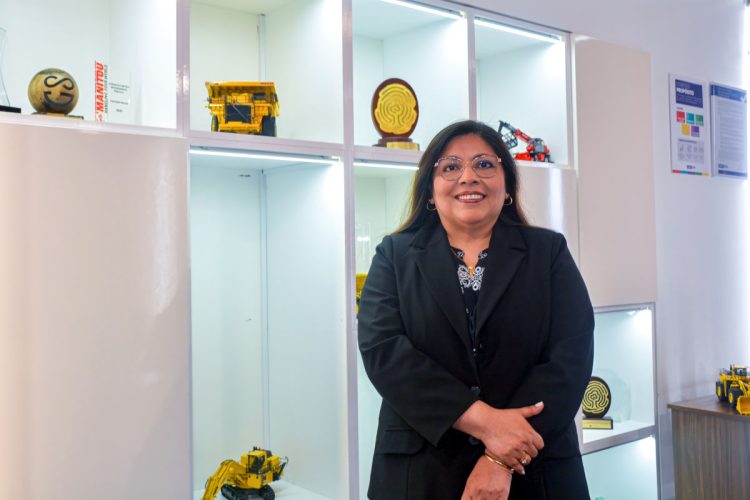
In an exclusive interview with ProActivo, Mirtha Rodríguez, Corporate Director of HSSEQ (Health, Safety, Security, Environment, and Quality) and Sustainability at KMMP, provided a comprehensive analysis of the company’s operational performance. With sales approaching the $1 billion milestone and a workforce exceeding 3,600 employees, KMMP is setting a new benchmark for how heavy-machinery suppliers can integrate circular economy principles with high-impact social responsibility.
The Core Pillars of KMMP’s 2025 Sustainability Framework
KMMP’s recent reporting underscores a commitment to balancing aggressive commercial growth with a rigid adherence to sustainability standards. The company’s strategy is built upon three fundamental pillars: environmental stewardship, the professionalization of the local labor force, and the integration of the circular economy into the core of its business model.
1. Chronology of ESG Integration
- Pre-2023: Initial adoption of international safety and environmental standards.
- 2024: Formalization of the "Sucursal Verde" (Green Branch) program and expansion of the Remanufacturing Center (KRCP).
- 2025: Release of the Comprehensive Sustainability Report, setting binding targets for supply chain partners and achieving carbon neutrality in Scope 2 emissions.
- 2027 (Future Target): Full implementation of the Mid-Term Plan for Diversity, Equity, and Inclusion (DEI).
Decarbonization and the "Green Branch" Revolution
One of the most significant achievements highlighted by Rodríguez is the company’s progress in mitigating its environmental footprint. KMMP has moved beyond theory into tangible operational changes that impact its physical sites across Peru.
Achieving Carbon Neutrality in Scope 2
KMMP has achieved a reduction of Scope 2 emissions to zero. This was made possible through the strategic acquisition of I-REC (International Renewable Energy Certificates), which verify that the electricity consumed by the company’s operations originates from non-conventional renewable sources. This move effectively decouples the company’s growth from carbon-intensive energy consumption.
The "Sucursal Verde" Concept
The company has pioneered the "Environmentally Sustainable Branch" initiative. This program evaluates over 80 technical criteria across various facilities, including those in Callao, Pucusana, and the La Joya Complex in Arequipa.
"We have successfully established our first ‘green branch’ in Peru—and the second across the entire Komatsu Latin American network—in Arequipa," notes Rodríguez. This certification is not merely a label; it represents the highest standard of water management, energy efficiency, and waste reduction that the company enforces internally.
Circular Economy: The Role of Remanufacturing
In the context of heavy mining machinery, the circular economy is perhaps the most effective tool for waste reduction and cost-efficiency. By prioritizing the recovery of components over the purchase of new parts, KMMP is actively reducing the demand for raw material extraction.
The Komatsu Reman Center Peru (KRCP) serves as the engine of this initiative. By refurbishing mechanical, electrical, and structural components, KMMP extends the life cycle of heavy equipment, which is critical for mining operations that require extreme durability. According to Rodríguez, current initiatives have enabled a recovery rate of over 30% of components, significantly lowering the embodied carbon footprint of the equipment deployed in the field.
Social Impact: Decentralizing Technical Education
A recurring challenge in the Peruvian mining sector is the disconnect between the demand for highly skilled labor and the availability of such talent in mining-adjacent regions. KMMP has addressed this through a long-term commitment to education.
Strategic Partnerships
The company’s "flagship project" is its partnership with SENATI in Arequipa, which is slated to continue through 2031. This initiative, supported by mining operator Antapaccay, is designed to provide local youth with technical careers that translate directly into employability.
"We offer scholarships and internships in Heavy Machinery Maintenance, allowing young people in areas of influence to pursue a one-year professional technical degree as maintenance assistants," explains Rodríguez. Similar initiatives, such as "Becas TEC," are currently underway with major industry players like Antamina, Miski Mayo, and Quellaveco.
Supply Chain Integration: Empowering the Pymes
As KMMP elevates its own ESG standards, it faces the challenge of ensuring its subcontractors and suppliers follow suit. To prevent a "sustainability gap" in its supply chain, the company has positioned itself as an "anchor company."
In collaboration with Perú Sostenible, KMMP has implemented a co-financing model (70/30) for small and medium-sized enterprises (Pymes). Under this model, KMMP covers 70% of the costs required for these smaller firms to conduct environmental diagnostics and draft their own sustainability reports.
"The goal is to ensure that by next year, sustainability requirements are not just voluntary suggestions, but binding conditions in all of our tenders," says Rodríguez. By providing technical accompaniment, KMMP is effectively raising the bar for the entire domestic industrial sector.
Diversity and the Gender Equity Roadmap
Historically, the mining and machinery sectors have been predominantly male-led. KMMP is actively dismantling this demographic imbalance through its "Women Empowerment Network" (WEN), a group of over 60 volunteers dedicated to fostering an inclusive corporate culture.
Breaking the Cultural Barrier
The company’s 2025 initiative, Mujeres que Transforman (Women Who Transform), focuses on both technical training and soft-skills development. However, the most innovative aspect of their strategy is the engagement with local families.
"We identified a major bottleneck: parents were often afraid to send their daughters into male-dominated environments," explains Rodríguez. To solve this, KMMP began hosting workshops for parents, showcasing the career paths of women who have ascended to management roles within the organization.
Workplace Policies for Retention
Retention is prioritized through progressive HR policies, such as:
- Hybrid Work: Flexible arrangements for administrative staff post-maternity.
- Operational Support: An additional paid month of leave for technical personnel in mining operations.
- Paternity Incentives: Extended leave for fathers to foster shared domestic responsibility.
Implications for the Future of Peruvian Mining
The trajectory established by KMMP demonstrates that sustainability is no longer a corporate luxury, but a fundamental business necessity. By linking the company’s growth to the development of local communities, the reduction of carbon emissions, and the promotion of a circular economy, KMMP is positioning itself as a leader in the global transition toward "Green Mining."
As Mirtha Rodríguez concludes, the success of these programs hinges on the commitment of leadership at all levels. With the 2025 Report serving as a foundational document, KMMP is not only proving that it can meet the rigorous demands of the mining sector but is also actively redefining what it means to be a responsible corporate citizen in the 21st century.
For stakeholders, investors, and industry partners, the data is clear: the future of mining in Peru will be defined by those who can successfully integrate technical excellence with deep social and environmental consciousness. KMMP is currently leading that charge.
For more information on the initiatives mentioned, please consult the full KMMP 2025 Sustainability Report.