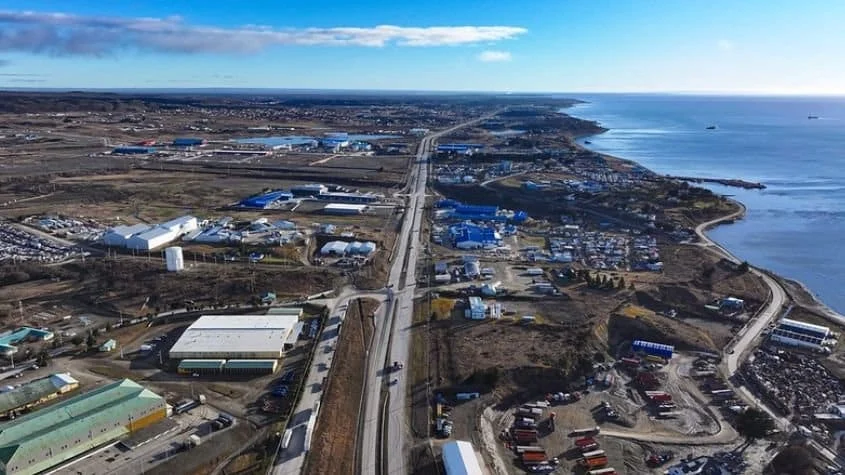
After seven decades of dormancy, the Terminal I facility at the Port of Villa Constitución in Santa Fe, Argentina, is poised for a significant industrial renaissance. This ambitious project, centered on the rehabilitation of over 33,000 square meters of port infrastructure, represents a pivotal shift in Argentina’s logistics strategy. By integrating modern technology and specialized capacity for the handling of minerals, the project aims to serve as a vital link in the supply chain for Vaca Muerta, the world-class unconventional oil and gas formation.
Main Facts: A New Era for Logistics
The project, which has been officially greenlit by the provincial government, marks the end of nearly 70 years of inactivity for this specific segment of the port. The contract for the exploitation and modernization of Terminal I has been awarded to a Temporary Business Union (UTE) comprised of Southern Silica S.R.L. and Esesa S.A.
The revitalization plan is multifaceted. It involves:
- Structural Rehabilitation: Upgrading 33,000 square meters of aging infrastructure situated along the Paraná River.
- Operational Modernization: Implementing advanced equipment for the storage, classification, and dispatch of sand and aggregates.
- Infrastructure Investment: A private sector commitment estimated at US$ 4.5 million, focused on modernizing operational technology and facility safety.
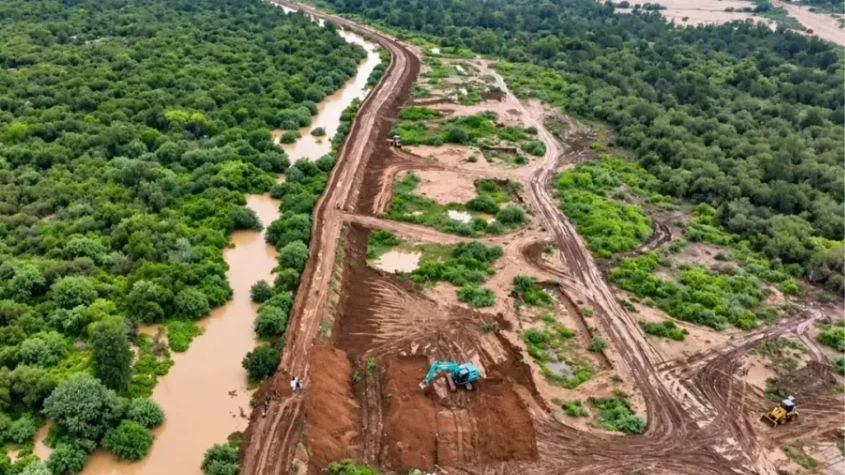
- Navigational Maintenance: Comprehensive dredging and consistent maintenance of the quay and water mirror to ensure reliable vessel access.
Chronology: From Stagnation to Strategic Hub
To understand the significance of this reactivation, one must look at the timeline of the Port of Villa Constitución. For the better part of the 20th and 21st centuries, Terminal I remained a forgotten asset, a silent relic of an era when the logistics demands of the interior were vastly different.
- The Mid-20th Century: The terminal ceases major commercial operations, eventually falling into a state of structural decline due to shifts in river commerce and changing export patterns.
- The Early 2020s: As Vaca Muerta expands, the demand for proppant sand—a critical component in hydraulic fracturing—skyrockets. Domestic logistics networks become strained, highlighting the need for efficient inland water transport.
- 2025 (Planning Phase): The provincial government of Santa Fe identifies the dormant Terminal I as a strategic asset capable of alleviating road congestion and reducing transport costs for industrial materials.
- October 2026 (Awarding Phase): Official adjudication of the tender to the UTE (Southern Silica S.R.L. and Esesa S.A.), signaling the beginning of the investment phase.
- Post-2026: The immediate future will see the commencement of structural repairs, dredging, and the installation of heavy machinery, with an eye toward reaching full operational capacity within the next 18 to 24 months.
Supporting Data: Why Villa Constitución?
The decision to revitalize this specific site is not merely nostalgic; it is deeply rooted in geographic and economic logic. The Paraná River acts as the backbone of Argentina’s industrial transport, and Villa Constitución serves as a critical junction between the inland production centers and the broader logistical network.

The Vaca Muerta Connection
Vaca Muerta requires massive quantities of "frac sand"—high-quality silica sand used to prop open fissures in shale rock to allow oil and gas to flow. Currently, a significant portion of this material is transported over long distances by truck. By utilizing the Paraná River and the Port of Villa Constitución, operators can transition to a multimodal transport model, shifting volume from trucks to barges. This transition offers:
- Cost Reduction: River transport is significantly more fuel-efficient per ton-mile than road transport.
- Safety and Sustainability: Reducing the number of heavy trucks on national highways lowers the carbon footprint and decreases road maintenance requirements.
- Volume Efficiency: A single barge can replace dozens of trucks, allowing for the consistent, high-volume flow of aggregates required by the continuous operations at the Vaca Muerta fields.
Technical Specifications
The investment of US$ 4.5 million is specifically earmarked for:
- Conveyor Systems: High-capacity automated systems to transfer material from storage zones to vessels.
- Storage Silos: Modernized climate-controlled silos to prevent moisture contamination in sand and aggregates.
- Dredging Operations: Ensuring that the draft at the pier remains deep enough to handle modern bulk carriers, regardless of seasonal water level fluctuations in the Paraná River.
Official Responses and Stakeholder Perspectives
The project has received broad support from both local government officials and industry analysts. The provincial administration of Santa Fe views this as a "model project" for how dormant state assets can be transformed into private-sector engines of growth.
"This is not just about fixing a dock," noted an industry spokesperson close to the project. "It is about reconnecting the industrial capacity of our hinterland with the energy heart of our nation. By leveraging private capital, we are modernizing our infrastructure without placing a burden on the public treasury."
The UTE partners, Southern Silica S.R.L. and Esesa S.A., have emphasized their commitment to environmental compliance. Given the location on the banks of the Paraná, the modernization plan includes stringent protocols for dust control, noise mitigation, and water protection, ensuring that the industrial revitalization does not come at the cost of the local ecosystem.

Broader Implications: A Catalyst for Regional Development
The reactivation of Terminal I is expected to have a "multiplier effect" on the local economy of Villa Constitución.
1. Job Creation
The rehabilitation phase will require specialized labor for civil engineering, dredging, and heavy machinery installation. Once operational, the facility will require permanent staff for logistics management, port operations, and maintenance, providing a boost to the local employment market.
2. Supply Chain Resilience
By creating a dedicated hub for sand and aggregates, the project helps insulate the energy sector from logistical bottlenecks. During peak demand periods, the ability to store and dispatch material through an efficient, specialized port terminal ensures that the drilling and completion of wells in Vaca Muerta are not delayed by material shortages.
3. Future-Proofing Argentina’s Infrastructure
This project sets a precedent for the "Punto de Revalorización" (Revaluation Point) approach, where the government audits underutilized infrastructure and tenders it to specialized companies. It is highly probable that other abandoned river ports along the Paraná and Uruguay rivers will follow a similar path, as the country seeks to optimize its river-based logistical capacity.
Conclusion: A Vision for the Future
The resurrection of Terminal I in Villa Constitución is a powerful symbol of Argentina’s industrial ambition. By bridging the gap between a historic port facility and the futuristic demands of the shale energy industry, the project creates a template for sustainable development.

As the US$ 4.5 million investment begins to translate into tangible progress, the eyes of the regional logistics community will be fixed on the Paraná River. The success of this venture will likely dictate the pace of future inland port developments, proving that with the right partnership between the state and the private sector, even the oldest infrastructure can be revitalized to meet the challenges of the 21st century.
This is more than just a renovation project; it is the reactivation of a strategic artery, pumping the lifeblood of industrial materials into the heart of Argentina’s energy future. With the dredging machines ready to mobilize and the construction crews preparing the site, the dormant port is finally waking up to a new, busy, and prosperous reality.