Executive Summary
The Comptroller General of the Republic (CGR) of Peru has issued a severe warning regarding the fiscal management of the Pasco Regional Government (GORE Pasco). According to the latest findings from the Office of Institutional Control (OCI), the regional administration initiated 23 public procurement processes between July and September 2026, totaling over S/ 892 million. However, an audit revealed that the regional government had only secured budget certifications for approximately S/ 80 million. This discrepancy leaves a staggering deficit of S/ 811.9 million, threatening the viability of critical infrastructure projects and potentially exposing the regional administration to massive legal and operational liabilities.
The Core of the Issue: A Disconnect Between Ambition and Reality
The fundamental duty of any regional government when initiating a public works project is to ensure that the funding required for the total cost of the work is guaranteed—either through current budget allocations or multi-year financial commitments. The recent findings by the Comptroller’s Office, detailed in Informe de Orientación de Oficio N.° 027-2026-OCI/5348-SOO, suggest that GORE Pasco bypassed these essential financial safeguards.
By launching 23 distinct tender processes without the necessary budgetary backing, the regional government has effectively created a "financial house of cards." The S/ 811.9 million shortfall is not merely a bookkeeping error; it is a systemic failure that risks the suspension of projects, the legal nullification of contracts, and the waste of taxpayer resources. When the government invites private contractors to bid on projects that lack a guaranteed funding stream, it undermines the integrity of the public procurement system and compromises the delivery of essential services to the Pasco region.
Chronology of the Procurement Crisis
To understand the scope of the administrative negligence, one must examine the timeline of the events that led to the Comptroller’s intervention:

- July 2026: GORE Pasco begins the initial phase of rolling out a series of public works tenders, signaling an aggressive push for regional development.
- August 2026: The intensity of the procurement processes increases, with the total value of projects under tender reaching hundreds of millions of soles. During this period, the regional office fails to align its budget certifications with the pace of the procurement calendar.
- September 2026: The OCI concludes its preliminary data analysis, identifying that the aggregate cost of the 23 projects has ballooned to S/ 892 million, while the authorized budgetary certification remains stagnant at approximately S/ 80 million.
- October 2026: The Comptroller General of the Republic officially issues Informe N.° 027-2026-OCI/5348-SOO, notifying the Governor of Pasco of the irregularities and mandating immediate corrective measures to prevent further financial exposure.
Supporting Data and Financial Analysis
The magnitude of the deficit is best understood by looking at the ratio of authorized funds versus committed project costs. The Pasco Regional Government committed to projects worth 11 times their certified budget capacity.
Key Fiscal Indicators:
- Total Value of Tendered Projects: S/ 892,000,000
- Total Certified Budget: S/ 80,000,000
- Calculated Budgetary Deficit: S/ 811,900,000
- Number of Affected Projects: 23
The Comptroller’s report further highlights a disturbing "rob-Peter-to-pay-Paul" strategy. In at least two of the audited cases, the administration proposed to fund the new projects by stripping resources from existing, ongoing construction projects. This move is particularly egregious as it threatens to halt active infrastructure works—potentially leaving half-finished schools, hospitals, or roads across the region—to initiate new, unbudgeted ventures.
Implications for the Pasco Region
The fallout from this situation extends far beyond the administrative offices of the regional government.
1. Risk of Project Paralysis
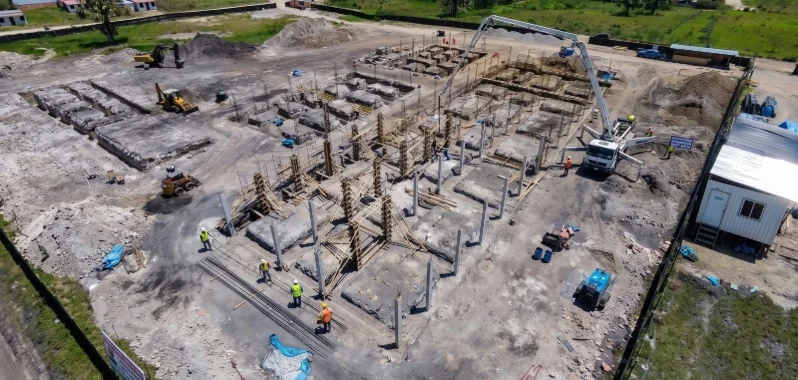
The most immediate danger is the total abandonment of construction sites. When a contractor realizes that a regional government lacks the funding to fulfill its contractual payment obligations, work is typically suspended. This leads to cost overruns caused by inflation, the deterioration of partially built structures, and the eventual need for expensive litigation to settle outstanding debts.

2. Legal Nullification of Contracts
According to the Peruvian Law on State Contracting, procurement processes that do not meet strict budgetary requirements are susceptible to being declared null and void. If these 23 projects are declared invalid, the regional government faces significant legal challenges from the bidding firms, including claims for damages and lost profits, which would further deplete the public coffers.
3. Impact on Local Beneficiaries
The primary victims of this fiscal mismanagement are the citizens of Pasco. These projects, which likely include vital healthcare facilities, irrigation systems, or transportation infrastructure, are meant to improve the quality of life for the regional population. Instead, the lack of financial planning creates an environment of uncertainty that denies the public the services they were promised.
Official Responses and Next Steps
The Comptroller’s Office has formally notified the Governor of Pasco. Under Peruvian law, this notification is not merely a suggestion; it serves as a mandate for the regional executive to provide a plan of action to rectify the budgetary imbalance.
The regional administration is currently required to:

- Halt or Suspend: Temporarily suspend any of the 23 procurement processes that do not meet the minimum financial requirements.
- Reprioritize: Re-evaluate the project portfolio and prioritize those that are truly backed by fiscal resources.
- Transparency: Make the corrected budget documents available for public review to restore institutional credibility.
As of now, the report remains accessible via the Buscador de Informes de Control (Comptroller’s Report Search Engine), allowing civil society and oversight bodies to track the administration’s progress in resolving these gaps.
Conclusion: The Path Toward Fiscal Responsibility
The case of the Pasco Regional Government serves as a stark reminder of the dangers of "political budgeting"—a practice where governments promise massive infrastructure expansion without the corresponding fiscal discipline to pay for it.
The Comptroller General’s intervention is a necessary check against the potential waste of nearly a billion soles. If the regional government fails to heed these warnings, the long-term impact on Pasco’s regional development will be severe. The upcoming months will be critical in determining whether the GORE Pasco administration can reorganize its priorities or if the region will face a wave of stalled projects and legal turmoil.
As the regional administration deliberates on its next moves, the citizens of Pasco are watching. They are waiting to see if their government will commit to the transparency required to manage public funds correctly or if the current administration will continue to prioritize optics over fiscal reality. For now, the "S/ 811 million question" remains unanswered, and the regional government faces the daunting task of correcting a record-breaking fiscal imbalance before the damage becomes irreversible.