Pítipo, Lambayeque – September 2026 – The regional infrastructure landscape in Northern Peru is undergoing a significant transformation with the rapid advancement of the new Mauro Bridge. Located in the district of Pítipo, within the Ferreñafe province, this critical infrastructure project has reached an 85% physical completion rate, signaling a major victory for local logistics, agricultural commerce, and rural connectivity.
Managed by the Regional Government of Lambayeque through the Olmos Tinajones Special Project (PEOT), the bridge is set to replace a temporary structure that has long hindered the flow of heavy transport and regional trade. With a total investment of S/ 2.86 million, the project stands as a cornerstone of the regional administration’s effort to modernize transport corridors leading into the Andean hinterlands of Lambayeque.
Main Facts: A Vital Link for Rural Development
The Mauro Bridge is not merely a structural improvement; it is a vital artery for the economic health of several high-altitude districts. Spanning the Taymi Nuevo canal, the new infrastructure replaces a provisional crossing that was previously inadequate for modern logistics.
Key Specifications:
- Total Investment: S/ 2.86 million (encompassing both construction and professional supervision).
- Structural Dimensions: 12 meters in length with a 7.20-meter-wide roadway.
- Design Capacity: Two-lane configuration, engineered to accommodate heavy-duty commercial vehicles.
- Current Progress: 85% completion, with finishing works currently underway.
- Expected Completion Date: September 24, 2026.
The bridge’s design prioritizes durability and safety, addressing the specific needs of a region that experiences heavy seasonal rainfall and requires robust transport routes for agricultural output. By providing a stable, permanent crossing, the Regional Government of Lambayeque aims to permanently remove the restrictions that have limited the movement of cargo from the fertile highlands to coastal markets.
Chronology: From Planning to Completion
The project’s timeline reflects a focused execution strategy designed to minimize disruption to local communities. The progression of the Mauro Bridge highlights the efficiency of the PEOT in managing complex engineering tasks within a compressed timeframe.

- May 28, 2026: Official commencement of construction. The site was cleared for the replacement of the existing provisional bridge, marking the beginning of the 120-day contractual period.
- June – July 2026: Foundation works and structural support installation. Given the location over the Taymi Nuevo canal, specialized geotechnical assessments were required to ensure the stability of the abutments.
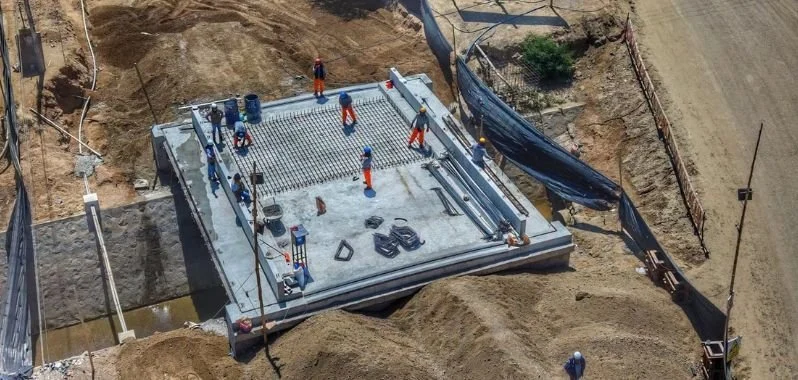
- August 2026: Completion of the structural superstructure. A significant milestone was achieved with the successful pouring of the concrete slab, which serves as the primary load-bearing component of the bridge.
- September 2026: Finalization phase. Current efforts are concentrated on the installation of parapets, pedestrian walkways, and approach slabs.
- September 24, 2026 (Projected): Final delivery and opening to the public.
This 120-day schedule is an ambitious target that demonstrates the government’s commitment to delivering public works without the standard bureaucratic delays that have historically plagued infrastructure projects in the region.
Supporting Data: Engineering and Technical Scope
The technical complexity of the Mauro Bridge project extends beyond the bridge itself. The project includes extensive civil works designed to integrate the bridge into the existing road network seamlessly.
Current Workstreams:
- Structural Integrity: With the main slab finished, the focus has shifted to the "finishing" stage. This includes the de-shuttering (removal of forms) and the installation of safety parapets to prevent accidents.
- Pedestrian Integration: Recognizing the reliance of local communities on foot traffic, the project includes the reconstruction of pedestrian walkways to ensure the safety of students and workers moving between the districts.
- Road Surface Rehabilitation: A critical component is the replacement of over 1,090 square meters of flexible asphalt paving on the approaches to the bridge. This ensures that the transition from the road to the bridge deck is smooth, preventing structural wear and tear on vehicles.
- Safety Infrastructure: The project includes a comprehensive signage plan, featuring horizontal signaling that complies with national safety standards to ensure clear navigation for drivers during nighttime and adverse weather conditions.
Official Responses: The Regional Vision
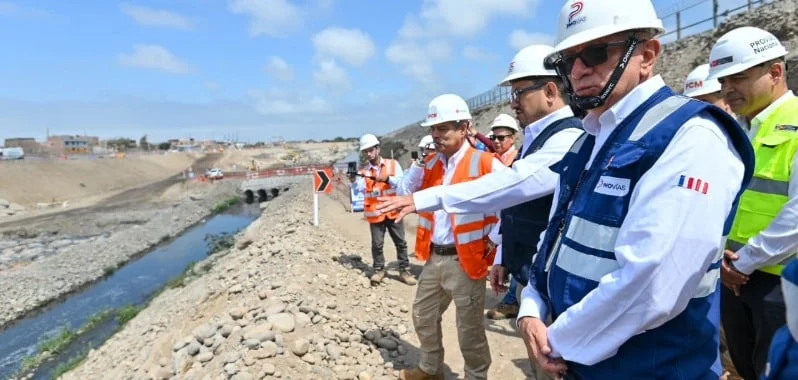
Governor Jorge Pérez Flores, during a recent site inspection, underscored the importance of the project in the broader context of the "Lambayeque Productive" initiative.
"The completion of the Mauro Bridge is a testament to our commitment to decentralizing growth," said Governor Pérez Flores. "We are not just building a structure; we are building a bridge to opportunity. For years, the producers in the highlands have been disconnected from their primary markets due to inadequate infrastructure. By finalizing this work, we are effectively lowering the cost of logistics for our farmers and ensuring that heavy transport can finally navigate these corridors safely."
The involvement of the PEOT (Proyecto Especial Olmos Tinajones) has been central to the project’s success. As the executing entity, the PEOT has applied rigorous quality control standards, ensuring that the concrete strength and material quality meet the seismic requirements of the Peruvian building code.

Implications: Economic and Social Transformation
The completion of the Mauro Bridge will have immediate and long-term implications for the provinces of Ferreñafe and beyond.
1. Strengthening the Agricultural Value Chain
The bridge serves as a critical junction for the transportation of agricultural goods from the Zaña Valley and the surrounding high-altitude areas. Currently, farmers face high transit costs due to the need for smaller, fragmented shipments that can navigate the current temporary structure. A permanent, heavy-duty bridge will allow for larger trucks, reducing the cost-per-unit for transport and increasing the competitiveness of local produce in regional and national markets.
2. Enhanced Connectivity to Remote Districts
The bridge is a vital link for the towns of Batangrande, La Traposa, and Mayascón. Furthermore, it serves as a gateway to the districts of Incahuasi and Cañaris—regions known for their cultural heritage and agricultural potential. By improving this corridor, the regional government is reducing travel times, facilitating better access to healthcare and education services for rural populations.
3. Safety and Security
The removal of the "provisional" status of the crossing is a significant safety upgrade. Provisional bridges are often susceptible to structural failure during the rainy season or when subjected to the weight of heavy machinery. The new Mauro Bridge provides a permanent solution, eliminating the risk of traffic isolation for the thousands of citizens who rely on this route for their daily commute.
4. Long-term Regional Strategy
This project is part of a larger, systemic plan to upgrade the road network in the Lambayeque region. By prioritizing infrastructure that links the interior to the coast, the Regional Government is laying the groundwork for a more cohesive regional economy. The successful delivery of the Mauro Bridge is expected to boost public confidence in government-led infrastructure projects, setting a benchmark for future developments in the province.

Conclusion: A Future Built on Solid Foundations
As the September 24 deadline approaches, the activity at the Mauro Bridge site is reaching a fever pitch. With the heavy lifting behind them, the construction crews are now focused on the final details—the asphalt paving, the line markings, and the landscaping—that will turn a construction site into a functional public asset.
For the people of Pítipo and the surrounding communities, this bridge represents more than just concrete and steel; it represents the end of uncertainty and the beginning of a new era of reliability. As the region looks toward the future, the Mauro Bridge stands as a symbol of progress, demonstrating that through disciplined management and a clear focus on rural development, the regional government can indeed bridge the gap between isolation and economic integration.
The final inauguration will mark a milestone in the administration of Governor Jorge Pérez Flores and provide a template for future infrastructure projects that aim to balance technical excellence with the urgent needs of the Peruvian population. With the finishing touches now being applied, the residents of Lambayeque can look forward to a safer, more efficient, and more connected future.