By Editorial Staff
The landscape of public infrastructure development in Peru has undergone a seismic shift in 2026. Data released by the Agency for the Promotion of Private Investment (ProInversión), under the Ministry of Economy and Finance (MEF), reveals that the "Works for Taxes" (Obras por Impuestos) mechanism has achieved an unprecedented milestone. Between January and September 2026, the program successfully adjudicated a staggering S/ 9,409 million, effectively tripling the performance recorded during the same period in 2025.
This surge in investment marks the most significant expansion in the 18-year history of the mechanism, signaling a maturation of the public-private partnership model and a newfound efficiency in executing regional and local infrastructure projects.
The Main Facts: A Triple-Digit Growth
The sheer scale of this growth cannot be overstated. With 691 individual interventions—ranging from complex infrastructure projects and IOARR (Optimisation, Marginal Expansion, Rehabilitation, and Replacement) investments to critical maintenance activities—the mechanism has evolved from a supplementary tool into a primary engine for national development.
To put this in perspective, the S/ 9,409 million figure represents more than 300% of the S/ 2,989 million recorded in the first nine months of 2025. The momentum is accelerating, with an average of over S/ 1,000 million being adjudicated every month throughout 2026. September alone served as a testament to this pace, with 105 interventions totaling S/ 1,652 million, nearly doubling the results of September 2025.

Chronology: A Record-Breaking Third Quarter
While the first half of the year showed strong promise, the period between July and September 2026 shattered all previous benchmarks. During these three months, the country saw the adjudication of 351 interventions amounting to S/ 3,858 million. This represents the highest quarterly investment volume since the mechanism’s inception in 2009.
This upward trajectory reflects a systematic acceleration:
- Q1-Q2 2026: Steady growth driven by updated policy frameworks and increased technical support from ProInversión.
- July 2026: Legislative and regulatory adjustments regarding annual capacity caps begin to yield significant fruit.
- August-September 2026: A surge in participation from "first-time" entities and companies creates a competitive environment that pushes the total volume to record highs.
Supporting Data: Dissecting the Investment
The success of the 2026 cycle is characterized not just by the volume of capital, but by the diversity of stakeholders and sectors involved.
Sectoral Breakdown
Infrastructure remains the backbone of the "Works for Taxes" model, with the following sectors leading the investment:
- Transport: S/ 3,242 million, focusing on regional connectivity and road infrastructure.
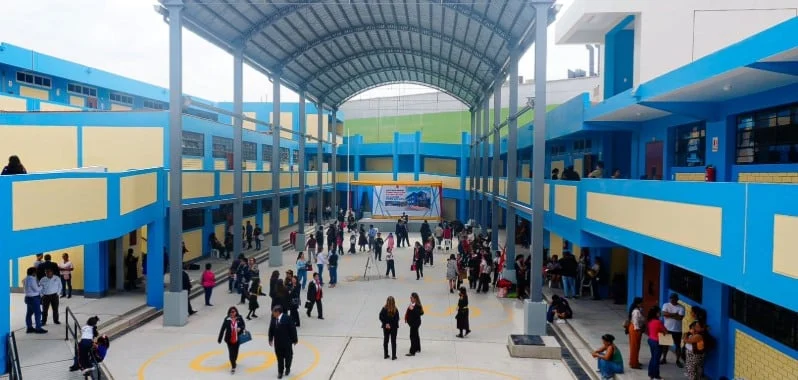
- Education: S/ 1,552 million, directed toward the modernization of school facilities across the nation.
- Planning, Management, and Contingency Reserves: S/ 1,270 million.
- Health: S/ 873 million, supporting the ongoing effort to upgrade medical centers and regional hospitals.
Participant Profiles
The 2026 figures highlight a democratization of the investment process. A total of 343 public entities and 408 private companies participated in the mechanism during the first nine months.

Perhaps most striking is the influx of new actors: 282 companies (69% of the total) engaged in "Works for Taxes" for the first time, committing a combined S/ 3,043 million. Similarly, 216 public entities (63% of the total) joined the program, signaling a widespread adoption of the model at the municipal and regional government levels. While regional governments accounted for 50% of the total investment amount, local governments dominated in terms of the number of individual projects, with 471 initiatives launched.
Official Responses and Strategic Leadership
Luis Del Carpio, Executive Director of ProInversión, attributes this historic performance to a multi-pronged strategy. "This result is the direct consequence of the enhanced dynamism of public entities, which have adeptly utilized the new maximum annual capacity caps to commit to long-term investments," Del Carpio stated.
He further noted that the agency’s proactive stance has been a critical variable. "We have moved beyond being mere observers. By providing robust technical accompaniment, we have successfully converted the institutional priorities of local governments into viable, bankable, and executable projects. This synergy between ProInversión, the public sector, and private enterprise has fundamentally changed the speed at which public works are delivered."
The Ministry of Economy and Finance has also echoed this sentiment, noting that the legislative updates providing higher flexibility for public entities have effectively removed bottlenecks that historically plagued the mechanism.
The Broader Implications: What This Means for Peru
The implications of these figures extend far beyond a balance sheet. With 2026 accounting for roughly 36% of the total investment accumulated by the mechanism since its 2009 launch (a total of S/ 26,392 million), the country is witnessing a structural shift in how public infrastructure is financed and managed.

1. Decentralization of Development
The fact that local governments are spearheading 471 projects indicates that the "Works for Taxes" mechanism is successfully reaching the most isolated corners of the country. This reduces the burden on central government ministries and allows for infrastructure development that is more closely aligned with the specific, immediate needs of the local population.
2. A Model of Resilience
The significant increase in private sector participation—especially the 282 new companies—suggests that the private sector views the mechanism as a stable and secure way to contribute to national development while fulfilling their social and fiscal responsibilities. This creates a virtuous cycle where private sector efficiency is imported into the public sector.
3. Sustainability and Future Outlook
With the total accumulated investment now exceeding S/ 26 billion, the program has reached a "critical mass." The infrastructure being built—schools, hospitals, and transport networks—will generate long-term economic dividends. Furthermore, the expertise gained by local and regional officials in managing these projects will likely lead to even more sophisticated and larger-scale interventions in 2027 and beyond.
Conclusion
The data from the first nine months of 2026 paints a picture of a nation that has successfully unlocked the potential of the "Works for Taxes" mechanism. By transforming the way the public and private sectors collaborate, Peru is not only accelerating the delivery of essential services but is also creating a blueprint for sustainable development that could serve as a model for emerging economies globally.
As the year draws to a close, all indicators suggest that the final quarter will continue this momentum, cementing 2026 as the most transformative year in the history of Peruvian infrastructure development. The challenge now lies in ensuring the quality and maintenance of these 691 interventions, ensuring that the legacy of this record-breaking year is felt by the citizens of Peru for generations to come.