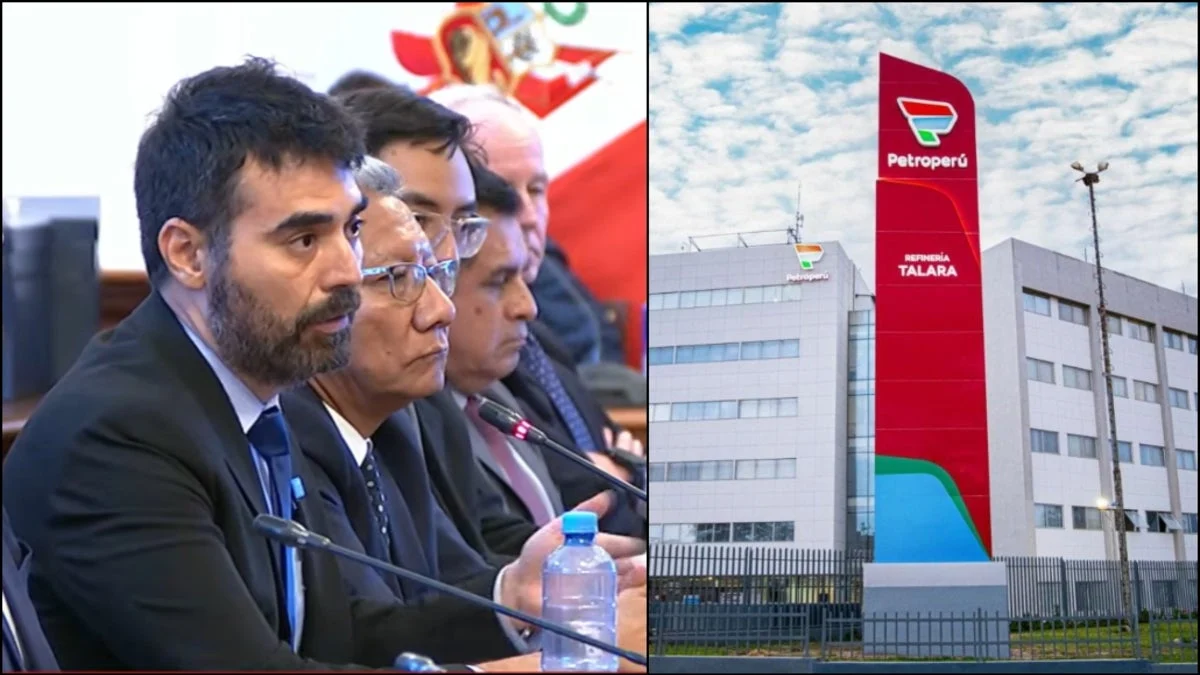
In a definitive move to stabilize its operations and restore financial health, the state-owned oil company Petroperú has unveiled a comprehensive, phased restructuring plan. Under the guidance of ProInversión—Peru’s agency for promoting private investment—the company is shifting toward a model of "patrimonial reorganization." This strategy seeks to divide the firm’s vast, complex asset base into independent business units, allowing for targeted private sector participation without relinquishing state ownership of strategic infrastructure.
The process, which kicks off in October 2024, represents one of the most significant shifts in the management of Peru’s energy sector in decades. By inviting private operators to co-manage specific assets and inject capital, the government aims to revitalize the company’s performance while maintaining the core mission of energy security.
The Strategy: Decentralizing Assets for Efficiency
The core philosophy behind this reorganization is to treat Petroperú not as a monolithic entity, but as a portfolio of distinct business units. Ángel Delgado, director of the Patrimonial and Operational Reorganization Project at ProInversión, presented the blueprint to the Energy and Mines Commission of the Congress of the Republic, clarifying that the goal is to leverage private sector efficiency.
"The intention is that a private investor participates jointly with Petroperú in the management of the asset and provides the necessary resources to recover its value," Delgado stated. He emphasized that this is not a privatization of the state company itself. Rather, it is a strategic partnership model where the state retains titular ownership of essential infrastructure, ensuring that the company continues to operate as a vital public service provider while shedding the operational and financial weight that has hindered it in recent years.
Chronological Roadmap: A Step-by-Step Transition
ProInversión has structured the rollout into a progressive schedule, prioritizing assets based on their operational readiness and their potential to yield immediate value through private investment.
Phase 1: Southern Terminal Operations (Q4 2024)
The process officially begins on October 2, 2024, with the "Southern Terminals" block. This includes the strategic facilities in Pisco, Mollendo, and Ilo. These assets are vital for the distribution of fuels in the southern region of the country. By bringing in private operators here, Petroperú aims to optimize logistics and storage capacity, which have historically faced bottlenecks.
Phase 2: Bayóvar and Beyond (Late 2024)
During the second half of October, the promotion plan for the Bayóvar Terminal will be approved. This facility is critical for the logistics of the northern coast. Following this, the schedule moves to the Central and Northern regions:
- November 2024: Approval of the promotion plan for the Conchán terminals and distribution centers.
- December 2024: Approval for the refineries and terminals located in Pucallpa and Iquitos, targeting the Amazonian supply chain.
Phase 3: Long-term Strategic Assets (2025–2027)
The transition enters its most complex phase starting in 2027. This includes the El Milagro refinery, the Lote 192 and Lote 64 oil fields in the Marañón basin, and the critical Norperuano Pipeline. Each of these assets presents unique environmental, social, and technical challenges, necessitating a slower, more deliberate approach to private involvement.
Phase 4: The Talara Refinery (2027)
The crown jewel of the company, the Talara Refinery, is scheduled to enter the promotion process at the beginning of 2027. Given its status as the most modern and expensive asset in the company’s portfolio, ProInversión has earmarked it as the final piece of the reorganization puzzle to ensure that the regulatory and investment frameworks are perfectly aligned before inviting private partners.
The Complexity of the Talara Refinery
The Talara Refinery is a massive, highly complex industrial complex. Its recent modernization project consumed billions in investment, placing significant fiscal pressure on the Peruvian state. Because of its scale and the complexity of its technological processes, Delgado noted that it requires a "deeper, more profound analysis" than any other asset in the company.
The delay in moving toward private participation in Talara until 2027 is a calculated move. The government intends to use the intervening years to stabilize the refinery’s operational performance and finalize the audit of its financial impact. When the promotion plan is eventually unveiled, it will likely involve a long-term concession or a joint venture agreement where a global industry leader provides the technical expertise and capital necessary to maximize output and profitability.
Addressing the "Privatization" Narrative
Throughout his presentation to the Congressional Commission, Ángel Delgado was meticulous in his choice of words, aiming to dispel the political controversy that often surrounds any mention of private investment in state-owned enterprises.
The "red line" for the government is the titular ownership of the company. The state will remain the primary owner of the strategic assets, and the company will continue to be a state-owned entity. The model is one of "management participation." In this scenario, the private sector acts as a catalyst for efficiency, bringing in the capital that the Peruvian state currently struggles to allocate due to fiscal constraints. This approach effectively separates the ownership of the infrastructure from the operation of the business, a common practice in modern infrastructure management globally.
Economic Implications and Sectoral Impact
The integration of private capital into Petroperú’s assets has wide-reaching implications for the Peruvian economy:
- Fiscal Relief: By offloading the burden of operational maintenance and future capital expenditure to private partners, the Peruvian Treasury will see a significant reduction in the pressure to subsidize the company’s operations.
- Operational Efficiency: Private operators typically bring better supply chain management, maintenance schedules, and technological integration. This could lead to more stable fuel prices and a more reliable supply chain for the mining and agricultural sectors.
- Investment Attraction: The move signals to international markets that Peru is willing to engage in pragmatic, market-oriented solutions for its state enterprises, potentially improving the country’s sovereign risk profile.
- Energy Security: By ensuring that the assets—especially the Norperuano Pipeline and the refineries—are managed by entities with sufficient capital to maintain them properly, the risk of environmental disasters and supply interruptions is significantly lowered.
Challenges and Future Outlook
While the plan is comprehensive, it is not without risks. The success of the reorganization depends entirely on the interest of private investors. The assets in the Marañón basin (Lotes 192 and 64), for instance, are located in areas with high social conflict risk and significant environmental legacy issues. Attracting a reputable private partner to these areas will require not just a sound business model, but also a robust social license to operate, which has historically been difficult to secure.
Furthermore, the political climate in Peru remains volatile. Any change in administration or shifts in the legislative landscape could potentially disrupt the 2027 timeline. For this strategy to succeed, there must be a sustained political consensus that Petroperú’s current model is unsustainable and that private collaboration is the only viable path to long-term viability.
Conclusion
Petroperú stands at a crossroads. The transition from a state-dominated operational model to one of collaborative management is a necessary evolution in the face of modern economic realities. By breaking down the company into manageable, individual units and creating a transparent, chronological path for private investment, the Peruvian government is attempting to modernize its energy sector without sacrificing state control.
The road ahead is long, and the success of the program will be measured in the ability of ProInversión to attract high-quality operators for the southern terminals and, eventually, for the massive Talara complex. If successful, this reorganization could serve as a model for other state-owned enterprises in Latin America, demonstrating that efficiency and state interest can, in fact, coexist through careful, structured, and transparent private partnership. As of October 2024, the clock begins to tick on this ambitious transition, with the entire energy sector watching closely.