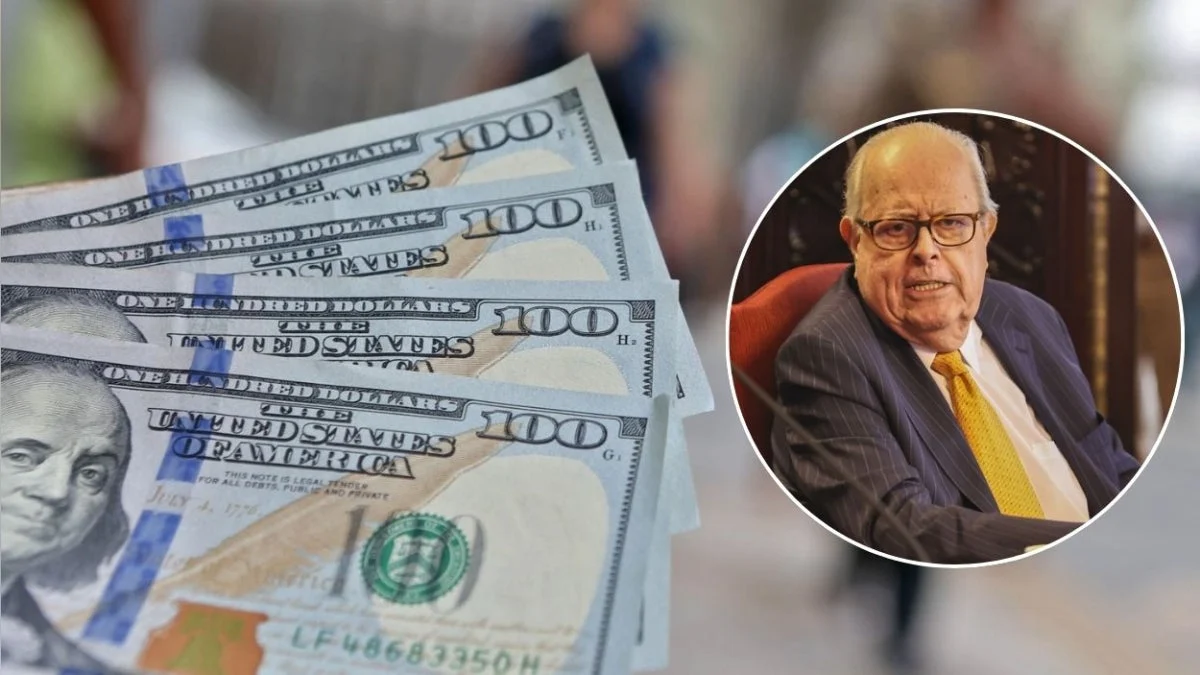
In an era defined by geopolitical instability and shifting macroeconomic landscapes, the Peruvian sol has emerged as a surprising outlier in the Latin American financial arena. While many of its regional neighbors have seen their currencies succumb to the gravitational pull of global market volatility, the Peruvian sol has demonstrated remarkable fortitude. Julio Velarde, the long-standing president of the Central Reserve Bank of Peru (BCR), recently provided an in-depth analysis of this phenomenon, attributing the currency’s strength to a complex interplay between robust commercial fundamentals and the overwhelming influence of international capital flows.
The Core Narrative: A Divergent Path
The primary narrative surrounding the Peruvian economy in recent months has been one of resilience. While emerging market currencies across the globe have faced downward pressure due to the strengthening of the U.S. dollar and restrictive monetary policies in developed economies, the sol has maintained a unique trajectory.
According to Velarde, the sol’s performance is not merely a product of domestic policy but a reflection of Peru’s structural economic health. The country’s substantial trade surplus, driven by a highly dynamic export sector, has provided a fundamental buffer against external shocks. However, Velarde cautions against oversimplifying the situation; the movement of the exchange rate is a multifaceted equation where domestic export strength is often challenged by the gargantuan influence of international financial markets, particularly those centered in New York.
Chronology of Currency Shifts: 2023–2024
To understand the current strength of the sol, one must look at the comparative data from 2023 onward. While the U.S. dollar has exerted significant pressure on emerging economies, the sol has recorded an appreciation of approximately 9%, standing in stark contrast to its peers.
- The Regional Landscape: Since 2023, the Brazilian real has seen a depreciation of roughly 6.4%, the Chilean peso has weakened by 8.9%, and the Mexican peso has experienced a 2% decline.
- The Peruvian Exception: In the same timeframe, the Peruvian sol defied these trends, strengthening by 9%.
- Recent Market Dynamics: In mid-September, specifically around the 16th, the market observed a notable stabilization. Despite the U.S. Federal Reserve’s decision to raise interest rates—a move typically detrimental to emerging currencies—the sol actually saw a slight recovery. The exchange rate moved from S/ 3.381 on September 14 to S/ 3.370 on September 16. This counter-intuitive behavior highlights the market’s ability to "price in" anticipated decisions long before they are officially announced.
Supporting Data: The Trade Surplus and Export Dynamics
Peru’s trade surplus, which currently sits at an impressive US$ 50,000 million, is a cornerstone of the country’s economic stability. This surplus creates a natural "downward pressure" on the dollar within the local market, as export proceeds provide a consistent supply of foreign currency.
However, Velarde provides a crucial nuance that is often misunderstood by the public: a trade surplus does not automatically translate into a flooded domestic market for dollars. He explains that large-scale mining companies—the primary drivers of these exports—are under no obligation to repatriate or convert their earnings into soles. These corporations frequently maintain their liquidity in dollars, storing them in accounts both within Peru and abroad. Consequently, while the surplus signals strong economic health, it does not guarantee an immediate, proportional increase in the local supply of soles versus dollars.
The "Whale" Effect: Institutional Investors vs. Corporations
Perhaps the most enlightening portion of Velarde’s recent address was his comparison between industrial players and global financial speculators. The BCR president illustrated the disparity in scale between a major mining firm and a global hedge fund.
"A massive mining corporation might export and sell US$ 3,000 million worth of minerals over the course of an entire year," Velarde noted. "In contrast, a major hedge fund can mobilize that exact same amount in a single day."
This distinction is vital for understanding why the exchange rate remains volatile despite favorable trade statistics. The sheer volume of speculative capital moving through international financial centers dwarfs the commercial activity of the local export sector. When global sentiment shifts, or when institutional investors rebalance their portfolios, the impact on the exchange rate is instantaneous and often overrides the slower, more stable trends generated by trade balances.
Official Responses and the "Idiosyncratic" Fallacy
Velarde is keen to debunk the notion that every fluctuation in the sol is a commentary on the Peruvian government or domestic political stability. He argues that the sol moves in lockstep with a basket of emerging market currencies, suggesting that its behavior is dictated by global macro-factors rather than "idiosyncratic" (domestic) events.
"One observes that the sol tends to move in line with other emerging currencies," he stated. "This confirms that we are not seeing a uniquely Peruvian phenomenon, but rather a reflection of global movements."
When asked about the future trajectory of the currency, the BCR chief offered a candid response that highlights the humility required in central banking: "What will happen? I don’t know, and neither does anyone else." This statement underscores the reality that in an interconnected global economy, central banks can manage volatility, but they cannot fully dictate the direction of market forces.
The Federal Reserve and Market Anticipation
The recent decision by the U.S. Federal Reserve to lift its benchmark interest rate to the 3.75%–4% range serves as a case study in market efficiency. In theory, higher rates in the U.S. should draw capital away from emerging markets, causing the dollar to spike and the sol to weaken.
However, the reality in the Peruvian market was the opposite. By the time the Fed made its official announcement, the "market had already done the work." Investors had been adjusting their positions for days, reacting to inflation data, oil price fluctuations, and U.S. employment reports. By the time the news was confirmed, the adjustment had already been absorbed. This pre-emptive positioning prevented the volatility that many analysts had feared, allowing the sol to maintain its relative strength.
Implications for the Future
The implications of this scenario for Peru are significant:
- Monetary Policy Autonomy: The BCR’s ability to navigate these currents suggests that Peru’s monetary policy remains credible and effective. By maintaining a focus on inflation targets and market transparency, the central bank has built a level of trust that keeps speculative attacks at bay.
- Corporate Strategy: Large exporters and importers in Peru must continue to operate with the understanding that global financial flows will have a greater impact on their bottom lines than domestic political cycles. Hedging strategies remain essential.
- Economic Resilience: The persistence of the trade surplus is a testament to the productivity of the Peruvian export sector. So long as the global demand for Peruvian commodities remains, the country will continue to possess a fundamental "floor" for its currency.
In conclusion, Julio Velarde’s analysis serves as a sobering reminder of the limits of national control in a globalized financial system. While the Peruvian sol’s appreciation is a positive sign of economic health, it is a fragile victory, subject to the whims of international capital. For Peru, the path forward involves maintaining the fiscal and monetary discipline that has allowed the sol to weather the storm, while acknowledging that in the high-stakes game of global finance, the most successful players are those who can adapt to the tides rather than trying to force them to change.