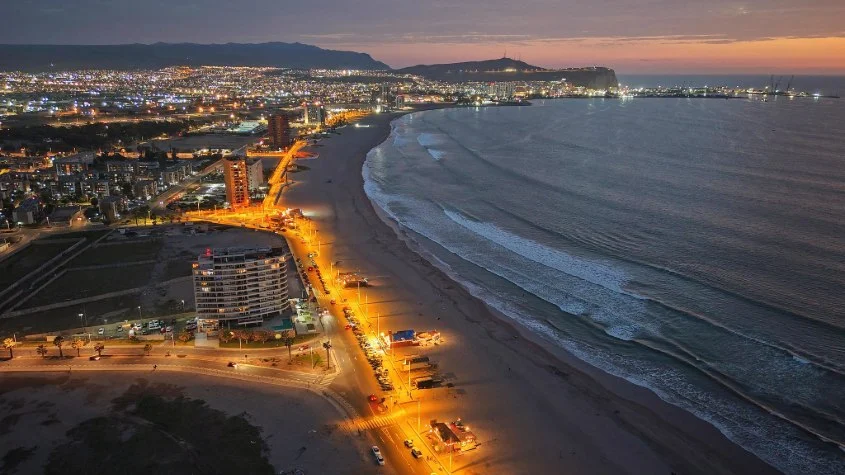
ARICA, CHILE – In a significant boost to urban infrastructure and regional tourism, the Chilean Ministry of Public Works (MOP) has officially unveiled the second phase of the comprehensive revitalization project for the Chinchorro beach coastline. This ambitious endeavor, which commanded an investment exceeding 4 billion Chilean pesos (approximately US$ 4 million), marks a pivotal step in the long-term strategic plan to transform Arica’s northern waterfront into a world-class public destination.
The project, executed through the MOP’s Directorate of Port Works, has successfully rehabilitated 1.3 kilometers of one of the most iconic and frequently visited coastal stretches in northern Chile. The inauguration ceremony, led by Minister (s) of Public Works Nicolás Balmaceda, served as a showcase for the modern, accessible, and resilient infrastructure that now defines this renewed urban landmark.
Project Scope and Technical Specifications
The revitalization of Chinchorro Beach was born out of a critical necessity. Years of exposure to harsh saline conditions, combined with high pedestrian traffic and environmental wear, had led to a significant deterioration of existing structures. The MOP’s intervention was not merely cosmetic; it was a structural necessity designed to future-proof the area against the elements.
The 1.3-kilometer upgrade included a comprehensive overhaul of the following elements:
- Structural Reinforcement: Extensive restoration of containment walls and sea-facing barriers to prevent erosion and structural failure.
- Urban Renewal: Complete replacement of degraded pavements with high-durability, aesthetically pleasing materials.
- Accessibility Standards: The integration of modern ramps and pathways designed to ensure universal access, catering to residents and tourists with mobility challenges.
- Public Amenities: The installation of contemporary street furniture, including ergonomic benches, shaded seating areas (sombreaderos), and modern, energy-efficient lighting systems.
- Modern Infrastructure: Dedicated parking facilities for bicycles and a specialized access point for emergency and maintenance vehicles, ensuring safety protocols are integrated into the public space.
Chronology: From Concept to Completion
The journey toward a revitalized Chinchorro coastline has been a decade-long vision aimed at reclaiming public space for the citizenry.

2018: The Genesis
The project began to take shape in 2018. Following community consultations and engineering assessments, the MOP identified the urgent need to address the decay of the coastline. The plan was envisioned as a multi-stage, long-term development to cover nearly five kilometers of the northern shore.
The First Wave
Before the current 1.3-kilometer milestone, the project saw preliminary success with the completion of a 450-meter stretch of the Chinchorro coast and a significant 1,600-meter improvement project at the adjacent Las Machas beach.
2024–2026: The Second Stage
The recently completed second stage represented the most complex phase of the development, focusing on the high-traffic areas of Chinchorro. Through diligent management by the Directorate of Port Works, the project weathered logistical challenges to reach its completion in late 2026, delivering a space that balances functional utility with leisure.
Official Responses and Strategic Vision
During the inauguration, Minister (s) Nicolás Balmaceda emphasized that the project is a testament to the government’s commitment to public welfare. "This investment of over 4 billion pesos is not just about concrete and lights," Balmaceda noted. "It is about returning the coast to the people of Arica, providing a secure, family-friendly environment for sports, leisure, and community bonding."
Balmaceda also highlighted the economic ripple effects. "Projects of this magnitude are engines for local employment. By upgrading our coastal assets, we are signaling to the tourism industry that Arica is a premier destination. This is a crucial step in a broader strategy that, when completed, will encompass nearly five kilometers of continuous, high-quality public coastal space."

Diego Paco Mamani, the Governor of Arica and Parinacota, echoed these sentiments, stressing the importance of the project in regional development. "Our coastline is our identity. Investing in its maintenance is an investment in our pride and our future. We are creating a space that welcomes both the local family on a Sunday afternoon and the international tourist looking for a high-quality experience."
The Mayor of Arica, Orlando Vargas, focused on the sustainability of the project. "The challenge now lies in stewardship. We have been handed a world-class facility. The responsibility of the city and its citizens is to protect and maintain these areas, ensuring they remain the crown jewel of our tourism sector."
Economic and Social Implications
The revitalization of Chinchorro is expected to serve as a catalyst for local economic growth. The area currently serves as a hub for a dense network of hospitality services, including hotels, pubs, and restaurants. By providing a clean, safe, and modern environment, the city expects to see an increase in dwell time for tourists, which in turn drives higher revenues for local small and medium-sized enterprises.
Miguel Ángel Maldonado, President of the Arica Chamber of Tourism, lauded the initiative, noting that the aesthetic and functional improvements elevate the city’s national profile. "For years, we have advocated for infrastructure that matches the natural beauty of our beaches. This renovation provides the final piece of the puzzle, allowing us to compete effectively as a top-tier national tourist destination."
Beyond the economic metrics, the project addresses a profound social need: the democratization of space. By installing high-quality recreational facilities, including new children’s playgrounds and sport-friendly zones, the city is fostering a healthier community. The project ensures that the beach is no longer just a destination for swimming, but a year-round venue for exercise, social gatherings, and community events.

Looking Ahead: The Future of Arica’s Coastline
The success of the Chinchorro project serves as a blueprint for future public works in the Arica and Parinacota region. With 3.4 kilometers of the northern coastline now significantly upgraded, the MOP has effectively proven the viability of large-scale urban interventions in the face of harsh coastal environments.
The long-term roadmap involves integrating these segments into a seamless, unified, and high-standard coastal corridor. The Ministry of Public Works has indicated that planning for subsequent phases is ongoing, with a focus on extending the same standards of accessibility and aesthetic design further down the coast.
As Arica continues to position itself as a strategic northern gateway, the integration of high-quality urban infrastructure will remain the backbone of its development. The Chinchorro beach renovation stands not only as a feat of engineering but as a triumph of collaborative governance—a project that has successfully aligned the interests of the state, local authorities, and the private sector to create a lasting legacy for the people of Arica.
For the residents, the beach is once again a place of pride, a testament to what can be achieved when public policy focuses on the intersection of sustainability, economic development, and human well-being. As the city looks toward the next phase of its coastal evolution, the restored shores of Chinchorro serve as a beacon of progress and a promise of future prosperity.