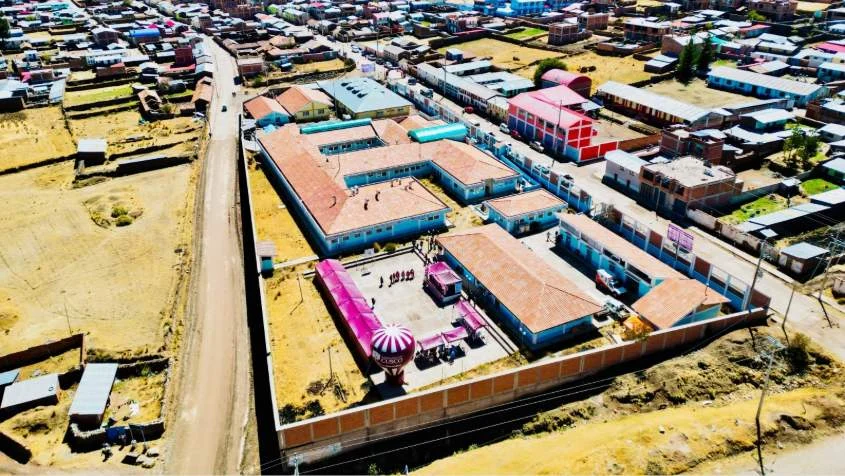
CUSCO, PERU – In a significant move to bolster public health infrastructure in the high-Andean region, authorities have officially commenced a comprehensive modernization project for the Yanaoca Health Center, located in the province of Canas. With an investment exceeding S/ 7.5 million, this initiative aims to bridge the gap in medical service quality for thousands of residents, marking a pivotal moment for regional healthcare development.
The project, executed under the IOARR (Investments in Optimization, Marginal Expansion, Repositioning, and Rehabilitation) modality, is designed to fast-track the delivery of critical medical infrastructure. By streamlining the bureaucratic requirements typically associated with large-scale public works, the IOARR framework ensures that the residents of Yanaoca will benefit from state-of-the-art facilities and equipment within an accelerated timeframe of 300 calendar days.
Main Facts: A Holistic Overhaul of Medical Services
The modernization of the Yanaoca Health Center is not merely a superficial renovation; it is a structural and technological transformation. The project, formally registered as the "Construction of consulting rooms; remodeling of the urgent and emergency clinic and inpatient ward; acquisition of digital X-ray equipment; and other assets in Yanaoca," seeks to address the long-standing limitations of the existing facility.
Key components of the intervention include:
- Infrastructure Expansion: The construction of new, specialized consulting rooms designed to accommodate modern primary care workflows and ensure patient privacy.
- Emergency Care Enhancement: A complete redesign and renovation of the triage, urgent care, and emergency wings to ensure they meet modern clinical standards.
- Inpatient Capacity: Modernization of the inpatient ward, which is essential for stabilizing patients before transfer or for managing minor surgeries and routine recovery.
- Technological Integration: The centerpiece of the equipment upgrade is the procurement of a state-of-the-art digital X-ray system. This addition will eliminate the need for patients to travel to larger urban centers—often hours away—to receive basic diagnostic imaging.
Chronology of the Project
The path to this upgrade has been defined by a need for efficiency and a commitment to closing the health gap in rural Cusco. While the project is now in the execution phase, its history reflects the broader challenges of infrastructure development in the Peruvian highlands.

- Early Planning and Assessment: Following initial diagnostic reports that highlighted the deterioration of the Yanaoca facility, local health authorities and the Regional Government of Cusco prioritized the site for an urgent upgrade.
- Technical Validation (Q2 2026): Technical committees conducted comprehensive site inspections to assess the structural integrity of the existing facility and identify the specific requirements for the IOARR framework.
- Approval and Budget Allocation (July 2026): The project received formal approval, with a budget exceeding S/ 7 million, reflecting the importance of this facility to the province of Canas.
- Commencement of Operations (August 2026): With the site handover completed, the Gerencia Regional de Infraestructura (Regional Infrastructure Management) initiated on-site work.
- Execution Horizon: The project is scheduled to reach completion within 300 calendar days, with the local government committing to strict oversight to ensure the deadline is met without sacrificing quality.
Supporting Data: Why Yanaoca Matters
The Yanaoca district serves as a vital hub for the province of Canas. For rural populations in the Andes, the local health center is often the only point of access to the formal healthcare system.
The reliance on outdated analog equipment and limited consulting space has historically contributed to delayed diagnoses and increased pressure on provincial hospitals in larger cities. By introducing digital diagnostic tools, the health center will be able to integrate into a modern tele-health network, allowing for faster consultation with specialists in Cusco or Lima.
The investment of over S/ 7 million is proportional to the necessity of the population. In the context of regional public spending, the decision to utilize the IOARR mechanism is a strategic choice intended to prevent the "administrative paralysis" that often plagues public construction in Peru. By focusing on "rehabilitation" and "repositioning," the project optimizes existing assets rather than starting from zero, which is a more sustainable approach in high-altitude environments where logistics are complex and costly.
Official Responses and Stakeholder Involvement
During the official launch ceremony, representatives from the Gerencia Regional de Infraestructura emphasized that the project is part of a wider commitment to decentralizing healthcare services.

"We are not just laying bricks; we are providing the tools for our doctors and nurses to save lives," stated a regional spokesperson during the site inspection. The inspection was a critical milestone, as technical teams from the regional government walked through the facility alongside local municipal leaders. This collaborative approach ensures that the "field reality" matches the "blueprint theory."
Local authorities in Canas have expressed their support for the project, noting that the health center will serve as a cornerstone of the province’s development. The involvement of the community is also expected to be high, as the renovation promises to reduce the out-of-pocket costs currently incurred by families who must travel to receive basic X-rays or emergency treatments elsewhere.
Implications for the Future of Andean Healthcare
The Yanaoca project represents a model for future infrastructure development in rural Peru. The implications of this investment are three-fold:
1. Reducing Regional Inequality
By investing in remote health centers, the regional government is taking a tangible step toward reducing the health gap between urban centers and rural provinces. Equitable access to digital imaging and modern emergency wards is a fundamental right that, when provided locally, significantly improves health outcomes for maternal, infant, and elderly populations in the Andes.

2. Efficiency in Public Procurement
The successful deployment of the IOARR modality in Yanaoca serves as a case study for other regions. If this project concludes on time and within budget, it will bolster the argument for using similar, agile procurement methods for other stalled infrastructure projects in the Cusco region.
3. Strengthening the Health Network
The Yanaoca Health Center does not operate in a vacuum. By upgrading its capacity, the regional health network in Cusco strengthens its overall resilience. A better-equipped local center acts as a filter, allowing provincial hospitals to focus on complex cases rather than being overwhelmed by patients who could have been treated locally if the proper equipment had been available.
Conclusion
As the heavy machinery begins its work in the heart of the Yanaoca district, the community looks forward to a future where high-quality healthcare is not a luxury, but a local reality. The S/ 7.5 million investment is more than a line item in a budget; it is an investment in the human capital of Canas.
Over the next 300 days, the progress of this health center will be closely monitored. If the project succeeds in its mission, it will serve as a beacon for other communities, proving that through diligent technical planning and a focus on essential infrastructure, the gap in healthcare quality can be successfully bridged, even in the most remote corners of the Andes. The transformation of Yanaoca’s health center is a testament to the fact that when infrastructure meets innovation, the result is a stronger, healthier, and more resilient society.