Introduction: The Red Metal as the Backbone of the Future
Copper has officially transcended its status as a mere industrial commodity; it is now the "new oil" of the 21st century. As the world accelerates its shift toward decarbonization, copper stands as the indispensable input for everything from high-voltage electrical grids and renewable energy generation to the complex wiring of electric vehicles (EVs) and the massive infrastructure required for digital transformation.
In this high-stakes global narrative, Peru occupies a position of strategic prominence. As one of the world’s leading copper producers, the Andean nation is not merely a supplier but a cornerstone of the global energy transition. However, as the demand for this "critical mineral" outpaces supply, Peru faces a pivotal moment: will it remain a provider of raw materials, or will it leverage its position to become an industrial hub that adds value and embraces circularity?
Main Facts: The Current State of Peruvian Copper
The data from the first half of 2025 paints a picture of resilient production. According to the Ministry of Energy and Mines (MINEM), Peru produced approximately 1.36 million metric tons of copper between January and June, representing a 1.9% increase compared to the same period in the previous year.
This output is supported by a massive pipeline of future potential. The Institute of Mining Engineers of Peru (IIMP) reports a national project portfolio valued at US$ 67,000 million, with nearly 70% of these investments dedicated to copper. If these projects reach maturity, analysts suggest that Peru possesses the geological wealth to challenge current leaders and secure the title of the world’s top copper producer.
Chronology: The Evolution of Peru’s Mining Strategy
To understand where Peru is headed, one must look at the recent trajectory of its mining sector:
- 2020–2022 (The Resilience Phase): Despite global supply chain disruptions caused by the pandemic, the Peruvian mining sector maintained production levels, underscoring its role as a reliable global partner.
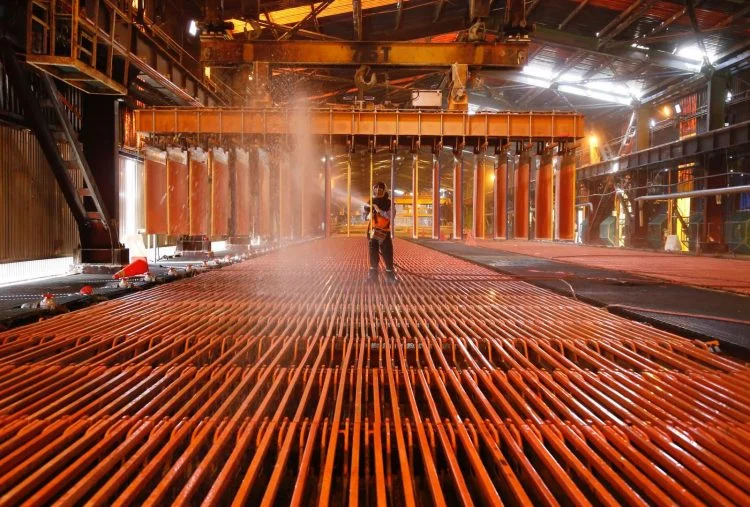
- 2023–2024 (The Value-Addition Debate): Industry leaders and government bodies began shifting the conversation from "volume-at-all-costs" to "sustainable extraction." Discussions regarding the processing of copper cathodes into wire rod and finished cables gained significant traction.
- 2025 (The Circularity Shift): The focus has narrowed on the "Closing the Loop" initiative. Companies like INDECO by Nexans have pioneered the integration of renewable energy in manufacturing and set explicit goals for incorporating recycled copper into the supply chain, marking a turning point in how Peru approaches its mineral wealth.
Supporting Data: The Looming Supply Gap
The urgency for a new strategy is driven by a stark mathematical reality. INDECO by Nexans, a leader in electrical conductor manufacturing in Peru, has issued a warning regarding the "structural tension" in the global market.
Projections indicate that global copper demand could hit 40 million tons by 2030. Current production capacity, however, is projected to hover around 33 million tons. This 7-million-ton deficit is not merely a market fluctuation; it is a structural challenge that threatens the speed of the global energy transition.
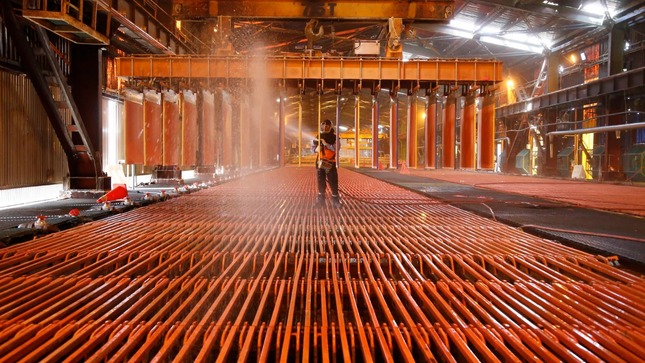
- Production vs. Need: While new mines are essential, the lead time for mining projects (often spanning over a decade) makes relying solely on new extraction insufficient.
- The Efficiency Mandate: The industry is moving toward a model where each ton of copper must be "squeezed" for maximum utility—through internal industrialization and aggressive recycling programs.
Official Responses and Industrial Insights
Fernando Sandoval, Sales Manager for Mining at Nexans, highlights that the traditional view of Peru as an exporter of raw rocks is becoming obsolete.
"We are moving beyond the ‘export-only’ model," Sandoval explains. "The chain is evolving. Mines produce cathodes, and companies like ours convert them into wire rod and then into high-performance cables. These are two critical stages of value addition within Peru, which generate local employment, foster technical expertise, and build industrial capacity."
Sandoval emphasizes a third, often overlooked, pillar of the strategy: Recycling. "There is a third stage that multiplies our contribution: recovering the metal at the end of its useful life so that it returns to the production chain. This is the definition of a circular economy in the mining sector."
The Four Pillars of Modern Copper Strategy
According to industry experts at Nexans, the value of Peruvian copper is now governed by four essential pillars:
1. Advanced Industrialization
The transition from raw cathode to finished product is the key to domestic economic growth. By producing wire and cable domestically, Peru captures more of the value chain, turning a commodity into a high-tech industrial product that supports local energy projects.
2. Energy Efficiency in Manufacturing
It is no longer enough to produce copper; the process of production must be clean. INDECO by Nexans, for instance, operates its Peruvian facilities using 100% renewable energy, ensuring that the copper cables produced for mining operations have a lower carbon footprint from the start.
3. The Circularity Mandate
The company has committed to a bold goal: reaching 25% recycled copper in its cables by 2028. This reduces the strain on primary mining, extends the lifespan of the metal, and provides mining operations with "green" materials that help them meet their own ESG (Environmental, Social, and Governance) targets.
4. Integrated Supply Chain Partnerships
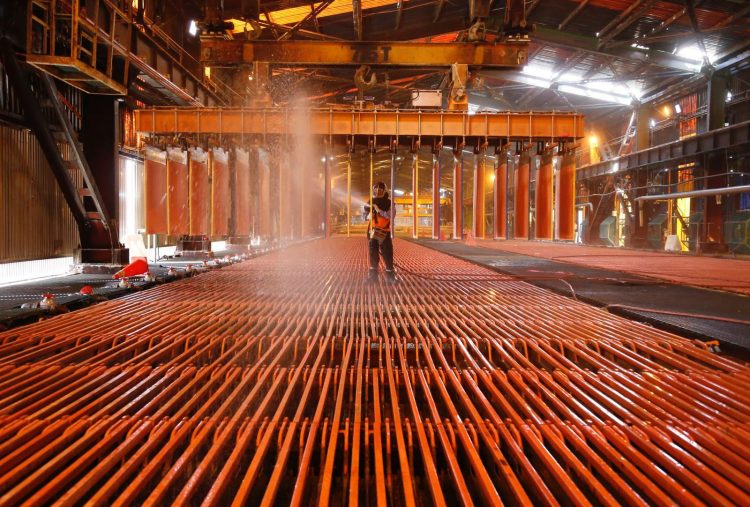
The modern model is symbiotic. Mining companies are both providers of raw cathodes and consumers of finished conductors. When a mining company purchases locally manufactured, high-efficiency cables, they are closing the loop, ensuring that the copper they extract is utilized effectively and eventually reclaimed.
Implications: The Path Forward for Peru
The implications of this shift are profound for the Peruvian economy and its global standing.
Economic Implications
By shifting toward a value-added model, Peru can diversify its industrial base. This reduces dependence on raw commodity price volatility and promotes the growth of high-skill manufacturing jobs. Instead of simply being a "quarry for the world," Peru establishes itself as a center for industrial innovation.
Environmental Implications
The electrification of the global economy is paradoxical: it requires massive amounts of mining, which is inherently resource-intensive. By focusing on circularity, Peru positions itself as a leader in "sustainable mining." This branding is increasingly important as global investors and downstream customers (such as EV manufacturers) demand proof of low-carbon footprints.
Geopolitical Implications
As the world seeks to secure its supply of critical minerals, nations that can guarantee not just volume, but also a stable, transparent, and circular supply chain, will have the upper hand in trade negotiations. Peru’s ability to integrate its mining and manufacturing sectors provides a unique competitive advantage in the Pacific Alliance and beyond.
Conclusion: A Shared Challenge
The "Copper Crucible" is the defining challenge for Peru’s next decade. As Fernando Sandoval aptly concludes: "The electrification of the world is going to require far more copper than is currently being produced, and that volume will not come from new mines alone. The challenge is shared: we must ensure that every ton of copper yields more, over a longer period, through a smarter chain—from the cathode to the cable that eventually returns to the mine."
Peru’s potential to become the world’s leading copper producer is undeniable. However, its true success will be measured by its ability to harmonize extraction with innovation, ensuring that the metal which powers the future of the planet also powers the industrial future of the nation. As the global energy transition accelerates, the focus must remain clear: the value of copper is not found in the ground, but in the efficiency, circularity, and intelligence with which it is managed throughout its entire lifecycle.