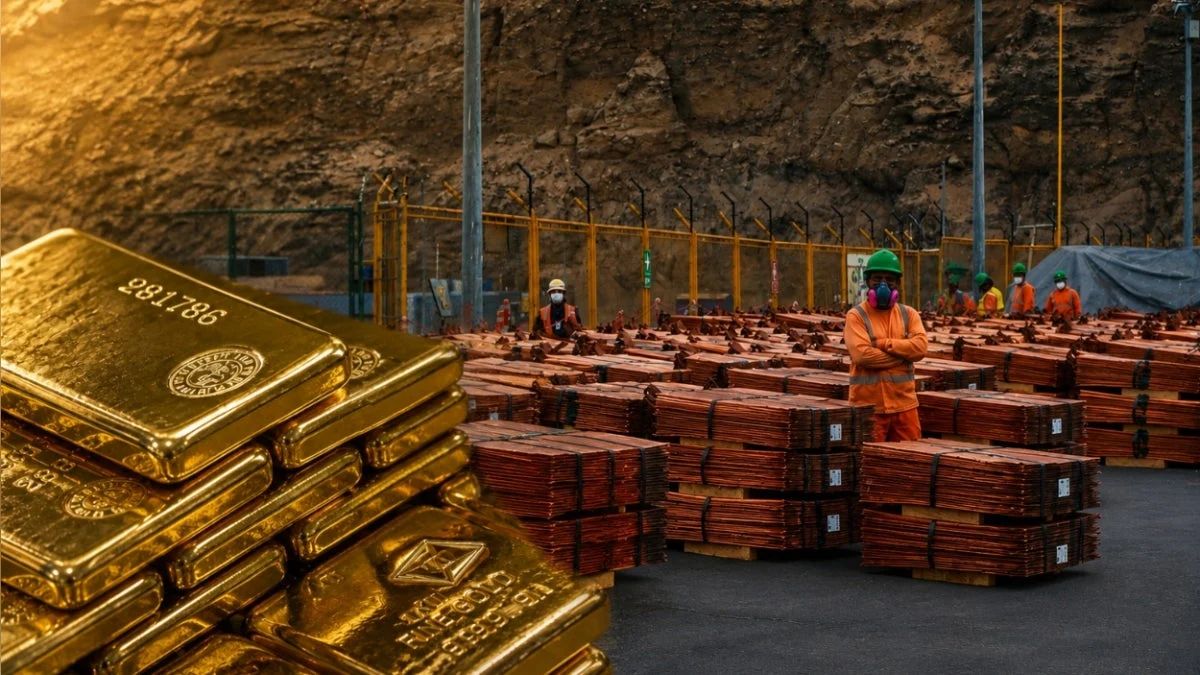
The Peruvian mining industry, the traditional backbone of the nation’s economy, has demonstrated unprecedented vitality during the first half of 2026. According to the latest data released by the National Society of Mining, Petroleum, and Energy (SNMPE), the sector generated a staggering US$42.221 billion in exports between January and June. This figure represents a robust 56% growth compared to the US$27.061 billion recorded during the same period in 2025, signaling a period of exceptional prosperity for the Andean nation’s extractives industry.
Executive Summary: A Half-Year of Record-Breaking Performance
The data confirms that the mining sector remains the primary driver of Peru’s international trade balance. With a total export value of over US$42 billion in just six months, the industry is on track to surpass previous annual records. The surge is largely attributed to a combination of favorable international commodity prices and a strategic increase in the output of precious and base metals.
The SNMPE report highlights that the overwhelming majority of these export earnings are derived from two primary commodities: copper and gold. Together, these two minerals accounted for approximately 83.5% of the total value exported by the mining sector during the first half of the year, reinforcing Peru’s position as a global leader in mineral production.
Chronology of the 2026 Mining Surge
The trajectory of the mining sector throughout the first half of 2026 has been marked by a consistent upward trend, as documented by both the SNMPE and the Ministry of Energy and Mines (Minem):
- January–May 2026: The Ministry of Energy and Mines reported a cumulative total of US$36.007 billion in mining exports, representing a significant 58.6% year-on-year increase. During this five-month window, the mining sector alone accounted for 76.1% of the total value of all Peruvian exports, cementing its role as the engine of the national economy.
- The June Milestone: The momentum continued into the middle of the year, with June exports reaching US$6.429 million. This monthly figure represents a 35.2% increase compared to June 2025, providing the final push needed to surpass the US$42 billion threshold for the semester.
- Sectoral Concentration: By the end of June, the combined contribution of copper, gold, lead, and zinc remained remarkably dominant, representing 92.9% of the total value of mining exports. This concentration underscores the specific reliance of the Peruvian export basket on a handful of high-value commodities.
Supporting Data: The Anatomy of Success
A granular look at the performance of individual metals reveals the mechanisms behind the financial growth.
The Copper Dominance
Copper continues to be the crown jewel of the Peruvian mining industry. Between January and June 2026, copper exports reached US$19.455 billion, a 53.3% increase over the US$12.692 billion reported in the first half of 2025. Copper alone accounted for 46.1% of the total value of mining exports for the semester.
However, a closer look at the June figures reveals a nuanced market reality: while the value of copper exports rose, it was driven almost entirely by price, not volume. In June, the value of copper exports grew by 18%, but the physical volume of the metal exported actually declined by 16.9%. This suggests that while global price surges (up 41.9% in June) have shielded the economy, there are potential challenges regarding production volume and operational efficiency that require attention.
The Gold Rally
Gold has performed even more aggressively than copper in terms of growth rates. With exports totaling US$15.808 billion in the first six months, the sector saw a 62% increase compared to the US$9.760 billion recorded in the same period of 2025. Unlike copper, gold’s performance in June was characterized by a "double win": both the volume of exports and the price of the metal increased by 15% and 26.1%, respectively. Gold now accounts for 37.4% of the total mining export value.
Supporting Metals: Lead and Zinc
Beyond the primary two, lead and zinc have played supporting roles in the national recovery. Lead exports contributed an additional US$1.585 billion to the semester’s totals, highlighting the diversity of the portfolio and the ability of the industry to capitalize on rising demand for industrial metals across the global market.
Official Responses and Strategic Outlook
Government authorities, led by the Ministry of Energy and Mines (Minem), have framed these results within the context of a shifting global landscape. The surge in exports is not merely a product of luck but of a sustained international demand for minerals linked to the global energy transition, industrial manufacturing, and large-scale infrastructure development.
Addressing Speculation and Efficiency
In response to the boom, the government is currently evaluating new regulatory frameworks for mining concessions. The Ministry is looking to implement stricter rules, including the mandatory payment of bonds for new concessions. The objective is to prevent the "speculation" that often plagues the sector, where large swaths of land are held for potential mining without active exploration or development.
The government’s recent decision to release over 1,000 mining concessions for the exploration of copper, gold, and other minerals is a direct effort to maintain this growth momentum. By clearing the path for new exploration, the Minem hopes to secure the future pipeline of mineral supply, ensuring that the current export boom does not lead to a medium-term resource depletion.
Implications for the Peruvian Economy
The record-breaking export figures have profound implications for the country:
- Fiscal Stability: The tax revenue generated by these mining giants provides the fiscal space necessary for the Peruvian government to invest in social programs, public health, and infrastructure projects in regions often neglected by the private sector.
- The "Green" Transition Opportunity: As the world moves toward electric vehicles and renewable energy, the global demand for copper is projected to remain elevated. Peru’s ability to sustain its copper output will be a key determinant of its long-term economic relevance in the 21st-century global market.
- Regional Development and Social License: Despite the stellar export numbers, the mining sector faces constant scrutiny regarding its environmental footprint and its relationship with local communities. The government’s move to update concession rules reflects a growing awareness that "mining success" must be accompanied by sustainable development practices to ensure a social license to operate.
- Currency and Inflation: The influx of foreign currency resulting from these record exports has a stabilizing effect on the Sol, helping to manage inflationary pressures related to imported goods.
Conclusion
The first half of 2026 has been a watershed moment for the Peruvian mining industry. By generating US$42.2 billion in just six months, the sector has proven its resilience and its critical importance to the nation’s survival and growth. While the divergence between price-led growth (copper) and volume-led growth (gold) presents a complex picture for analysts, the overarching narrative is one of strength. As the government moves to refine the regulatory framework and open new areas for exploration, the challenge for the second half of the year will be to ensure that these financial gains translate into tangible, long-term development for all Peruvians.