Executive Summary: Addressing the Energy Crisis
In a decisive move to stabilize the energy landscape in southern Peru, the Ministry of Energy and Mines (MINEM) has officially declared a state of emergency concerning the supply of Liquefied Petroleum Gas (LPG) across the departments of Cusco, Puno, Arequipa, Moquegua, and Tacna.
The declaration, formalized through Ministerial Resolution No. 360-2026-MINEM/DM and signed by Minister Guillermo Shinno Huamaní, comes as a response to severe logistical disruptions caused by extreme weather patterns. Heavy rains and subsequent natural disasters have rendered critical transport arteries impassable, isolating key regions and threatening the continuity of energy access for thousands of households, small businesses, and social institutions.
The emergency measure grants the Supervisory Body for Investment in Energy and Mining (Osinergmin) the authority to bypass standard regulatory bottlenecks, allowing for flexible, temporary solutions to maintain the flow of LPG despite the collapse of conventional supply chains.
Chronology of the Supply Disruption
The current energy crisis did not emerge in a vacuum. It is the culmination of a weeks-long struggle against seasonal climate volatility that has intensified significantly in the first quarter of 2026.
- Early Phase (Early August 2026): Unprecedented rainfall began affecting the Andean corridors. Initial reports from transport logistics firms indicated intermittent road closures in the high-altitude passes connecting the coastal distribution hubs to the southern interior.
- Escalation (Mid-August 2026): As saturation levels reached a critical point, landslides and localized flooding obliterated sections of the primary highways. The supply chain, which relies heavily on terrestrial tanker trucks for LPG distribution, effectively fractured.
- The Inventory Crisis (Late August 2026): By the final week of August, regional gasocentros and bottling plants reported that their storage tanks—designed for "just-in-time" delivery models—had dropped below safety thresholds. The autonomy of these facilities, typically capable of sustaining supply for only a few days, was exhausted.
- Government Intervention (Current): On the heels of the Ministerial Resolution, the government shifted from monitoring to active intervention, authorizing the mobilization of resources to bypass blockaded routes and ensure the prioritized delivery of fuel.
Supporting Data: Understanding the Southern Energy Map
The southern region of Peru represents a significant portion of the national LPG consumption market. Unlike the central region, which benefits from diversified infrastructure, the southern provinces are heavily dependent on long-haul road transport originating from major refineries or import terminals on the coast.

Infrastructure Vulnerability
The southern corridor is characterized by high-altitude terrain where infrastructure is uniquely susceptible to geodynamic phenomena. Recent data from the Ministry of Transport and Communications (MTC) highlights that over 40% of the primary road network in these five departments is currently categorized as "high-risk" due to unstable soil conditions and the intensity of the current rainy season.
Consumption Profile
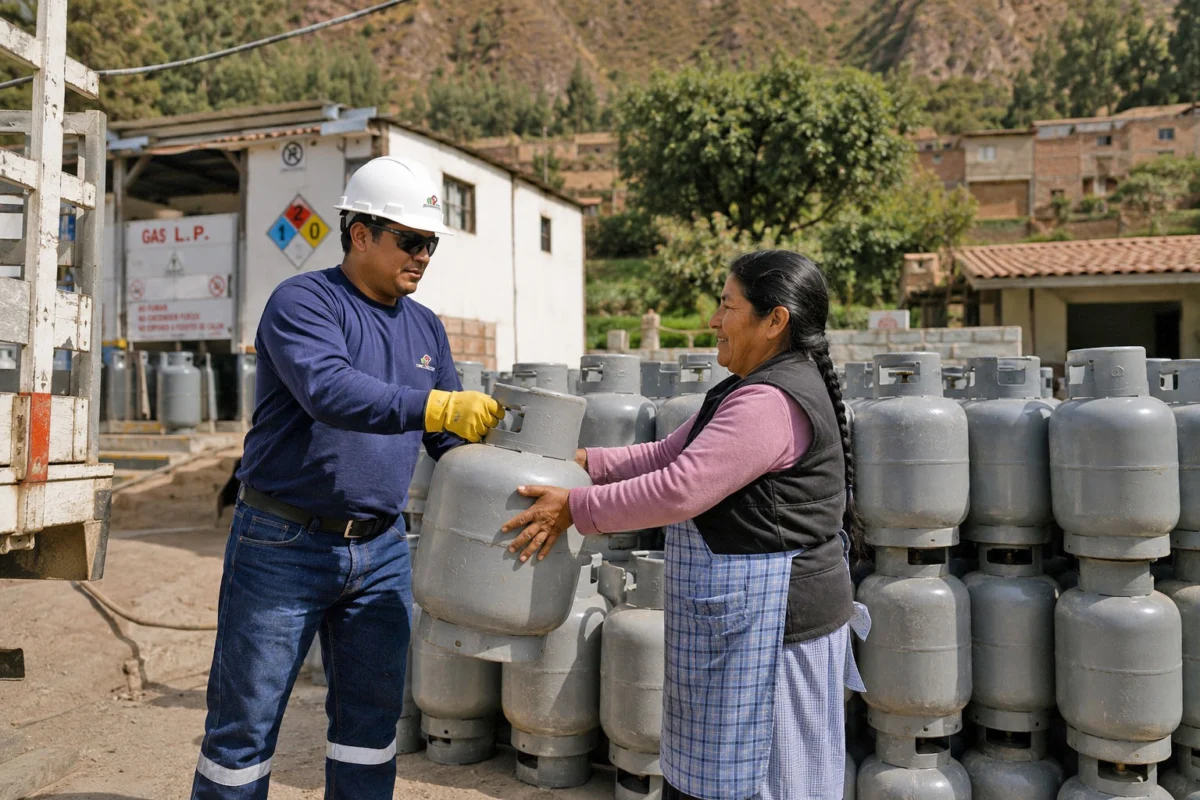
LPG in this region is not merely a commercial commodity; it is a critical utility. The consumption profile in Cusco, Puno, Arequipa, Moquegua, and Tacna is distributed as follows:
- Residential Sector (65%): LPG is the primary source of thermal energy for cooking and heating, particularly in the high-altitude climates of Puno and Cusco.
- Social and Public Infrastructure (15%): Hospitals, community kitchens (comedores populares), and schools rely on a consistent supply to maintain essential services.
- Commercial/Transport (20%): A significant portion of the local transport fleet has been converted to LPG for efficiency, making fuel availability a driver of local economic mobility.
Official Responses and Regulatory Shifts
The core of the government’s strategy, as outlined by Minister Guillermo Shinno Huamaní, is the temporary suspension of rigid regulatory compliance. Under normal circumstances, the commercialization and safety of hydrocarbons are governed by strict protocols that dictate storage volumes, transport safety, and quality control.
The Role of Osinergmin
The Ministerial Resolution tasks Osinergmin with the following responsibilities:
- Regulatory Flexibility: The agency is empowered to approve "alternative measures" to standard safety and operational regulations. This means that if a facility requires a deviation from standard storage protocols to maximize volume or expedite throughput, Osinergmin has the legal framework to grant immediate, temporary approval.
- Supply Prioritization: Osinergmin is now coordinating directly with distributors to ensure that the limited remaining inventory is directed toward the most vulnerable users first, specifically social programs and households, rather than non-essential industrial clients.
- Monitoring and Oversight: Despite the emergency, the agency remains tasked with ensuring that any deviations from standard protocols do not result in catastrophic safety failures, balancing the need for speed with the necessity of safe handling of pressurized gases.
Minister Shinno Huamaní noted in a press briefing, "Our priority is to keep the energy flowing to the home. If the regulation acts as a barrier during a natural disaster, the regulation must adapt. We are ensuring that the spirit of the law—the protection of the consumer—remains intact, even if the letter of the law is temporarily adjusted."

Implications: The Path Forward
The 30-day emergency period represents a bridge between the current crisis and a return to operational normalcy. However, the situation has ignited a broader national conversation regarding energy security in the face of climate change.
Short-Term Implications
- Supply Stabilization: The intervention is expected to stabilize prices in the black market, which often spikes during shortages. By facilitating legal, efficient distribution, the government aims to prevent price gouging.
- Logistical Innovation: The use of "emergency routes" and coordinated military or heavy-duty transport assistance will be tested over the next four weeks.
Long-Term Strategic Considerations
This crisis underscores the fragility of relying solely on terrestrial supply routes in a country defined by rugged geography and increasing climate volatility. Policy experts have begun to suggest that Peru must consider:
- Strategic Regional Reserves: Building larger, state-subsidized strategic LPG reserves in southern hubs like Arequipa and Cusco to provide a buffer against month-long supply interruptions.
- Diversification of Energy Sources: Accelerating the transition to localized renewable energy or decentralized power grids in rural southern areas to reduce the dependency on fossil fuel transportation.
- Climate-Resilient Infrastructure: Investing in "hardened" transport corridors that can withstand the increased frequency of extreme weather events, acknowledging that the current rainy season may be a preview of future climate trends.
Conclusion
The declaration of a state of emergency in the southern departments is a necessary, proactive intervention by the Peruvian government. By streamlining the role of Osinergmin and authorizing regulatory flexibility, the state is demonstrating a commitment to the fundamental rights of its citizens to access basic energy.
While the immediate focus is on the 30-day window of recovery, the lessons learned from the "August 2026 Crisis" will likely necessitate a fundamental shift in how Peru manages its energy security. The intersection of geography, climate change, and national welfare requires a robust, long-term infrastructure plan that ensures no citizen is left in the dark—or without heat—due to the closing of a road. As the situation evolves, the government’s ability to maintain this delicate balance between emergency response and public safety will be the defining metric of their success in the coming month.