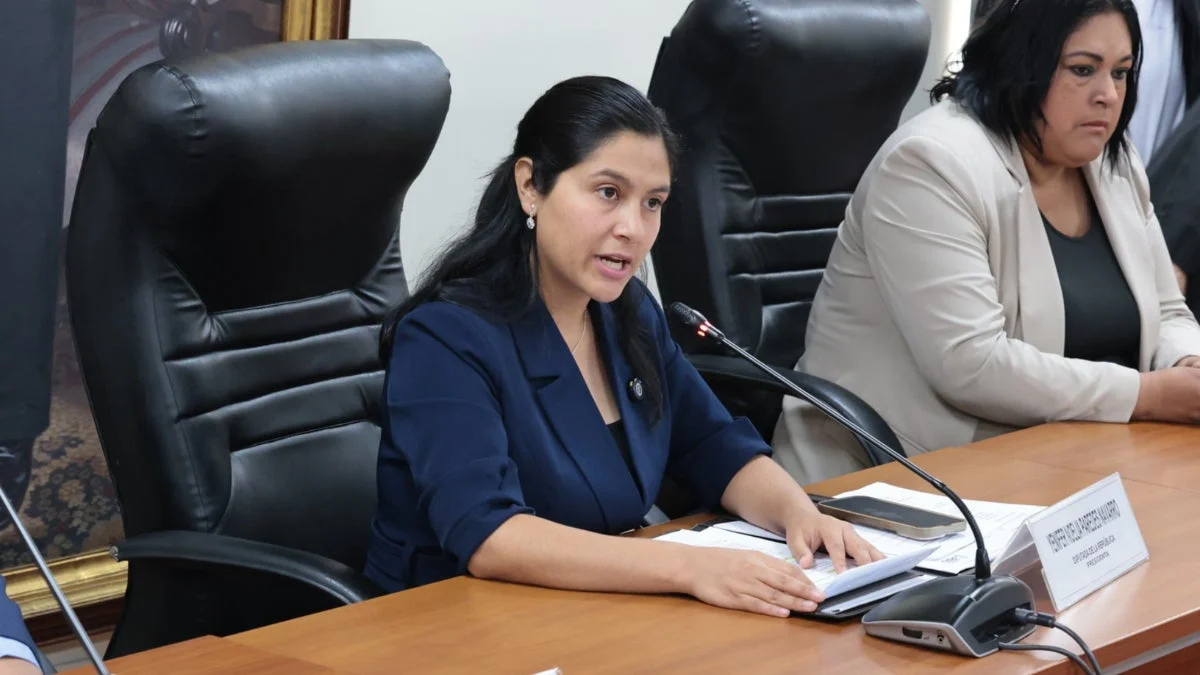
In a development that has captured the attention of both the political establishment and the mining industry, Yenifer Paredes Navarro, a congresswoman representing the Juntos por el Perú party, was unanimously elected this Wednesday to chair the Energy and Mines Commission of the Chamber of Deputies for the 2026–2027 legislative term.
The appointment is significant not only for the high-stakes legislative agenda awaiting the commission but also for the political profile of its new chair. Paredes, known for her close ties to former President Pedro Castillo, now finds herself at the helm of one of the most powerful and contentious committees in the Peruvian Congress. Her leadership will be tested immediately by the urgent need to address the structural crisis within the small-scale and artisanal mining sector, a pillar of the national economy that remains plagued by informality and environmental challenges.
Main Facts: The Mandate of the Commission
The Energy and Mines Commission holds the legislative key to the future of the nation’s primary economic engine. As chair, Paredes will oversee the debate on the Registro Integral de Formalización Minera (Reinfo), a controversial mechanism that has been at the center of Peruvian policy for years.
The commission’s agenda is expansive. Beyond Reinfo, Paredes is tasked with:
- Defining the future of MAPE: Leading the development of a new regulatory framework for Small-Scale and Artisanal Mining (MAPE).
- Combating Illegal Mining: Coordinating with the Executive branch to curb the expansion of illicit operations that have caused significant environmental degradation, particularly in the Amazon basin.
- Legislative Oversight: Reviewing the performance of the Ministry of Energy and Mines (MINEM) and ensuring that the newly announced reforms to the mining canon—intended to redirect resources directly to local communities—are implemented effectively.
Chronology: From Legislative Deadlock to New Leadership
To understand the gravity of Paredes’ appointment, one must look at the recent history of the mining sector’s legislative struggles:
- 2024–2025: The outgoing Congress struggled to reach a consensus on the formalization process. After several failed attempts to finalize the Reinfo transition, the legislature approved a controversial extension, pushing the deadline for formalization to December 31, 2026. This move was widely criticized by environmental groups and industry watchdogs as a "perpetual window for informality."
- Early 2026: The failure to pass the "MAPE Law"—a comprehensive proposal meant to replace the outdated formalization schemes—left a legislative vacuum. The previous commission rejected the primary predictamen, leaving the sector in a state of regulatory uncertainty.
- Mid-2026: Following the inauguration of the new legislative session, the selection process for the commission chair began. Despite the political diversity of the Chamber of Deputies, the unanimous vote for Paredes signaled a pragmatic consensus among disparate ideological factions.
- Wednesday, 2026: Formal inauguration of Yenifer Paredes as Chair, marking the beginning of a high-pressure 12-month term.
Supporting Data: The Mining Landscape in Peru
The sector over which Paredes now presides is not merely a bureaucratic entity; it is a sprawling economic network. According to government data and independent studies:
- The Human Scale: More than 300,000 families across Peru rely directly or indirectly on small-scale and artisanal mining for their livelihood.
- The Informal Gap: While Reinfo was designed as a pathway to legality, a significant percentage of participants remain in a "gray zone," often operating for years without fully meeting environmental or safety standards.
- Economic Impact: Mining accounts for roughly 60% of Peru’s total exports. The tension between large-scale industrial mining and the vast, fragmented artisanal sector creates a dual-track economy that is difficult to regulate.
- Environmental Stakes: Illegal mining remains the primary driver of deforestation in regions like Madre de Dios, where the use of mercury and the destruction of riverbeds have caused irreversible damage to biodiversity.
Official Responses and Political Realignments
Perhaps the most surprising aspect of the appointment was the reception of Paredes’ inaugural address. Despite her political background—often viewed with skepticism by conservative blocs—her speech struck a chord of bipartisan cooperation.
The Stance of the Major Parties
- Fuerza Popular and Renovación Popular: Traditionally aligned against the political faction from which Paredes emerged, these parties provided a surprisingly positive reception. Members of Renovación Popular specifically called for the immediate elimination of the Reinfo, arguing that it has become a "shield for illegal activity" rather than a tool for formalization. Their support for the new chair is contingent on her willingness to push for a more aggressive, market-oriented Ley MAPE.
- The Ministry of Energy and Mines: New Minister Guillermo Shinno has welcomed the appointment, stating that his office is prepared to collaborate closely with the Commission. Shinno has made it clear that his administration intends to replace the current Reinfo system with a more rigorous, modern mechanism that prioritizes environmental compliance.
Paredes’ Vision: "Mining and the Environment are Not Enemies"
In her opening remarks, Paredes emphasized a "human-centric" approach. She argued that the state has historically been a barrier to formalization rather than a facilitator.
"Whoever wants to work within the law must find a State that helps them formalize, not a State that slams the door in their face," Paredes asserted. She underscored that her tenure would prioritize "harmonious coexistence," rejecting the narrative that mining and environmental protection are mutually exclusive. She pledged to travel to the regions, promising that the Commission would act as a voice for remote communities that have historically felt ignored by the bureaucratic center in Lima.
Implications: The Road Ahead
The appointment of Yenifer Paredes carries significant political and economic implications.
1. The End of the "Reinfo Era"?
The most immediate challenge will be the expiration of the Reinfo extension. Paredes will have to navigate the intense lobbying from mining associations that fear sudden closure, against the mounting pressure from civil society and international organizations to end the cycle of extensions. If she succeeds in pushing through a new, more effective framework, she could define the regulatory landscape for a generation.
2. The Decentralization of Policy
By promising to listen to the regions, Paredes is signaling a shift in how the Commission operates. If the commission holds sessions outside of Lima, it could restore some of the fractured trust between the central government and the mining provinces. However, this also opens the door to political volatility, as regional interests often clash with national environmental mandates.
3. A Test of Political Maturation
For Paredes, this position is a chance to move beyond the controversies of the Castillo era and establish herself as a serious legislator. Her success depends on her ability to balance the demands of her coalition, the legislative requirements of the opposition, and the harsh reality of the illegal mining crisis.
4. Environmental and Social Governance (ESG)
The international community will be watching closely. With increasing pressure from global markets for "clean" minerals, Peru’s ability to clean up its artisanal sector is essential for maintaining its status as a top-tier mining destination. The policies drafted under Paredes’ watch will be scrutinized by investors who are increasingly sensitive to the environmental and human rights records of the supply chain.
Conclusion
As the new Chair of the Energy and Mines Commission, Yenifer Paredes faces an uphill battle characterized by deep-seated systemic issues and a polarized political climate. However, the unanimity of her election provides a rare window of opportunity for structural reform. Whether she can convert her vision of "harmonious coexistence" into actionable, durable law remains the central question of the 2026–2027 legislative year. If she can bridge the divide between the informal sector’s economic necessity and the nation’s environmental responsibilities, she may well leave an indelible mark on Peru’s mining history. The eyes of the nation—and its communities—are now firmly fixed on her next move.