Executive Summary: A Milestone for Andean Agriculture
In a landmark development for the agricultural heartland of Cusco, the Peruvian government has officially inaugurated the Paccaritambo Irrigation System. Located in the province of Paruro, this ambitious infrastructure project, spearheaded by the Ministry of Agrarian Development and Irrigation (MIDAGRI), represents a strategic shift toward climate resilience and economic sustainability for small-scale farmers. By securing a reliable water supply for the sectors of Coypa, Ayusbamba, Colqueucro, and Urbes, the project aims to transform the local agricultural landscape, ensuring that the fertile soils of the Andes can produce at their full potential throughout the year.
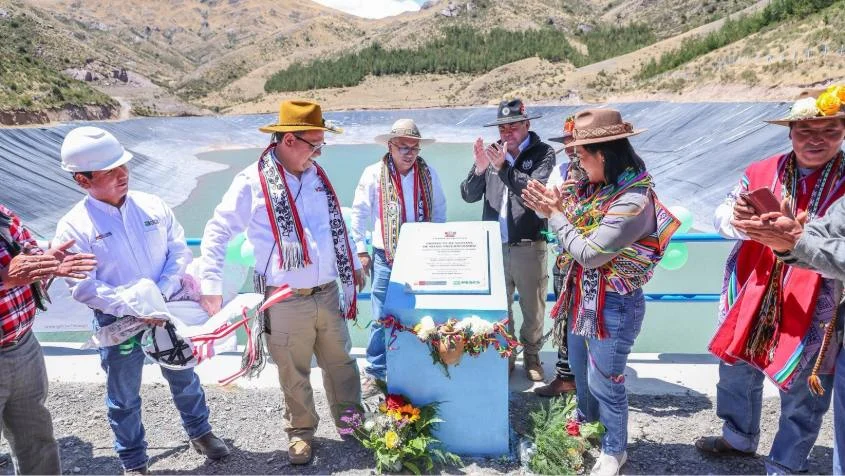
The inauguration ceremony, attended by President Keiko Fujimori and Minister of Agrarian Development and Irrigation Marco Vinelli, underscores the government’s commitment to decentralizing resources and empowering rural communities. With a total investment exceeding S/ 28 million, the system is designed to provide water security for 284 hectares of land, directly benefiting over a thousand residents and fostering a more robust, competitive, and drought-resistant agricultural sector in the region.
Chronology: From Planning to Fruition
The completion of the Paccaritambo system is the result of long-term planning and coordinated institutional effort. The project’s timeline highlights the complexity of executing major infrastructure in high-altitude terrain:
- Project Inception: Recognizing the vulnerability of Paruro’s small-scale farmers to seasonal droughts, the "Proyecto Especial Sierra Centro Sur" (PESCS) identified Paccaritambo as a priority site for hydraulic intervention.
- Construction Phase: Over the course of the construction period, the project faced the logistical challenges inherent in the geography of the Peruvian Andes, requiring the transport of heavy materials and specialized engineering teams to remote sectors.
- Infrastructure Completion: The final phase involved the successful construction of an enrocado (rock-fill) dam, capable of storing 0.72 million cubic meters of water, and the integration of advanced hydraulic structures to distribute water via modern irrigation channels.
- Inauguration and Commissioning: The system reached its operational milestone in September 2026, culminating in the formal opening of the valves by the President, marking the transition from a government-led project to community-managed water infrastructure.
Supporting Data and Technical Specifications
The Paccaritambo project is not merely a pipeline; it is a sophisticated integrated system designed for long-term sustainability. The technical metrics provide a clear picture of its scale and impact:

- Total Investment: S/ 28,062,709.43.
- Water Storage Capacity: 0.72 million cubic meters, sourced from both natural springs and seasonal rainfall.
- Agricultural Reach: 284 hectares of land are now equipped for advanced drip and sprinkler irrigation.
- Direct Beneficiaries: 1,092 local inhabitants across four key agricultural sectors.
- Scope of Works: Beyond the dam itself, the investment covers site preparation, environmental monitoring, archaeological safeguarding, and specialized technical assistance for the water-user associations tasked with operating the system.
The infrastructure is designed to support a diverse range of crops, including potatoes, corn, habas, wheat, various vegetables, fruit trees, and high-quality forages for livestock. This diversification is critical for food security and provides farmers with a wider range of market-ready products.
Official Responses and Strategic Vision
During the inauguration, Minister Marco Vinelli emphasized that this project is part of a broader, systemic effort by the current administration to modernize the Peruvian countryside.
"We are committed to building the necessary infrastructure—cochas for water harvesting, reservoirs, and modernized channels—to ensure that our farmers are no longer at the mercy of the weather," Minister Vinelli stated. "Our objective is to work hand-in-hand with local authorities to ensure water availability throughout the year, not just during the rainy season. This is the foundation upon which we will build rural prosperity."
The President echoed these sentiments, highlighting that the Paccaritambo initiative is a model of how public investment can directly stimulate local economies. By reducing the risks associated with climate change and water scarcity, the government is creating an environment where smallholder families can transition from subsistence farming to sustainable, market-oriented production.

Beyond Irrigation: Holistic Rural Development
The government’s strategy in Cusco extends well beyond the physical delivery of water. Recognizing that infrastructure is only one part of the equation, the MIDAGRI, through its various units, has implemented a multi-pronged support strategy:
The Role of AGRO RURAL and INIA
AGRO RURAL has bolstered the community’s capacity through the delivery of six specialized forage-chopping kits and 2,600 kilograms of high-quality oat seeds. Complementing this, the National Institute of Agricultural Innovation (INIA) has distributed 1,300 kilograms of specialized seeds—including forage oats, wheat, and corn—to ensure that local farmers have the biological resources necessary to capitalize on the new irrigation capabilities.
Empowering Women in Agriculture
A cornerstone of the 2026 development agenda is the "Estrategia de Emprendimiento de la Mujer Rural e Indígena" (EEMRI). AGROIDEAS provided significant financial support to local organizations, such as the Sumac T’ikariy Association of Espinar and the Valle de Accopampa-Cotarma Association. With a total infusion of S/ 251,265, these organizations are set to scale their operations in livestock, dairy production, and artisanal processing. Nationwide, the government has approved S/ 10 million to support 78 organizations led by women, focusing on high-value products like coffee, flowers, and dairy derivatives.
Sustainable Forest Management
In an effort to promote sustainable resource utilization, the Forest and Wildlife Service (SERFOR) facilitated the donation of 9,665 board feet of reclaimed cedar wood to the Paccaritambo Municipality. Additionally, the Rosa de América Educational Institution in Quispicanchi received structural lumber. This initiative highlights the government’s effort to repurpose confiscated or recovered forest products for the benefit of public infrastructure and education.

Socio-Economic Implications
The inauguration of the Paccaritambo Irrigation System marks a pivotal moment for the Cusco region. The implications for the local economy are profound:
- Increased Yields: By providing a consistent water supply, the system will significantly increase the yield per hectare, allowing farmers to engage in multi-crop cycles that were previously impossible.
- Climate Resilience: As the Andes become increasingly susceptible to erratic rainfall patterns, the ability to store water provides a critical buffer, insulating the regional economy from the devastating impacts of prolonged droughts.
- Poverty Alleviation: For the 1,092 residents directly involved, the project represents a pathway to increased household income. By lowering production costs and improving crop quality, farmers are better positioned to negotiate better prices in urban markets.
- Strengthened Social Fabric: The requirement for community-led water user associations fosters local governance, collective responsibility, and professional skill development. Training and technical assistance provided by the MIDAGRI ensure that these communities are not just passive beneficiaries but active managers of their own development.
Conclusion: A Blueprint for the Future
The Paccaritambo project serves as a definitive blueprint for how the Peruvian state intends to address the historical neglect of its rural sectors. By integrating large-scale infrastructure with community-level support, financial inclusion for women, and technical capacity building, the government is building a framework for long-term growth.
As the water begins to flow through the new channels of Paruro, the message to the Andean farmers is clear: the government is no longer just a spectator to their struggles, but an active partner in their success. With sustained investment and continued cooperation between regional authorities and the national government, the Paccaritambo irrigation model could soon be replicated across other high-altitude provinces, effectively securing the future of the Peruvian agricultural sector for generations to come.