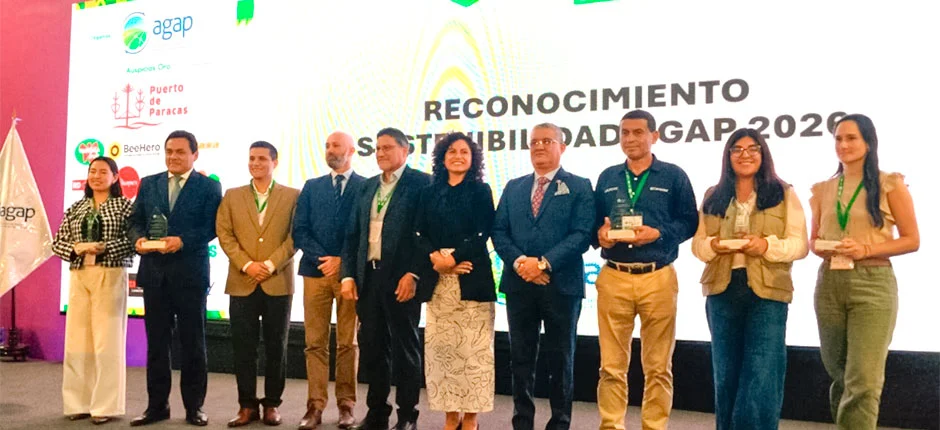
The Peruvian agricultural landscape reached a pivotal milestone this year during the fifth edition of Agrofest, the nation’s premier agricultural summit. Amidst an atmosphere of innovation and strategic reflection, the Association of Agricultural Producer Guilds of Peru (AGAP) took center stage to bestow the "Reconocimiento Sostenibilidad AGAP 2026" (AGAP Sustainability Recognition 2026). This prestigious accolade serves as a beacon, highlighting the organizations that have successfully integrated environmental stewardship, technological ingenuity, and social inclusivity into the very core of their operations.
By honoring nine organizations across three distinct categories, AGAP has signaled a clear shift in the industry: sustainability is no longer a corporate afterthought but the primary engine of modern agricultural competitiveness.
The Core Pillars of the 2026 Recognition
The AGAP Sustainability Recognition 2026 was curated to honor excellence across three critical domains that define the future of the sector: Environmental Stewardship, Innovation and Technology, and Social Inclusion.
According to AGAP, the objective is to move beyond mere compliance, instead showcasing initiatives that offer scalable solutions to the most pressing challenges facing the modern agro-industrial supply chain. The leadership of companies like Danper, Ubee Colombia, and Compañía Minera Antamina serves as a benchmark for the rest of the industry, proving that economic growth and responsible practices are not mutually exclusive, but rather deeply interdependent.
Chronology: A Commitment to Transformation
The recognition process was not a sudden event, but the culmination of a rigorous year-long evaluation cycle designed to identify high-impact projects.
- Q1-Q2 2026: AGAP opened the call for nominations, inviting firms from across the agricultural spectrum—from tech startups to mining giants and non-profits—to submit evidence of their sustainability initiatives.
- Q3 2026: The evaluation committee, composed of experts such as Luis Quirós (ESAN), Juan Carlos Castro (former Minister of the Environment), and Silvana Caro (Soluciones Conjuntas), conducted an exhaustive review of the entries. The panel focused on impact, scalability, and measurable outcomes.
- Agrofest 2026: The summit served as the grand stage where the winners were unveiled. The ceremony, led by AGAP President Gabriel Amaro and Head of Sustainability Edwin Córdova, turned the spotlight on the nine organizations chosen for their transformative contributions.
Detailed Breakdown of the Awarded Initiatives
The diversity of the winners reflects the complexity of the challenges facing the Peruvian agricultural sector.
1. Environmental Stewardship: Prioritizing the Planet
In the Environmental category, the focus was on circular economy models and climate resilience.
- Danper: Recognized for its "Zero Waste" program, Danper has set a new industry standard by prioritizing the reduction, reuse, and recycling of operational waste, demonstrating that industrial-scale agriculture can move toward a circular model.
- Ubee Colombia: Their project, "Intelligent Pollination and Inclusive Beekeeping for Resilience," underscores the vital role of biodiversity in the agricultural ecosystem, specifically supporting the livelihoods of coffee farmers across Latin America.
- Campo Limpio: Awarded for the "Efficient Management of Empty Agrochemical Containers in the Ancash Region," this initiative addresses the critical issue of chemical waste management, preventing soil and water contamination.
2. Innovation and Technology: Engineering the Future
The Innovation and Technology category showcased how cutting-edge research can modernize traditional practices.
- Camposol: Honored for "ORIGEN," an advanced genetic improvement program that enhances crop resilience and yield.
- Biológicos Naturales: Their "Biocircular" project stands out for transforming agricultural residues into regenerative bio-inputs, effectively closing the loop on waste and reducing dependency on synthetic fertilizers.
- Ecowax: Recognized for its "Organic Carnauba Coating for Hass Avocado," this post-harvest innovation significantly improves the safety, quality, and shelf life of exports, maintaining Peru’s status as a top-tier global supplier.
3. Social Inclusion: Strengthening the Human Fabric
This category emphasized the importance of social equity in agricultural development.
- Compañía Minera Antamina: Celebrated for its strategic alliance in the Huarmey province, which has successfully bridged the gap between mining and agricultural development to empower local export farmers.
- Caritas Chosica: Recognized for their work in strengthening the sustainable chain of the chirimoya (custard apple) in Cumpe, focusing on value-added processes and organized community commercialization.
- Banco de Alimentos Perú: Awarded for "Feeding with Hope: From the Field to the Community," a vital initiative that tackles food insecurity by creating a direct link between agricultural surplus and vulnerable populations.
Official Responses and Strategic Vision
During the presentation, Gabriel Amaro, President of AGAP, articulated the vision behind these awards. "This recognition seeks to visualize and promote initiatives that demonstrate that sustainability is a strategic axis for the country’s development," Amaro stated. "The companies distinguished this year are a clear example of how innovation, inclusion, and environmental commitment can generate positive impacts on communities and strengthen the competitiveness of our productive sectors."
The selection process was guided by experts who emphasized that the bar for sustainability is rising. By integrating voices from academia, the former government, and social consultancy, the panel ensured that the winning initiatives were not only technologically sound but also socially integrated and environmentally regenerative.
Implications: The Future of Peruvian Agriculture
The success of the AGAP Sustainability Recognition 2026 has profound implications for the Peruvian agro-export sector.
Strengthening Global Competitiveness
International markets are increasingly demanding evidence of sustainable practices—from carbon footprint reduction to fair labor standards. By highlighting these winners, AGAP is providing a "roadmap" for the rest of the industry. These practices enhance the reputation of the "Marca Perú" (Brand Peru), allowing local products to command higher value in markets like Europe, North America, and Asia.
The Role of Public-Private Collaboration
The involvement of entities like the Banco de Alimentos and local mining companies like Antamina illustrates that the future of agriculture lies in cross-sector cooperation. When industries that are traditionally seen as disparate—such as mining and agriculture—collaborate on resource management and infrastructure, the entire region benefits.
Scaling Solutions
The most important implication of this recognition is the potential for replication. Technologies like Ecowax’s organic coating or the circular models developed by Danper are not just isolated success stories; they are scalable templates. AGAP’s role is now to act as an incubator, facilitating the sharing of these "best practices" across the entire guild membership.
Conclusion: A Culture of Sustainability
As Agrofest 2026 draws to a close, the consensus among industry leaders is clear: the path forward for Peru is paved with innovation and ethical responsibility. By moving beyond a focus on simple volume and export figures, and instead emphasizing the quality of the process, AGAP is fostering a robust, resilient, and inclusive agricultural culture.
The nine awardees represent the vanguard of this movement. They have demonstrated that the path to a prosperous future is not found by exhausting natural resources or ignoring social disparities, but by investing in the intelligence of the soil, the ingenuity of technology, and the strength of the community. As these initiatives continue to mature, they will undoubtedly serve as the foundation for the next decade of agricultural success in Peru, ensuring that the sector remains a pillar of national stability and global progress.