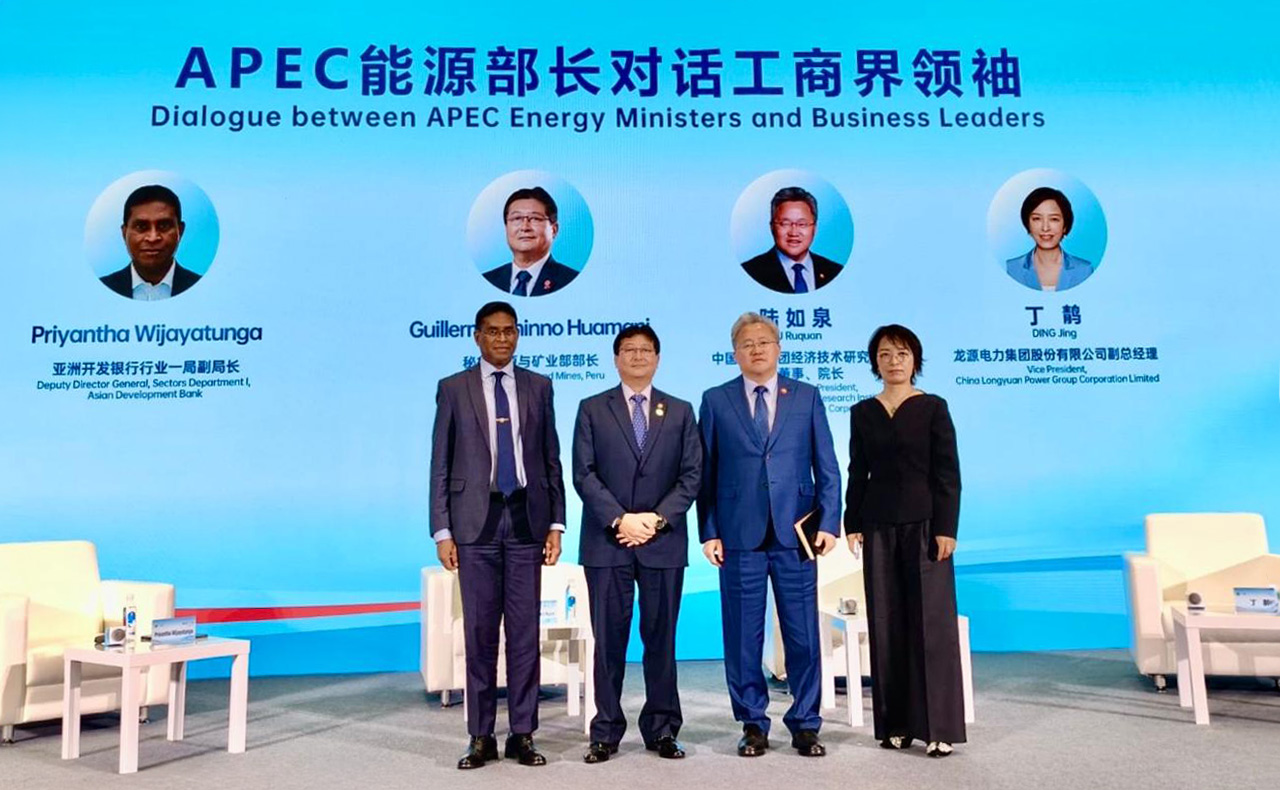
Lima, Peru – [Insert Date] – In a significant address at the APEC forum, Peru’s Minister of Energy and Mines, Guillermo Shinno, has underscored the nation’s robust potential and strategic positioning to drive the clean energy revolution across the Asia-Pacific region. Speaking at the XVI Ministerial Meeting on Energy of the Asia-Pacific Economic Cooperation (APEC) and the XII APEC Forum on Sustainable Energy Development in Beijing, China, Minister Shinno presented Peru as a highly attractive investment destination and a crucial ally for building a clean, secure, diverse, and prosperous economy for APEC member economies.
The Minister’s pronouncements highlight Peru’s commitment to economic openness, legal stability, environmental sustainability, and social inclusion, all of which are deemed essential for fostering collaborative growth in the energy sector. "Peru’s doors are open to jointly forge the energy future of the Asia-Pacific," Minister Shinno declared, emphasizing a proactive approach to international cooperation.
Peru’s Abundant Renewable Energy Potential: A Pillar for Regional Growth
Minister Shinno’s presentation provided compelling data showcasing Peru’s immense untapped renewable energy resources. The country boasts an extraordinary potential of over 937 gigawatts (GW) in solar energy, more than 20 GW in wind power, and 69 GW in hydroelectric resources. Crucially, only a fraction – a mere 5% – of this vast hydroelectric potential has been harnessed to date, signaling a significant opportunity for expansion and modernization. This vast reservoir of renewable energy positions Peru not just as a participant but as a potential leader in the global shift towards cleaner energy sources. The sheer scale of these figures suggests that Peru could play a pivotal role in meeting the growing energy demands of the APEC region while simultaneously contributing to global climate change mitigation efforts.
Beyond its renewable energy prowess, Peru also holds a distinguished position as a global leader in the production of essential minerals such as copper, zinc, and silver. Furthermore, the country is recognized for its reserves of critical minerals, which are increasingly vital for the manufacturing of renewable energy technologies, electric vehicles, and other components of the green economy. This dual advantage – abundant renewable energy potential and a strong mineral resource base – creates a unique synergy, allowing Peru to offer comprehensive solutions for the energy transition.
The "Summer Horizon" Project: A Blueprint for Green Ammonia Production
A cornerstone of Peru’s renewable energy strategy, highlighted by Minister Shinno, is its strong endorsement of the "Summer Horizon" project. This ambitious initiative, slated for development in the agro-industrial and mining heartland of southern Peru, aims to install nearly 6 GW of solar energy capacity. The primary objective of this massive solar farm is to power the production of over 1.6 million tons of green ammonia annually. Green ammonia, produced using renewable energy sources, is a highly sought-after clean fuel and a crucial component in the decarbonization of heavy industries, including shipping and agriculture. The "Summer Horizon" project represents a tangible demonstration of Peru’s commitment to innovation and its capacity to undertake large-scale, transformative renewable energy projects. Its success could serve as a model for other nations seeking to develop their green hydrogen and ammonia production capabilities.
Structural Reforms: Cultivating Investor Confidence and Stability
Minister Shinno elaborated on Peru’s proactive agenda of structural reforms, meticulously designed to instill confidence in private capital and foster a secure investment environment. These reforms are strategically focused on three key fronts:
-
Modernization of the Electricity Sector: Peru has undertaken what Minister Shinno described as "the most significant regulatory transformation of our electricity sector in the last two decades." This comprehensive overhaul aims to ensure the efficient development of electricity generation, transmission, and distribution. The reforms are intended to create a more competitive and transparent market, attracting both domestic and international investment in new generation capacity and grid infrastructure. This includes streamlining permitting processes, enhancing regulatory certainty, and promoting fair competition among energy providers.
-
Advancement of Green Hydrogen Regulations: The technical regulations for the Law Promoting Green Hydrogen are entering a transparent public consultation phase. This inclusive process involves engagement with businesses, experts, and civil society, ensuring that the regulatory framework is robust, practical, and aligned with the needs of the industry and the broader societal goals. The development of clear and supportive regulations for green hydrogen is critical for unlocking its potential as a clean energy carrier and a key element in decarbonizing various sectors.
-
Investor-Oriented Renewable Energy Zoning Maps: Peru has developed comprehensive zoning maps for renewable energy sources. These maps are specifically designed to guide investors, providing them with clear information on areas with the highest potential for solar, wind, and other renewable energy developments. By demystifying the site selection process and identifying prime locations, these maps are expected to significantly reduce investment risks and accelerate project development.
A Stable Macroeconomic Framework and a Welcoming Investment Climate
Beyond sector-specific reforms, Minister Shinno emphasized Peru’s broader economic strengths that make it an attractive investment destination. The nation boasts a low-risk macroeconomic framework, underpinned by sound fiscal policies and a commitment to economic stability. Constitutional guarantees are in place to promote foreign investment, providing a secure and predictable environment for businesses. Furthermore, Peru’s solid currency and a reformed electricity market designed for competitiveness further enhance its appeal to investors.
"We invite you to structure your projects in a country that respects the law and values private capital as a strategic partner for development," Minister Shinno concluded, extending a clear invitation to potential investors to collaborate with Peru in its pursuit of a sustainable and prosperous energy future. This statement encapsulates Peru’s vision of a partnership-based approach, where foreign investment is seen not merely as a source of capital but as a crucial element in achieving shared development goals.
Chronology of Peru’s Engagement with APEC and Clean Energy Initiatives
Peru’s participation in APEC forums and its proactive stance on clean energy are not recent developments but rather a culmination of sustained efforts.
-
[Insert Year of Previous APEC Energy Meeting]: Peru, likely through its Ministry of Energy and Mines, would have participated in previous APEC energy meetings, contributing to discussions on regional energy security and cooperation. While specific details of past participation are not provided in the source, it is reasonable to assume a consistent presence and engagement.
-
[Insert Year of Peru’s Green Hydrogen Law Enactment]: The mention of the "Law Promoting Green Hydrogen" suggests that Peru has been actively developing its legal framework for this emerging energy source. The introduction of such legislation would have been a significant milestone in formalizing the country’s commitment to this technology.
-
[Insert Approximate Timeframe for "Summer Horizon" Project Initiation]: While the exact timeline for the "Summer Horizon" project is not specified, its mention as a supported initiative indicates that planning and development phases are underway or have been completed, leading to its presentation at the APEC forum.
-
[Insert Year of Current APEC Energy Meeting – Beijing]: The current event in Beijing marks a specific point in this ongoing engagement, where Peru has chosen to highlight its progress and future ambitions. The timing of this meeting, with the recent emphasis on structural reforms and the "Summer Horizon" project, suggests a strategic presentation of Peru’s readiness for significant investment.
Supporting Data: Quantifying Peru’s Energy Potential
The figures presented by Minister Shinno offer a stark illustration of Peru’s energy wealth:
-
Solar Energy Potential: Over 937 GW – This is an immense capacity, significantly exceeding Peru’s current energy demand and even a substantial portion of the entire APEC region’s projected needs. This vast potential can support not only domestic energy security but also export opportunities for renewable energy and its derivatives.

-
Wind Energy Potential: Over 20 GW – While smaller than solar potential, this is still a substantial amount, capable of powering significant industrial and residential needs. Peru’s diverse geography likely offers excellent wind resources in various regions.
-
Hydroelectric Potential: 69 GW – This represents a mature and significant source of renewable energy. The fact that only 5% has been exploited indicates a substantial opportunity for upgrading existing infrastructure and developing new hydroelectric projects, potentially with improved environmental safeguards and efficiency.
-
Green Ammonia Production Target: Over 1.6 million tons annually – This ambitious target for green ammonia production underscores Peru’s strategic focus on creating value-added products from its renewable energy resources. This aligns with global efforts to decarbonize hard-to-abate sectors.
-
"Summer Horizon" Project Capacity: Nearly 6 GW – This single project represents a significant chunk of Peru’s total renewable energy potential, demonstrating the scale of investment and development being pursued.
Official Responses and International Implications
The Minister’s address at the APEC forum is a clear signal to the international community. It serves as an invitation for collaboration, investment, and knowledge sharing. The response from other APEC member economies is likely to be one of keen interest, given the region’s collective commitment to energy transition and sustainable development.
-
For APEC Economies: Peru’s message offers opportunities for diversified energy sourcing, potential partnerships in technology transfer, and investment in Peru’s burgeoning green energy sector. For nations seeking to reduce their reliance on fossil fuels, Peru’s abundant renewable resources and supportive policy environment present a compelling proposition.
-
For Investors: The detailed articulation of reforms and the emphasis on legal stability and macroeconomic soundness are designed to de-risk investments and attract capital. The specific mention of investor-oriented zoning maps and the transparent consultation process for green hydrogen regulations are particularly reassuring for potential investors.
-
For the Global Energy Landscape: Peru’s proactive approach contributes to the broader global narrative of a shift towards a low-carbon economy. By showcasing its capabilities and commitment, Peru positions itself as a key player in shaping the future of clean energy, particularly in the Asia-Pacific region, which is a critical hub for global economic activity and energy consumption.
The implications of Peru’s stance are far-reaching. It suggests a strategic vision that leverages natural resource advantages with forward-thinking policy and a commitment to international cooperation. By actively participating in forums like APEC and presenting a compelling case for investment, Peru is not just seeking to benefit from the global energy transition but also to actively lead and contribute to its success. The nation’s dual strength in mineral resources and renewable energy potential places it in a unique position to become a comprehensive supplier and innovator in the green economy, solidifying its role as a strategic partner for a sustainable future.