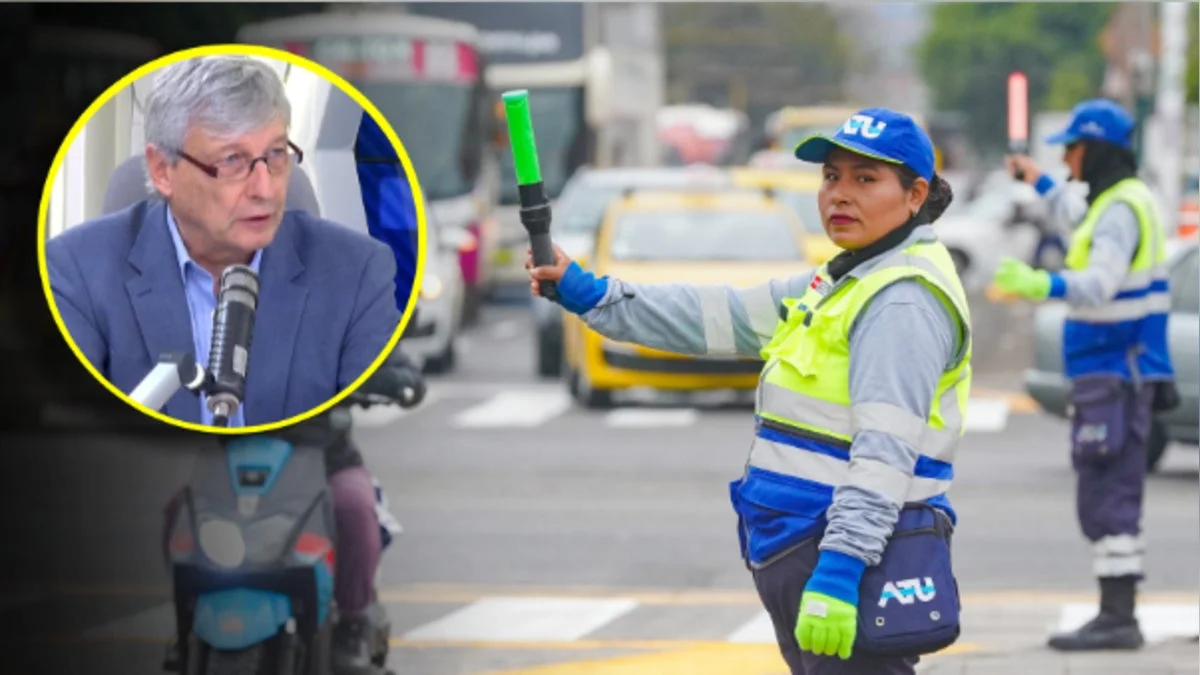
The debate over the institutional structure of urban transport in Peru’s capital has reached a boiling point. Last Wednesday, the Renovación Popular caucus in the Chamber of Deputies introduced a legislative bill that seeks to dismantle the Autoridad de Transporte Urbano para Lima y Callao (ATU), transferring its core functions back to the Metropolitan Municipality of Lima (MML) and the Provincial Municipality of Callao. This proposal, championed by the party’s leader and prominent political figure Rafael López Aliaga, has ignited a fierce national conversation regarding the efficiency of centralized technical entities versus the decentralization of administrative power.
The Genesis of the Proposal
The legislative motion, introduced by lawmaker Norma Yarrow, is not an isolated event; it is the culmination of a long-standing campaign by Rafael López Aliaga. The current Mayor of Lima has consistently argued that the ATU—a body designed to integrate transit across the two provinces—has failed in its mission. López Aliaga’s rhetoric often characterizes the ATU as a bloated, disconnected entity that should "disappear and return to Lima," suggesting that local governments are better equipped to manage their own streets and traffic flows.
For proponents of the bill, the ATU represents an unnecessary layer of bureaucracy that has failed to mitigate the city’s notoriously congested transit network. They argue that returning the power of route authorization and traffic management to the respective municipalities would restore accountability to elected officials who are directly answerable to the citizens.
A Chronology of Conflict: From Chaos to Centralization
To understand why the ATU exists, one must look at the state of transportation in Lima and Callao prior to its inception. For decades, the two jurisdictions operated independently, creating a patchwork of overlapping routes and conflicting regulations.
- Pre-2018: The era of the "War of the Cent" (la guerra del centavo). Transport companies competed aggressively for passengers, leading to reckless driving, constant illegal stopping, and systemic traffic accidents. Because Lima, Callao, and the province of Huarochirí managed their own transport permissions, it was common to see buses from one jurisdiction flooding the streets of another, causing massive bottlenecks.
- 2018 (Creation of the ATU): Following the recognition that municipal fragmentation was a primary driver of urban chaos, the ATU was established as a specialized technical entity. Its mandate was clear: to create a single, unified authority capable of planning, coordinating, and managing public transport across the entire metropolitan area.
- 2024 (The Pushback): As municipal elections approach and political tensions rise, the efficacy of the ATU has been called into question by local leaders who feel that a centralized agency undermines their administrative autonomy.
The Position of the Automotive Association of Peru (AAP)
The response from industry experts has been swift and critical. The Asociación Automotriz del Perú (AAP) issued a formal statement vehemently opposing the proposed dissolution. According to the AAP, the move would be a "historic regression" that would inevitably collapse the city’s transport planning and integration.
Karsten Kunckel, President of the AAP, offered a sobering analysis of the situation in a recent interview with RPP. "Why was the ATU created in the first place?" Kunckel asked. "It was created because of the chaotic overlaps between Callao, Lima, and Huarochirí. Each entity planned its own routes, leading to the ‘war of the cent.’ Everyone wanted the passenger. They ignored traffic laws, stopped in double and triple lanes, and all because there was no unified coordination."
The "Technical vs. Political" Dilemma
A central pillar of Kunckel’s argument is the danger of political interference. He emphasized that transportation management requires a long-term, technical vision that spans beyond the typical four-to-five-year electoral cycle.
"Transportation is a purely technical field," Kunckel noted. "Mayors are not transport experts. The best thing a mayor can do is listen to the ATU. Unfortunately, there has been significant political interference in the ATU. It must be an entity that does not depend on politicians."
Kunckel pointed out that the current structure of the ATU’s board already includes representatives from the Municipalities of Lima and Callao, as well as the Ministry of Transport and Communications (MTC). Therefore, the mechanisms for local coordination are already in place; they simply require better implementation rather than total destruction.
Analyzing the Economic and Social Implications
The potential dissolution of the ATU carries significant risks that extend beyond simple traffic flow. The economic impact on the transport sector and the safety implications for the public are of paramount concern.
The Problem of Informal Transport
One of the most complex aspects of the debate is the role of informal transport. Critics of the current system, including the AAP, acknowledge that the ATU has struggled with the sheer scale of the informal market. However, they argue that dissolution is the wrong medicine.
"The informal transporter is covering a need," Kunckel explained. "If there were no demand, there would be no informality. No informal driver would take to the streets if they couldn’t recover their investment. The answer is not to dismantle the regulatory body, but to find a better way to integrate them into a formal, safe system."
The Threat of Extortion and Mafias
Perhaps the most alarming implication of returning to the pre-ATU model is the potential resurgence of organized crime within the transport sector. Before the ATU, the process of route authorization was notoriously opaque, often subject to "cupos" (extortion fees) paid to corrupt municipal officials or criminal syndicates.
"In the days before the ATU, there were mafias that organized everything," Kunckel recalled. "There were undesirable people within the municipalities who held the power to authorize a route. That was eliminated with the ATU. By going back to the old system, we risk inviting those same corrupt practices back into the fold."
The Issue of "Irrational" Penalties
While the AAP staunchly defends the existence of the ATU, they do not offer a blanket endorsement of its current performance. A point of common ground between the AAP and the critics is the issue of administrative fines.
Kunckel admitted that the AAP has received numerous complaints regarding the ATU’s disciplinary actions. "We agree that the fines are excessive and, in many cases, irrational," he stated. However, he clarified that this is a flaw in the administration of the agency, not a flaw in the concept of the agency. "We need to reinforce the ATU, not eliminate it. We need a different approach to how they interact with the transport sector."
Conclusion: A Crossroads for Lima’s Mobility
The proposal to disband the ATU serves as a litmus test for the future of urban governance in Peru. Is Lima a city that thrives on the centralized, technical management of its infrastructure, or does it require a more fragmented, localized approach to satisfy the political demands of its municipal leaders?
The consensus among urban planners and the transport industry is clear: the challenges facing Lima—ranging from extreme congestion and traffic accidents to the pervasive influence of informal operators—cannot be solved by reversing the clock. The current administrative structure, while admittedly imperfect and prone to political friction, provides a singular voice in a metropolitan area that spans two provinces.
If the legislative bill proceeds, the city risks entering a period of administrative uncertainty where "the war of the cent" could once again dictate the safety and quality of life for millions of commuters. As Karsten Kunckel concluded, "The mayor should be incentivizing an autonomous authority. The alternative is a return to a chaotic past where local political rivalries dictate where and how the public travels."
For now, the proposal remains a point of intense legislative contention, with the fate of the capital’s transit future hanging in the balance. The coming months will reveal whether the government chooses to strengthen the technical backbone of the city or surrender to the pressures of political decentralization at the cost of urban order.