The landscape of mobile technology has reached a pivotal inflection point. During this week’s highly anticipated Snapdragon Summit, chipmaker Qualcomm unveiled a transformative duo of mobile platforms: the Snapdragon 8 Elite Gen 6 and the Snapdragon 8 Elite Extreme Gen 6. These platforms represent more than just incremental gains in clock speed or graphical rendering; they signal a fundamental shift in how artificial intelligence (AI) is integrated into the user experience, moving from cloud-dependent services to deep, on-device processing.
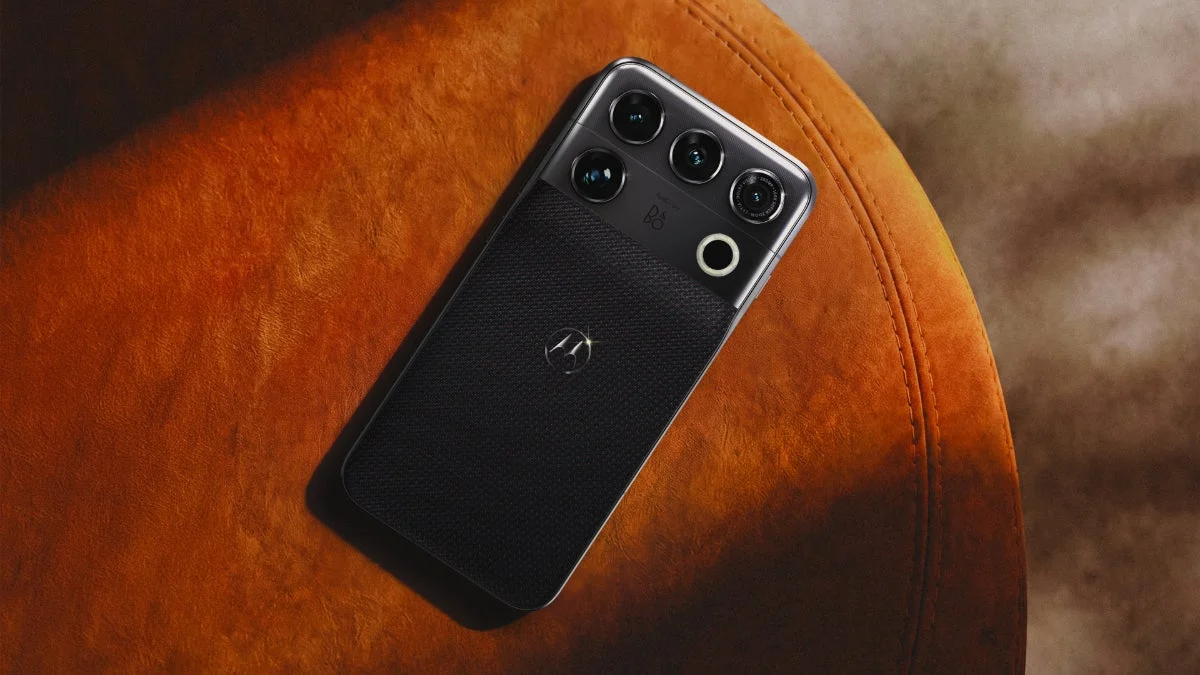
Leading the charge in hardware implementation, Motorola showcased the Signature 27, one of the first flagship devices confirmed to leverage the power of the Extreme variant. This move marks the beginning of a new era where the smartphone acts as a localized hub for complex generative AI, redefining the boundaries of photography, gaming, and personal productivity.
Main Facts: The New Architecture of Power
Qualcomm’s latest silicon is built on a cutting-edge 2-nanometer manufacturing process, designed to maximize efficiency while packing unprecedented computational density. At the core of both chips are the Qualcomm Oryon CPU, the high-performance Adreno GPU, and the refined Hexagon Neural Processing Unit (NPU).
The primary distinction between the standard Gen 6 and the Extreme variant lies in their targeted performance ceiling. While the standard Gen 6 brings advanced AI, photographic prowess, and superior connectivity to the broader high-end market, the Extreme version is engineered for "power users" and professional-grade tasks.
Key Technological Pillars:
- Adreno Neural Fusion: A proprietary system that utilizes AI for real-time super-resolution and frame generation in mobile gaming.
- Intelligent Pixel Control: An image processing layer that analyzes scene composition in real-time to optimize exposure, stabilization, and color accuracy.
- Qualcomm Sensing Hub: A low-power, always-on subsystem that maintains context-awareness for voice and audio without pinging the cloud.
- Advanced Professional Video (APV): Allows for 8K capture at 60fps and 4K at 240fps, with in-device post-production capabilities.
- Connectivity: Both chips feature the X105 5G Modem-RF and FastConnect 8800, supporting theoretical download speeds up to 14.8 Gbps.
Chronology: The Road to the Snapdragon Summit
The trajectory leading to these announcements began years ago, as the industry recognized the limitations of cloud-based AI.
- Early 2024: Qualcomm began emphasizing "Edge AI," focusing on the necessity of local processing to ensure user privacy and reduce latency.
- Mid-2025: Industry rumors began circulating about a move to 2nm architecture, with manufacturers looking for ways to handle increasingly large language models (LLMs) on mobile hardware.
- September 2026: At the Snapdragon Summit, Qualcomm officially unveiled the 8 Elite series, showcasing the "Mixture of Experts" (MoE) scheme, which allows the Hexagon NPU to activate only the necessary parameters for a specific task, optimizing battery life and heat management.
- Post-Summit 2026: Manufacturers including Motorola, HONOR, iQOO, OnePlus, OPPO, REDMI, RedMagic, vivo, and Xiaomi confirmed their upcoming product pipelines will integrate these new chips throughout the remainder of 2026 and into 2027.
Supporting Data: Understanding On-Device AI
The fundamental question posed by this launch is: Why does on-device processing matter?

When an AI operation is performed in the cloud, it introduces latency and requires data to be sent across the internet, raising privacy concerns. By processing information directly on the chip, the device can act as an "AI Agent"—an autonomous system capable of understanding complex user context, maintaining history, and executing multi-step tasks without external server validation.
The "Mixture of Experts" Advantage
The Snapdragon 8 Elite Extreme Gen 6 introduces a sophisticated approach to running large AI models. Instead of the entire model loading into memory, the "Mixture of Experts" architecture functions like a specialized library: only the relevant "expert" sub-networks are triggered to solve a specific problem. This drastically reduces the computational overhead, allowing even complex tasks—like live video editing or generative image creation—to run smoothly on a handheld device.
Cooling and Hardware Integration
With such immense power, heat becomes a critical variable. Motorola’s Signature 27 addresses this with its ArcticMesh cooling system. By integrating liquid metal, diamond-infused thermal gel, and a copper vapor chamber that is 40% larger than its predecessor, the device ensures that the Extreme processor can sustain peak performance during intensive AI-driven rendering or long-form 8K video sessions.
Official Responses and Strategic Vision
Qualcomm’s leadership team emphasized that the "Elite" branding is not merely marketing; it is a declaration that the smartphone is evolving into a platform for general-purpose AI.
"We are moving past the era where AI is an ‘app’ you open," a Qualcomm representative noted during the keynote. "With the Hexagon NPU and our Oryon architecture, AI is now part of the hardware’s DNA—it is involved in every pixel of a photo and every frame of a game."
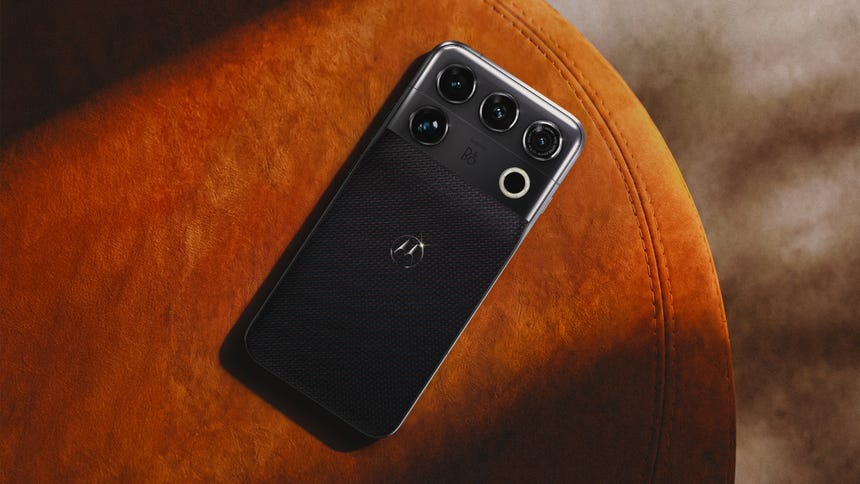
Motorola, in its unveiling of the Signature 27, highlighted its partnership with Google to integrate the Gemini AI assistant. According to Motorola, the goal is to provide a seamless interface where users can generate content—be it video, music, or complex text—using only the device’s local intelligence. "The Signature 27 isn’t just a phone; it’s a mobile workstation for the AI-driven creator," said a spokesperson from the Motorola hardware team.
Implications: The Future of Mobile Computing
The implications of this launch extend far beyond the current generation of flagship phones.
1. The Death of the "Dumb" Device
As AI capabilities move from the cloud to the silicon, the gap between "entry-level" and "high-end" will likely grow. The ability to run local LLMs will become the primary differentiator for consumers. Devices that cannot handle these operations locally will increasingly feel outdated, as they will lack the "contextual intelligence" that users are beginning to expect from their assistants.
2. Privacy as a Premium Feature
One of the most significant arguments for on-device AI is data sovereignty. By keeping personal data, biometric patterns, and audio context on the device’s local storage rather than on a remote server, companies like Qualcomm and Motorola are positioning privacy as a luxury feature. Users are more likely to interact with AI-driven assistants if they know their personal information never leaves their physical possession.
3. The Proliferation of AI Agents
The shift toward "Agents" suggests a future where users won’t need to manually navigate through multiple apps to complete a task. Instead, a user might tell their phone, "Help me edit this video and create a soundtrack that fits this specific mood," and the device—utilizing the NPU’s specialized capabilities—will orchestrate the entire process across different software layers.
4. A Global Rollout
While specific pricing for the Motorola Signature 27 remains undisclosed, the broad support from major manufacturers like Xiaomi, OPPO, and vivo suggests that these chips will permeate the global market rapidly throughout 2026. This democratization of high-end AI capabilities ensures that the benefits of the Snapdragon 8 Elite series will be felt across diverse markets, from tech-savvy enthusiasts to professional content creators.
In conclusion, the Snapdragon 8 Elite Gen 6 and its Extreme counterpart mark the transition of the smartphone from a communication tool to an intelligent companion. By prioritizing localized, efficient, and high-performance AI processing, Qualcomm has laid the groundwork for a future where our devices don’t just store our data—they understand, process, and act upon it in ways we are only just beginning to imagine. As we look toward the 2026 launch of the Signature 27, it is clear that the "mobile experience" will never be the same again.