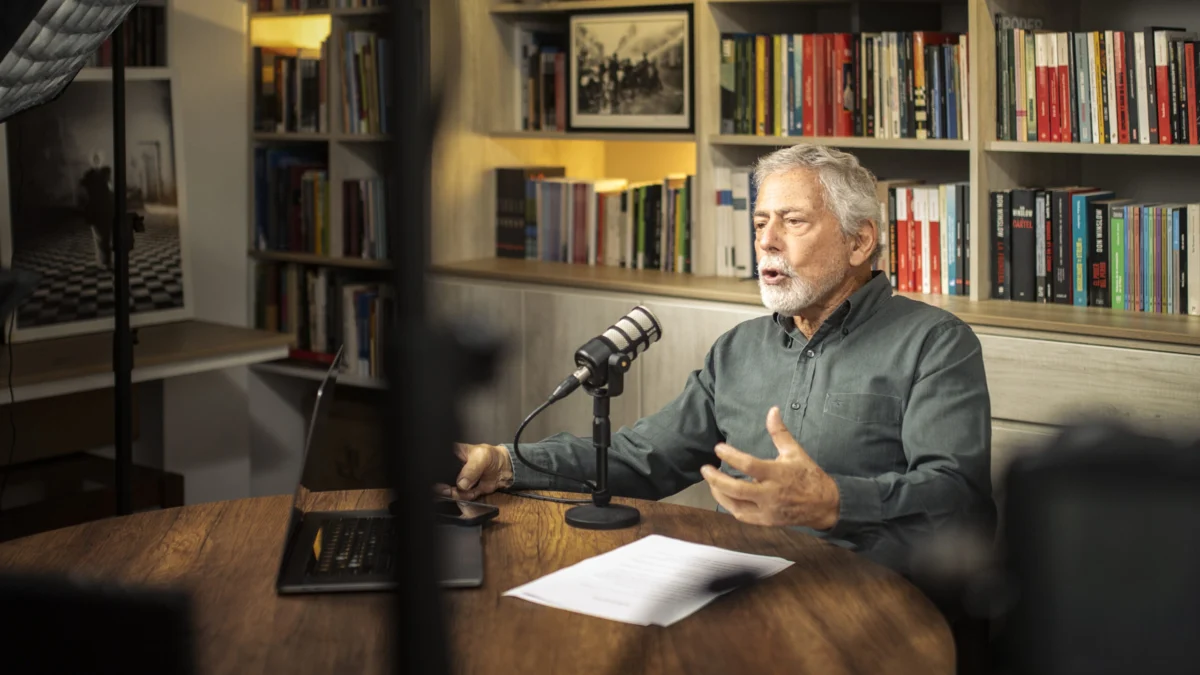
The landscape of Peruvian democracy is currently witnessing a defining struggle between the entrenched forces of political power and the journalists who strive to hold them accountable. Gustavo Gorriti, the venerable director of IDL-Reporteros and a cornerstone of Latin American investigative journalism, stands at the center of a mounting judicial and legislative offensive. This assault, driven by the Peruvian Congress and aimed at criminalizing his foundational work on the Lava Jato scandal, represents a broader, existential threat to press freedom in the Andean nation.
The Epicenter of Corruption: The Lava Jato Legacy
The Lava Jato (Car Wash) case remains the most expansive corruption investigation in Latin American history. Originating in Brazil, the scandal revealed how the construction giant Odebrecht systematically bribed politicians, businessmen, and public officials across the continent to secure multi-billion-dollar infrastructure contracts.
In Peru, the impact was nothing short of seismic. For the past decade, IDL-Reporteros has been at the vanguard of exposing these illicit networks. Gorriti’s team utilized the 2019 "effective collaboration" agreements—a legal mechanism allowing defendants to provide testimony in exchange for reduced sentences—to dismantle the pacts of silence that protected the nation’s political elite.
However, this investigative success has triggered a fierce "counter-offensive." Rather than addressing the corruption revealed, a powerful coalition of political actors—spanning from the far-right to the radical left—has joined forces to dismantle the investigative apparatus itself.
Chronology of a Targeted Campaign
The systematic attempt to discredit and silence Gorriti is not a sudden development but the culmination of years of targeted hostility:
- 2011–2015: IDL-Reporteros initiates its deep-dive investigation into the Brazilian construction giant, eventually leading to a cross-border collaborative network of journalists across Latin America.
- 2019: The signing of the "effective collaboration" agreements between the Peruvian Judiciary and Odebrecht provides the critical evidence needed to implicate top-tier officials.
- 2023: Recognizing the escalating personal and professional danger, the Inter-American Commission on Human Rights (CIDH) grants Gorriti precautionary measures, acknowledging that his life and liberty are at high risk.
- June 12, 2024: The Peruvian Congress approves a controversial final report from a parliamentary commission. The report recommends criminal proceedings against the journalists and prosecutors who led the Lava Jato probe, accusing them of influence peddling, bribery, and obstruction of justice.
- Present Day: The judicial system faces intense pressure to re-open closed cases against Gorriti, as the political class seeks to reclaim control over the narrative of the Lava Jato era.
The Conflict of Interest: Who is Judging the Journalists?
One of the most alarming aspects of the current legislative offensive is the inherent conflict of interest within the body conducting the investigation. The parliamentary commission responsible for the report that calls for Gorriti’s prosecution is composed of members who are themselves subjects of ongoing Lava Jato inquiries.
"It is an almost grotesque example of conflict of interest," Gorriti remarked in an interview with elDiario.es. The commission was spearheaded by Congressman Alejandro Muñante of the far-right Renovación Popular party. The party’s leader, Rafael López Aliaga—who unsuccessfully vied for the presidency—has been a vocal antagonist of Gorriti, labeling him the "great enemy of Peru" and publicly inciting his removal from the country. López Aliaga himself faces separate investigations for money laundering and administrative irregularities.
This dynamic suggests that the legislative attack is not a quest for legal accountability, but a strategic act of self-preservation by a political class that sees the independent press as its primary threat.
Implications for Democracy and Press Freedom
The repercussions of this campaign extend far beyond the legal troubles of one journalist. Since 2022, Peru has plummeted in the World Press Freedom Index, compiled by Reporters Without Borders, falling from the 77th to the 125th position—the most dramatic decline of any country in Latin America.
The broader institutional decay is evident. The two lead prosecutors of the Lava Jato Special Team, José Domingo Pérez and Rafael Vela, have been systematically sidelined. Pérez has been expelled from the Public Ministry, while Vela has faced suspension and ongoing legal harassment.
Gorriti views this as a "profound regression." He notes that nearly every Peruvian president of the 21st century—including Alan García, Alejandro Toledo, Ollanta Humala, and Pedro Pablo Kuczynski—has been embroiled in the Lava Jato investigations. The current attempt to rewrite the history of these investigations is an effort to insulate these political figures from the consequences of their actions.
Official Responses and International Outcry
The international community has reacted with significant alarm. Organizations including the Inter-American Press Association (SIP), the Committee to Protect Journalists (CPJ), and the Gabo Foundation have issued strong condemnations. They argue that the Peruvian Congress is weaponizing the law to silence dissent and erode the checks and balances necessary for a functioning democracy.
Despite the pressure, the response from the Peruvian judicial authorities remains volatile. While a previous attempt by the Prosecutor’s Office to force Gorriti to reveal his confidential sources was dismissed in December 2023, the current legislative push seeks to revive these claims. The fate of the case now rests with the National Prosecutor, who must navigate the fine line between political retaliation and the preservation of the rule of law.
The Resilience of a Veteran Reporter
Gustavo Gorriti is no stranger to state-sponsored intimidation. In 1992, during the regime of Alberto Fujimori, he was kidnapped by security forces following his reporting on the administration’s links to drug trafficking. He credits his mental and physical discipline—honed through decades of competitive judo—for his ability to weather the storm.
"These are longer, more complex, and difficult struggles than one might think," Gorriti reflects. "Many factors are at play that are outside of one’s control." Yet, his commitment to his craft remains unshaken. He argues that the most potent defense against this "campaign of disinformation" is not just his personal resolve, but the mobilization of international media attention and a vigilant, informed citizenry.
Conclusion: A Test for the Future
The attempt to criminalize Gustavo Gorriti is a canary in the coal mine for the state of democracy in Latin America. If the legislative branch succeeds in utilizing the courts to silence those who expose corruption, the message to the public is clear: power operates above the law, and truth is a liability.
As the political landscape in Peru continues to shift, with figures like Keiko Fujimori re-emerging at the center of the executive branch, the battle to preserve the independence of IDL-Reporteros remains a critical front in the global fight for transparency. For Gorriti, the conclusion remains simple and defiant: "Not for a single moment have I regretted what I have done." His work serves as a reminder that while corruption can be institutionalized, it cannot be sustained indefinitely if the truth continues to be told.