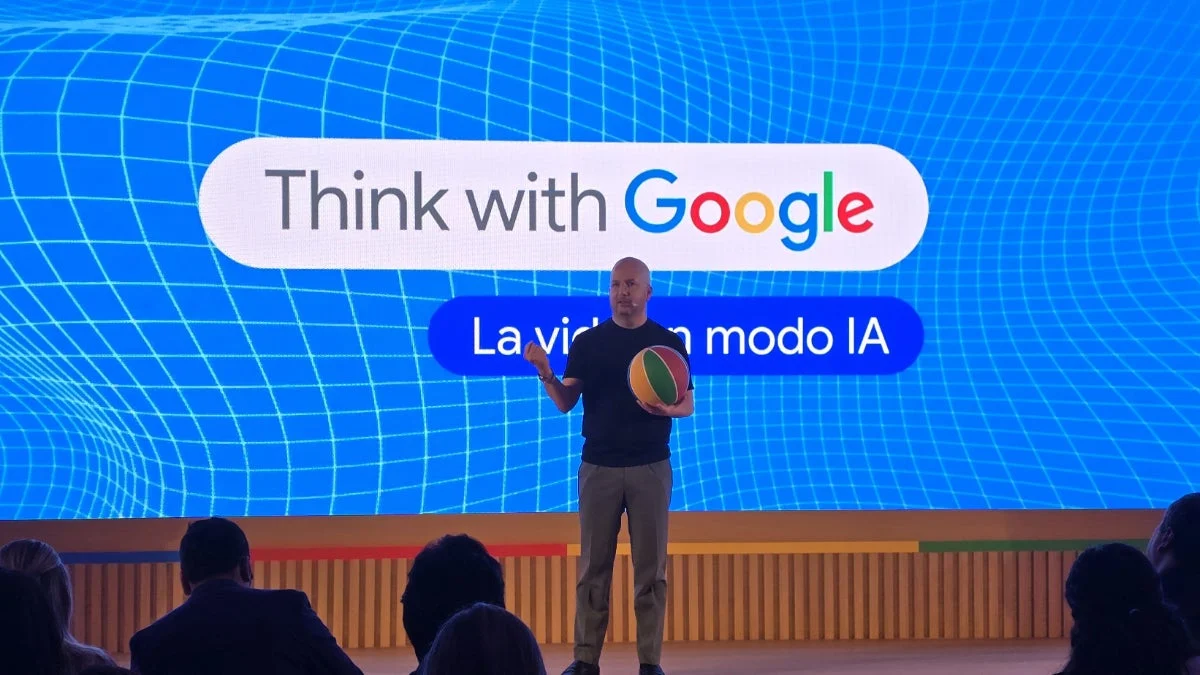
The landscape of consumer behavior in Peru is undergoing a tectonic shift. As artificial intelligence (AI) integrates seamlessly into the daily lives of citizens, the traditional journey from product discovery to purchase is being dismantled and reconstructed. According to the latest insights unveiled during Think with Google 2026, the power dynamic between brands and consumers has evolved: the modern Peruvian shopper no longer merely wants to be advertised to; they want to be assisted, guided, and empowered by technology.
Main Facts: The New Standard of Consumer Expectation
The core finding of the recent Google report is clear: convenience is the new currency. Eight out of ten Peruvian consumers (83%) now state that AI tools significantly facilitate their purchasing decisions, while 82% believe these technologies simplify the entire process.
This paradigm shift has moved beyond simple novelty. Consumers are now actively offloading the "burden" of research to algorithms. More than half of respondents (58%) expect brands to take on the labor of comparing products and selecting the best alternatives for them. Perhaps most telling is the shift in preference regarding brand communication: 51% of consumers now prioritize the practical utility of a brand—such as tools that solve problems or provide technical clarity—over traditional, narrative-heavy advertising.
Chronology: From Manual Search to Automated Assistance
The evolution of the consumer journey in Peru can be traced through the changing habits of the digital population:
- The Era of Manual Exploration: Traditionally, consumers spent significant time visiting physical stores, browsing multiple websites, and watching endless video reviews to build confidence in a product.
- The Transition Period: With the rise of search engines and early e-commerce, the process became more efficient but still required high cognitive effort.
- The AI-First Present: Today, 36% of consumers have reduced their physical store visits for product evaluation, while 34% have curtailed their manual search efforts across marketplaces. Furthermore, 33% report spending less time watching product reviews, opting instead to trust AI-generated summaries and recommendations.
- The Future of Delegation: We are currently entering the phase of "delegated consumption," where users are beginning to trust AI to monitor prices during major sales events like Black Friday or to organize complex logistics, such as travel planning.
Supporting Data: The Quantitative Shift in User Behavior
The adoption of AI in Peru is not merely a niche trend; it is a widespread societal movement. With nine out of ten internet users having interacted with Google’s AI tools, the saturation is profound.
How AI is used in the decision-making process:
- Platform Diversity: 47% of consumers rely on dedicated AI platforms, 40% utilize visual search tools like Google Lens, and 34% regularly engage with AI-driven search modes.
- Primary Motivations: The intent behind these queries is highly pragmatic. 83% of users use AI to learn how to utilize a product effectively, 76% seek out trusted retailers with confirmed stock, and 65% use AI to conduct head-to-head brand comparisons.
- Professional and Personal Integration: The utility of AI extends well beyond retail. 77% of Peruvians utilize these tools for personal life management, while 73% integrate them into their professional workflows. On average, users estimate that AI saves them 3.5 hours per week—a significant gain in productivity.
The Trust Gap and Transparency
Despite the enthusiasm, trust remains the critical barrier. When delegating decisions to a machine, users demand transparency. According to the report, the top three factors that generate confidence are:
- Direct links to official sources (49%).
- Visible citations and references (47%).
- The ability to connect with a human agent when complexity exceeds the machine’s capacity (42%).
Regarding financial autonomy, the consumer remains cautious. 53% of users explicitly state they would not allow an AI to execute a payment without manual authorization, and only 28% would feel comfortable allowing an AI to handle small transactions (under S/150).
Official Responses: Insights from Industry Leaders
Edgardo Frías, Director General of Google for the Andean Region, highlighted that the transformation is as much about psychological shifts as it is about technological ones.
"The intelligence artificial is changing not only the tools that people use, but also their expectations toward brands," Frías stated. "Today, consumers expect to find information that helps them solve, compare, and decide in a much simpler way."
Frías emphasized that for businesses, this means the relationship with the customer now begins long before the transaction. Brands that fail to provide structured, technical, and easily comparable data are likely to be left behind by the AI-powered search engines that prioritize such clarity.
Implications for Brands and the Market
The implications for the Peruvian business ecosystem are profound. The "Age of Assistance" requires companies to rethink their digital strategy from the ground up.
1. The Rise of "Technical SEO" and Structured Data
Because 54% of consumers prefer brands that offer detailed, structured technical information, businesses must invest in schema markup and high-quality product data feeds. If a brand’s information is not machine-readable, it will not be surfaced by AI-driven search, effectively rendering the brand invisible to a large segment of the population.
2. Beyond Narrative Advertising
The traditional "storytelling" approach to marketing is losing its edge. While emotional connection remains important, the primary entry point for a modern consumer is utility. Brands must pivot to providing "utility-first" content: calculators, comparison tools, and AI-friendly knowledge bases that answer the "how-to" questions that occupy 83% of the consumer’s inquiry time.
3. The Human-AI Hybrid Model
The data suggests that the future is not purely automated, but hybrid. As 42% of consumers still demand access to a human agent, companies must integrate AI to handle the "drudge work" of comparison and information retrieval, while reserving human talent for high-stakes decision-making and complex problem-solving.
4. Overcoming the "Blank Page" Syndrome
With 41% of users stating that AI helps them overcome the initial hesitation or "blockage" when starting a task, brands have a unique opportunity to become the "facilitator of action." By providing AI-integrated tools that help users plan, budget, or choose, brands can move from being a passive vendor to an active partner in the user’s life.
Conclusion: The Path Ahead
The findings from the Think with Google 2026 report underscore that in Peru, the artificial intelligence revolution is no longer a forecast—it is the status quo. Consumers have discovered that their time is their most valuable asset, and they are increasingly turning to technology to protect it.
For the Peruvian market, the mandate is clear: the brands that win in this new era will be those that embrace the role of "Assistant." By providing the transparency, technical accuracy, and ease-of-use that modern consumers demand, companies can move beyond the friction of traditional advertising and into a new, more efficient, and highly personalized relationship with their customers. The tools are ready, the consumers are eager, and the market is waiting for those who can lead the charge into this AI-integrated future.