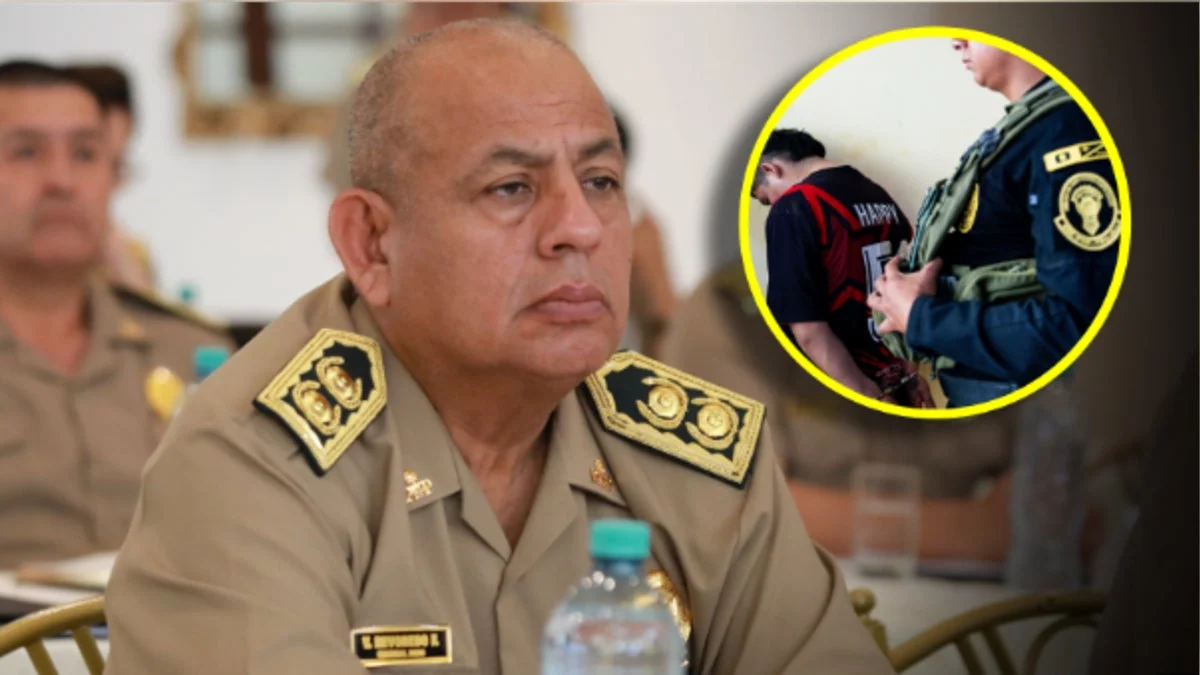
The Peruvian justice system is currently grappling with a profound institutional rift following the high-profile arrest of suspects linked to a quadruple homicide and the kidnapping of mining entrepreneur Jenss Lara in Trujillo. At the center of this controversy is General Víctor Revoredo, head of the Directorate of Criminal Investigation (Dirincri), who has aggressively defended the police’s use of "preliminary interrogations" without the presence of prosecutors. This practice has drawn sharp rebukes from the leadership of the Public Ministry, raising critical questions about the balance of power between the National Police (PNP) and the Prosecutor’s Office in the fight against organized crime.
Main Facts: The Trujillo Case and the "Preliminary" Interrogation
The friction began on August 31, when the PNP presented several detainees to the media, asserting they were connected to the brutal criminal activities recently terrorizing Trujillo. During this presentation, police officers conducted on-the-spot interrogations of the suspects.
General Revoredo, speaking in an exclusive interview with RPP, maintained that these actions were "urgent and unavoidable" measures authorized by recent constitutional interpretations and legislative changes granted by the Congress of the Republic. Revoredo argued that these preliminary inquiries serve as a "head of evidence" (cabeza de indicios), allowing police to gather vital information quickly to prevent the loss of time that often hampers traditional judicial processes.
"I can become a witness," Revoredo stated, defending the evidentiary weight of his interactions with the suspects. He described his method as a technical analysis of the suspects’ backgrounds, habits, and affiliations—specifically pointing to their links with criminal organizations like Los Pulpos. For the police, these interventions are not merely for show; they are essential survival tools in a nation suffering from a "criminal pandemic."
Chronology of Events
- August 25-27: A series of violent criminal acts, including a quadruple murder and the kidnapping of businessman Jenss Lara, occur in Trujillo, sparking national outrage.
- August 31: The National Police (PNP), led by General Víctor Revoredo, presents several suspects to the media. During the press event, police officers perform live interrogations of the detainees without the presence of the Public Ministry.
- September 2 (approx.): The Prosecutor of the Nation, Tomás Gálvez, publicly condemns the police’s actions, labeling the interviews as "for the photo" and devoid of legal validity.
- September 3: General Revoredo doubles down on his position, citing constitutional "franchise" and the authority granted by the Constitutional Tribunal (TC) to act independently in emergencies.
- Present: A standoff persists regarding procedural protocols, with the Prosecutor’s Office emphasizing the protection of due process and the police emphasizing the need for operational agility.
The Legal Tug-of-War: Police Autonomy vs. Prosecutorial Oversight
The fundamental dispute lies in the interpretation of police powers. General Revoredo contends that the Peruvian Congress and the Constitutional Tribunal have empowered the police to bypass the traditional bureaucracy that often delays investigations for years. He argues that the state of emergency regarding security in the country necessitates a departure from standard, slow-moving legal protocols.
"If I had to wait for judicial orders for every step—for house raids, for wiretaps—we would still be waiting," Revoredo remarked. He posits that current laws, which allow the police to conduct urgent investigations, are playing in favor of the Peruvian people rather than just the police institution.
However, this "expedited" approach is viewed by the Public Ministry as a violation of procedural norms. Prosecutor of the Nation Tomás Gálvez has been categorical in his assessment: the police interrogations conducted without fiscal oversight hold zero legal value. According to Gálvez, the practice of presenting detainees in this manner is not only prohibited by law but potentially compromises the entire investigation.
"It is a performance for the cameras," Gálvez stated, noting that such public exposure can jeopardize the secrecy and integrity of the criminal investigation. He further criticized the police for ignoring historical directives that prohibit the public display of detainees in a way that suggests guilt before a formal conviction.
Supporting Data and Institutional Implications
The conflict reveals a deeper, structural problem within Peru’s criminal justice system. The divide between the police and the Prosecutor’s Office is not merely about one case in Trujillo; it is a symptom of a broader breakdown in communication.
The "Criminal Pandemic" Narrative
The police justification hinges on the "pandemic of crime" currently gripping regions like Trujillo. With the rise of complex criminal organizations like Los Pulpos, the police feel that the current legal framework is inadequate. The data—while not fully quantified in this specific dispute—suggests that the police feel hindered by a perceived "delay" in prosecutorial action.
The Erosion of Cooperation
The lack of coordination between the PNP leadership and the Office of the Prosecutor of the Nation has become a matter of public record. Tomás Gálvez admitted that he has not maintained communication with the General Commander of the PNP, Óscar Arriola, since disagreements arose regarding the handling of electoral irregularities in the past. While Gálvez noted that lower-level coordinators are still working with the police, the lack of high-level cohesion is palpable.
Official Responses and Perspectives
The Police Perspective (General Víctor Revoredo)
- Utility of Evidence: Claims that police interrogation serves as the "head of evidence" which can later be validated in court.
- Legislative Mandate: Argues that the Congress and the Constitutional Tribunal have explicitly provided the tools for the police to act without waiting for fiscal intervention in urgent cases.
- Operational Necessity: Emphasizes that speed is the only way to combat sophisticated criminal networks that operate faster than the current bureaucratic legal system.
The Public Ministry Perspective (Tomás Gálvez)
- Legal Nullity: Asserts that interrogations without a prosecutor present are essentially "for the photo" and cannot be used as valid evidence in a trial.
- Due Process: Warns that presenting suspects to the media risks violating their rights and can be used by defense attorneys to nullify the entire investigation.
- Structural Criticism: Views the police’s actions as a recurring and problematic "custom" that the institution has failed to abandon despite numerous warnings.
Future Implications for the Justice System
The standoff between the Dirincri and the Public Ministry threatens to derail the prosecution of the Trujillo cases. If the evidence gathered during these controversial interrogations is deemed inadmissible by the judiciary, the perpetrators of these crimes may walk free on technicalities.
Furthermore, the public nature of this dispute undermines confidence in the state’s ability to provide justice. When the two most important arms of the criminal justice system—the investigators and the prosecutors—publicly discredit one another, it creates a vacuum of accountability.
The Path Forward
To resolve this impasse, legal experts suggest a clear, unified protocol must be established. The current "grey area" created by the Constitutional Tribunal’s rulings and legislative changes is being exploited by both sides. Without a formal, written agreement defining exactly when a "diligence" becomes an "interrogation," these tensions are likely to repeat.
For the victims of the Trujillo violence, the bureaucratic and institutional warfare is an secondary trauma. Whether the police are "heroically" bypassing red tape or "recklessly" violating the rule of law remains the subject of a debate that will define the future of criminal procedure in Peru. As the investigation into the death of the sub-officer and the kidnapping of the mining entrepreneur continues, the nation watches to see if the law will prevail over the competing egos and strategies of its public institutions.
In conclusion, the situation serves as a stark reminder that the fight against crime in Peru is not only a battle on the streets of Trujillo but a complex legal struggle in the halls of power. Until the police and the Prosecutor’s Office can align their operational methods, the true beneficiaries will remain the criminal organizations they seek to dismantle.