Introduction
The political landscape in the capital is bracing for a significant confrontation between the branches of government. The administration of President Keiko Fujimori has formally requested that the National Congress delegate legislative powers for a period of 120 days, a move designed to fast-track critical reforms across sectors ranging from national security and prison administration to tax policy and labor regulations.
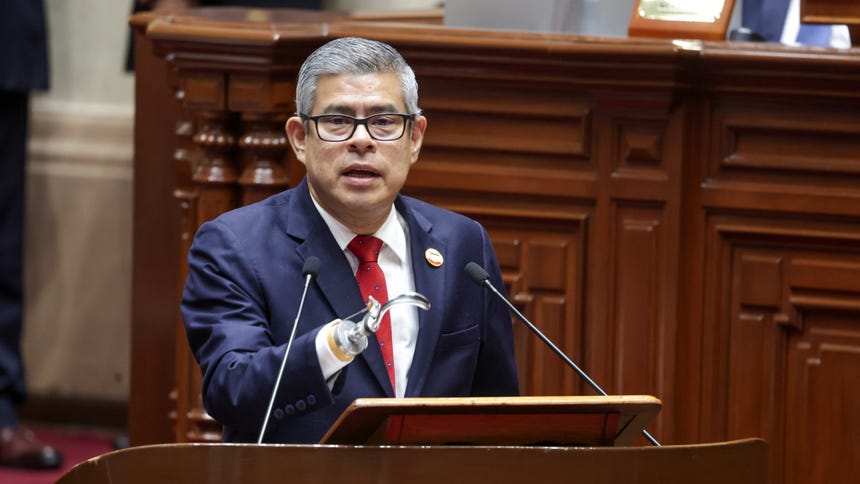
In response, the Commission on Constitution, Regulations, and Foreign Relations—the primary gatekeeper for such constitutional requests—has summoned the President of the Council of Ministers, Luis Galarreta Velarde, to provide a detailed justification for the 66 specific legislative items contained within the Executive’s proposal. The session is set for Wednesday, September 9, at 3:00 p.m. in the Miguel Grau Seminario Session Hall of the Legislative Palace.
Main Facts: The Scope of the Request
The Executive’s request is not merely a procedural formality; it represents a broad ambition to bypass the standard legislative process for a four-month window. The government argues that the urgency of the current national crisis—particularly regarding the security situation and economic stagnation—necessitates the ability to enact decrees without the iterative delays inherent in parliamentary debates.
The request covers 66 distinct points of legislation. Among the most contentious are:
- National Security: Overhauling police protocols and enhancing the judicial framework for capturing organized crime leaders.
- Penitentiary Reform: Implementing stricter controls within the prison system to prevent criminal activity from being directed from behind bars.
- Taxation: Proposals aimed at broadening the tax base and simplifying compliance to boost fiscal revenue.
- Labor Legislation: Modifications to employment contracts intended to spur formal job creation, a move that has already drawn scrutiny from labor unions.
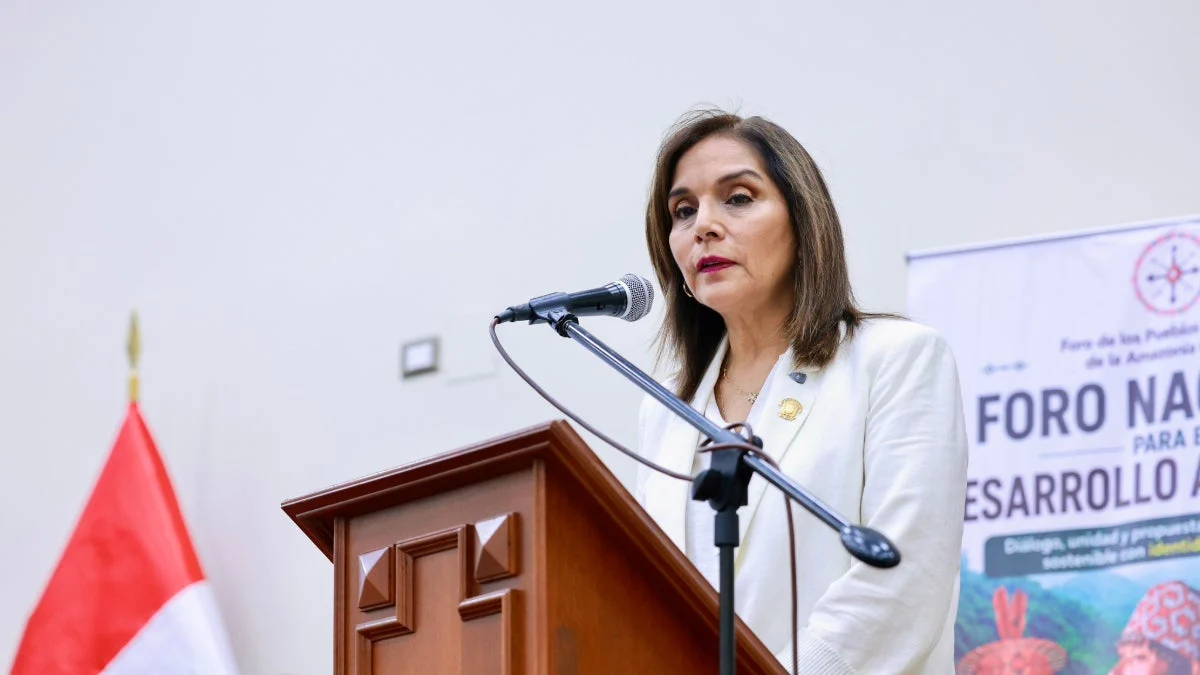
Giannina Avendaño Vilca, chair of the Constitution Commission, emphasized that while the delegation of powers is a constitutional mechanism, it is strictly intended to be "exceptional." The core tension lies in whether the Executive’s broad scope exceeds the bounds of "exceptionality," potentially infringing upon the fundamental role of Congress as the primary legislative body.
Chronology of Events
The road to this upcoming confrontation has been marked by a series of rapid developments:
- August 2026: The Fujimori administration signals a shift in strategy, citing a need for "rapid executive action" to curb rising crime rates.
- Early September 2026: The official petition for legislative delegation is filed with the Secretariat of the Congress.
- September 6, 2026: Giannina Avendaño Vilca confirms the formal summons for Prime Minister Luis Galarreta Velarde.
- September 7–8, 2026: The Commission initiates preliminary rounds of consultation with technical experts, academic institutions, and labor leaders to prepare for the rebuttal of the Executive’s arguments.
- September 9, 2026 (Scheduled): Prime Minister Galarreta Velarde is expected to appear at the Palacio Legislativo to defend the necessity and urgency of the 66 points.
Supporting Data and Technical Consultation
Recognizing the weight of the Executive’s proposal, the Constitution Commission has opted for a "multi-sectoral evaluation" approach. Rather than acting as a single, isolated committee, the Commission has requested opinions from 13 different standing committees within the Congress. This strategy ensures that the specialized knowledge of committees focusing on energy, the environment, and labor is incorporated into the final decision-making process.
The Stakeholder Dialogue
Chairperson Avendaño Vilca has championed a policy of transparency, inviting a diverse array of stakeholders to contribute to the debate. This includes:
- Academic and Technical Experts: To analyze the legal validity and economic impact of the proposed tax and labor reforms.
- Labor Unions: To voice concerns regarding the potential erosion of existing worker protections.
- Indigenous Organizations: To ensure that any legislative changes in environmental or extractive sectors do not infringe upon communal land rights or international environmental standards.
The goal, according to the Commission’s official statement, is to ensure that "the citizenship is a participant in this public debate," preventing the perception that decisions are being made in a political vacuum.
Official Responses and Political Posturing
The Executive branch remains firm in its stance. Prime Minister Galarreta Velarde has previously stated that the "urgency of the situation leaves no room for the slow machinery of traditional lawmaking." Government spokespeople argue that if the requested 120-day window is not granted, the country risks a stalemate on issues as critical as public safety.
Conversely, the opposition in Congress views this request as an attempt to consolidate power. "The fundamental role of Parliament is to legislate, to represent the citizenry, and to exercise political control over the government," Avendaño Vilca remarked. She highlighted that balancing the powers of the State is not an obstacle to governance, but a necessary safeguard for democracy.
"We will review this with absolute responsibility," she added. "Delegating powers is an act of trust, and that trust must be earned through evidence-based arguments and clear, measurable goals."
Implications for the State and the Constitution
The upcoming session in the Miguel Grau Seminario Hall is more than a budget or policy hearing; it is a test of the current constitutional order. The delegation of legislative faculties is a "temporary transfer of functions," and the precedent set by how this request is handled will likely dictate the legislative climate for the remainder of the presidential term.
Implications for the Separation of Powers
If Congress grants the full scope of the request, it effectively renders the legislature a passive observer for the next four months, limiting its ability to check the Executive’s power through the standard committee-and-plenary process. If Congress denies or heavily modifies the request, the administration may be forced to scale back its agenda or engage in a more grueling, piece-by-piece legislative negotiation.
Economic and Social Impact
The business sector is watching closely. Investors are looking for stability in tax policy and a more favorable labor climate, but they are also wary of sudden, unilateral changes that could spark social unrest. The involvement of unions and indigenous groups in the Commission’s review process suggests that the final outcome will likely be a compromise—one that attempts to satisfy the Executive’s need for speed while maintaining the social protections demanded by civil society.
The "Control" Function
The Congress is signaling that it intends to exercise its "political control" mandate more aggressively than in previous administrations. By involving 13 separate committees, the Commission is signaling to the Executive that it will not rubber-stamp legislation. Each of the 66 points will be scrutinized under the lens of constitutional compliance and social necessity.
Conclusion
As the September 9 deadline approaches, all eyes are on the Palacio Legislativo. The session will be the defining moment for the Fujimori administration’s legislative agenda. Prime Minister Galarreta Velarde faces a challenging task: he must convince a skeptical Congress that the Executive’s need for speed outweighs the Parliament’s duty to deliberate.
Ultimately, the debate is not just about the 66 points listed in the petition; it is about the health of the republic’s democratic checks and balances. Whether the outcome results in a harmonious collaboration or a deepening of the divide between the Executive and the Legislative branches, the proceedings will set the tone for the nation’s political trajectory for the foreseeable future. The citizens, represented by the various organizations now engaging in the dialogue, wait to see if their voices will be heard in the halls of power, or if they will be sidelined in the rush to bypass the democratic process.