Executive Summary: A Multi-Billion Dollar Opportunity
The landscape of Peru’s extractive sector is at a critical juncture. While much of the public discourse has been dominated by the administrative complexities of the Integral Mining Formalization Registry (Reinfo), industry experts are now pivoting toward a more ambitious vision: transforming the Artisanal and Small-Scale Mining (MAPE) sector into a robust engine for national economic growth.
According to Miguel Incháustegui, president of Rumbo a PERUMIN and a former Minister of Energy and Mines, the formalization of this sector is not merely a legal hurdle—it is a macroeconomic catalyst. Preliminary estimates suggest that a fully integrated, formal, and sustainable MAPE sector could boost Peru’s Gross Domestic Product (GDP) by an additional 1.5% and create between 300,000 and 400,000 new, formal jobs. This article examines the strategic roadmap required to unlock this potential, moving beyond simple compliance toward genuine industrial development.
The Core Data: Quantifying the Potential
The economic arguments presented by Incháustegui are rooted in the urgent need to bridge the gap between subsistence mining and industrial efficiency.
The Macroeconomic Impact
- GDP Contribution: A 1.5% increase in GDP represents a significant infusion of capital into the national economy, particularly in regions where formal financial institutions and industrial infrastructure are currently underdeveloped.
- Employment Generation: By transitioning 300,000 to 400,000 workers into the formal sphere, the government would not only increase the tax base but also provide these individuals with access to social security, occupational safety protocols, and banking services.
Rumbo a PERUMIN has announced that it will lead an in-depth study to validate these figures. "We need hard evidence," Incháustegui stated. "We are operating on projections from the Ministry of Energy and Mines (Minem), but we require a granular understanding of how these gains are distributed across provinces and how they can be sustained over the long term."
Chronology: The Evolution of the Formalization Dilemma
To understand the current state of the MAPE sector, one must analyze the history of Peru’s regulatory approach to small-scale mining.
- 2002–2010: The Early Regulatory Framework. The government begins to recognize the proliferation of informal mining as a response to global commodity price spikes, yet fails to provide a streamlined pathway to legality.
- 2012–2016: The Legislative Decree Era. Introduction of legislative decrees aimed at controlling illegal mining. These efforts were met with significant pushback due to the "all-or-nothing" approach, which alienated thousands of artisanal miners.
- 2017: Creation of the Reinfo. The implementation of the Registro Integral de Formalización Minera (Reinfo) was intended to be a transitional tool. However, it quickly became a permanent "waiting room," where thousands of miners remained in a state of suspended legality for years.
- 2020–2024: The Stagnation Period. Frequent extensions of Reinfo have created a sense of complacency. Policy discussions became trapped in the "extension vs. expiry" cycle, stalling meaningful reform.
- 2025–2026: The New Vision. Industry leaders like Incháustegui are now calling for the end of the "Reinfo-centric" debate, advocating for a focus on technical support, productivity, and market access.
Official Perspectives: Shifting the Paradigm
The consensus among policy experts is that the "compliance-only" model has failed. The primary challenge, as noted by Incháustegui, is that formalization is currently viewed by many miners as a burden—a series of expensive and bureaucratic requirements—rather than a gateway to prosperity.
Beyond Compliance to Profitability
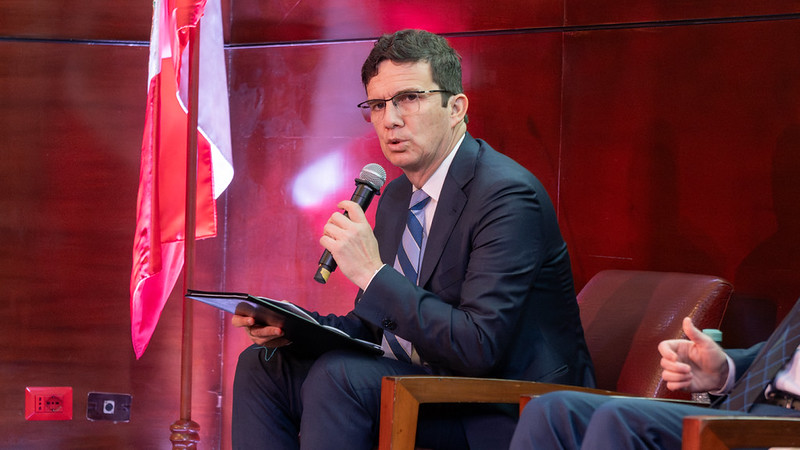
"We have to stop thinking that miners must formalize solely to comply with the law," Incháustegui argues. "They must formalize, yes, but also to generate profitability."
This shift in philosophy is vital. When a mining operation is formal, it can:
- Access Credit: Formal businesses can borrow from banks at lower interest rates to invest in cleaner, more efficient technology.
- Economies of Scale: Small producers can form associations or cooperatives to aggregate their production, negotiate better prices for their minerals, and share the cost of technical consulting.
- Environmental Stewardship: Formal operations are subject to environmental audits, which, if coupled with state-led training, can lead to the adoption of mercury-free extraction techniques.
Implications for the Future of Peru’s Mining Industry
The transition of the MAPE sector carries profound implications for the nation’s socio-economic stability.
1. Social Stability and Security
Informal mining is often a flashpoint for social conflict and the encroachment of criminal elements. By providing a clear, profitable, and attainable path to formalization, the State can regain control over territory and offer legitimate livelihoods to citizens who might otherwise be drawn into illicit economies.
2. Technological Advancement
A formal sector is an investable sector. By facilitating the transition, the government opens the door for private technology providers to supply the MAPE sector with modern, safer, and more efficient machinery. This reduces the carbon footprint and minimizes the physical danger associated with artisanal extraction.
3. Regional Development
Small-scale mining is decentralized. Unlike massive mega-projects that are localized, MAPE activities are scattered across various regions of Peru. Therefore, the success of formalization has a multiplier effect that can stimulate local markets, schools, and infrastructure in remote areas that have historically been neglected by central policy.
Addressing the "Reinfo" Bottleneck
The call to move past the Reinfo debate is perhaps the most radical aspect of the current proposal. The register, while well-intentioned, has arguably become a crutch. The focus now must shift toward:
- Technical Assistance: Establishing state-backed centers for metallurgical and environmental advice.
- Legal Simplification: Creating a tiered regulatory system where smaller operations face lower administrative barriers than large-scale industrial projects, while still adhering to strict safety and environmental standards.
- Sustainable Value Chains: Connecting small-scale miners directly to international markets that prioritize ethically sourced gold and minerals, thereby ensuring that the "premium" paid for sustainable mining stays in the hands of the producers.
Conclusion: A Call to Action
The potential for a 1.5% GDP increase and hundreds of thousands of jobs is not a pipe dream; it is an economic reality waiting to be unlocked. However, this will not happen through administrative extensions or bureaucratic circulars. It requires a fundamental shift in how the State perceives the MAPE sector: not as a problem to be solved, but as an industry to be developed.
As Rumbo a PERUMIN prepares its comprehensive study, the message is clear: The time for discussing the duration of a registry is over. The time for building a sustainable, responsible, and profitable artisanal mining sector has arrived. The integration of these thousands of workers into the formal economy is not just a regulatory necessity—it is a strategic pillar for the future of Peruvian prosperity. By fostering associations, encouraging investment in technology, and providing a stable legal framework, Peru can transform one of its most persistent challenges into one of its most significant economic advantages.
The path forward requires courage, political will, and a steadfast commitment to evidence-based policy. If the objective is to elevate the standard of living for the thousands of families dependent on small-scale mining, then the strategy must remain fixed on one goal: creating a formal sector that is as profitable as it is responsible.