Introduction: A Strategic Alliance Against Environmental Crime
In an era where environmental degradation has become one of the most pressing challenges for national security and sustainable development, the Peruvian Public Ministry has taken a decisive step forward. By fostering a closer collaboration between the Specialized Prosecutor’s Offices for Asset Forfeiture and the Specialized Prosecutor’s Offices for Environmental Matters, authorities are recalibrating their approach to the illicit economy that fuels illegal mining in regions like Madre de Dios.
The recent work session held to address the "Protocol for Asset Forfeiture in Environmental Crimes – Illegal Mining" represents a paradigm shift. This initiative, supported by the United States Embassy in Peru under the "Mentorship in Asset Forfeiture" project, seeks to bridge the gap between traditional environmental prosecution and the financial dismantling of criminal enterprises. By targeting the assets—the machinery, the gold, and the financial proceeds—rather than just the perpetrators, the state aims to strike at the very engine of illegal extraction.
Main Facts: The Intersection of Asset Forfeiture and Ecology
The core of this collaborative effort lies in the recognition that illegal mining is not merely a crime against nature; it is a highly lucrative financial enterprise. Often, environmental crimes are investigated in isolation, focusing on the immediate damage to rivers, forests, and biodiversity. However, the new framework emphasizes "parallel investigations."
The Protocol’s Objectives:
- Integrated Action: Developing a standardized protocol to ensure that when an environmental crime is detected, the asset forfeiture mechanism is triggered simultaneously.
- Financial Disruption: Moving beyond the seizure of basic tools (such as dredges or motors) to the identification and forfeiture of the larger, underlying financial structures supporting criminal networks.
- Institutional Synergy: Aligning the legal criteria of two specialized branches of the Public Ministry to ensure that cases are built on solid, admissible evidence that stands up to the rigors of the judicial system.
Chronology: Building a Robust Legal Framework
The meeting held in the Madre de Dios district was the culmination of months of preparation under the auspices of the U.S. Embassy’s mentorship program.
- Initial Phase (Early 2026): Identification of gaps in the coordination between environmental and forfeiture prosecutors. A realization emerged that while environmental prosecutors were successful in stopping illegal activities, the criminal organizations were often able to recoup their losses and reinvest in new equipment.
- The Mentorship Program: The U.S. Embassy launched the "Mentorship in Asset Forfeiture" project, bringing in international experts to share best practices on tracking illicit financial flows related to natural resource extraction.
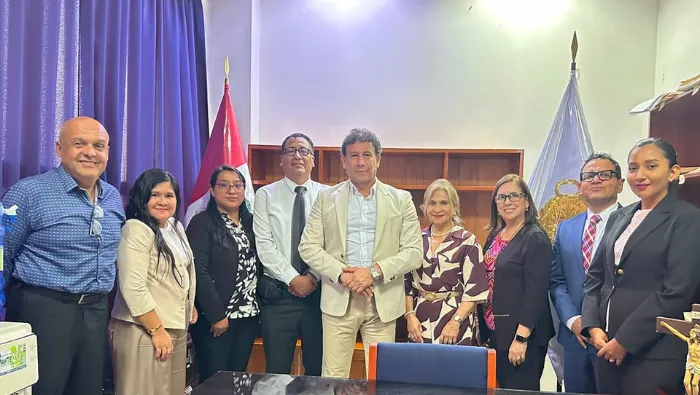
- The Madre de Dios Summit: High-level coordinators, including Alonso Raúl Peña Cabrera Freyre (National Coordinator of Asset Forfeiture) and Frank Almanza Altamirano (National Coordinator of Environmental Matters), convened with local fiscales to pilot the new protocol.
- Current Status: The implementation of the joint protocol is currently underway, with a focus on training regional staff and establishing communication channels for real-time information sharing.
Supporting Data: Why Madre de Dios?
Madre de Dios remains the epicenter of the illegal gold mining crisis in Peru. The region serves as a microcosm of the systemic challenges faced by the state.
- Ecological Impact: Thousands of hectares of primary rainforest are deforested annually, with mercury contamination threatening both the river systems and the health of local indigenous communities.
- The "Shadow" Economy: Estimates suggest that the illegal gold trade injects millions of dollars into the local economy, corrupting supply chains and creating a climate of insecurity.
- The Efficiency Gap: Historically, the time lag between an environmental report and the freezing of assets allowed criminal networks to move capital across borders or hide it behind front companies. The new protocol aims to compress this timeline, ensuring that the "financial cost" of committing an environmental crime is high enough to act as a genuine deterrent.
Official Responses and Key Stakeholders
The Public Ministry’s Stance
The leadership within the Public Ministry has been clear: environmental crime is not a victimless act, and it must be treated with the same severity as money laundering or drug trafficking. Alonso Raúl Peña Cabrera Freyre emphasized that the extinction of ownership is a powerful tool to strip criminal networks of their power. Frank Almanza Altamirano noted that the technical expertise of environmental prosecutors, when combined with the investigative powers of the forfeiture division, creates an unprecedented hurdle for illegal miners.
The Role of International Cooperation
The United States Embassy’s involvement highlights the transnational nature of these crimes. Illegal gold often enters the global market through complex, illicit supply chains. By helping Peruvian authorities refine their forfeiture techniques, the U.S. is indirectly strengthening regional environmental stability and disrupting the global supply of "dirty" gold.
Implications: A New Era for Environmental Justice
The integration of these two specialized units has profound implications for the future of environmental law in Peru.

1. Shift from Penalty to Restoration
Traditionally, environmental crime was punished with fines that were often considered a "cost of doing business." Asset forfeiture changes the equation: the state is no longer just seeking a penalty; it is seeking the restitution of the state’s property and the permanent dismantling of the criminal structure.
2. Deterrence through Financial Deprivation
By targeting the assets, the state effectively "de-capitalizes" the criminal syndicates. When a backhoe or a processing plant is permanently forfeited to the state, the organization loses not just the tool, but the entire investment. This creates a high-risk environment for investors in illegal mining, making it less attractive for organized crime groups to enter the sector.
3. Inter-Institutional Cooperation as a Standard
The success of this pilot in Madre de Dios sets a template that can be exported to other regions, such as the Puno corridor or the Amazonian frontiers. The institutionalization of "parallel investigations" ensures that environmental prosecutors are supported by experts who specialize in financial tracing, effectively creating a "specialized task force" approach to every major environmental crime case.
Challenges and Future Outlook
Despite the optimism surrounding the new protocol, the road ahead is complex. Corruption remains a significant barrier, as illegal mining networks often have deep roots within local power structures. Furthermore, the sheer scale of the Amazon basin makes monitoring and enforcement a logistical nightmare.
The success of this initiative will depend on three factors:
- Capacity Building: Continuous training for prosecutors on the ground who must navigate the legal nuances of both environmental and forfeiture laws.
- Public Trust: Transparent communication about the results of these forfeitures to ensure that the public understands the benefits of these actions for the environment and their communities.
- Sustainability: The commitment of the Public Ministry to maintain this level of coordination even after the U.S. mentorship project concludes.
Conclusion
The collaboration between the specialized prosecutor’s offices in Peru is a beacon of progress in the fight against environmental crime. By aligning the mechanisms of asset forfeiture with the expertise of environmental law, the state is evolving. It is no longer just reacting to the destruction of the Amazon; it is actively working to dismantle the financial foundations that sustain the criminal entities behind it.
As these protocols take root in Madre de Dios, the message to those who profit from the degradation of the environment is clear: the state is not only coming for your equipment, but it is also coming for your capital, your assets, and your capacity to operate. This is a vital step toward restoring the rule of law in one of the world’s most ecologically significant regions. Through this unified front, the Public Ministry is demonstrating that environmental justice and financial integrity are two sides of the same coin, essential to the security and future of the nation.