Executive Summary: A Conflict of Rights
In May 2017, the Peruvian political landscape became the epicenter of a critical debate regarding the boundaries of state power and the fundamental rights of indigenous peoples. At the heart of this controversy was Legislative Decree 1333, which established the "Special Project for Access to Land for Prioritized Investment Projects" (APIP) under the state agency ProInversión.
Proponents of the measure, primarily within the Ministry of Economy and Finance (MEF), argued that the decree was a necessary tool to streamline land titling and facilitate major infrastructure projects. However, legal experts, human rights organizations, and indigenous federations characterized the decree as a "land-grabbing" mechanism that bypassed constitutional requirements for prior consultation. The legislative standoff reached a boiling point as Congress debated whether to uphold the executive’s directive or repeal it to protect the ancestral rights of the nation’s indigenous populations.
Chronology of the Controversy
- Late 2016 – Early 2017: The Executive branch issues Legislative Decree 1333, granting ProInversión the authority to engage in "process zero"—a mechanism to "sanitize" land ownership titles to expedite prioritized investment projects.
- March – April 2017: Indigenous organizations, including the National Agrarian Confederation (CNA) and the National Organization of Andean and Amazonian Women of Peru (ONAMIAP), mobilize, citing that the decree violates ILO Convention 169.
- May 2017: The Congressional Constitution Commission, led by figures like Congresswoman Úrsula Letona Pereyra, reviews the decree. The Commission issues a landmark recommendation for the full repeal of the decree, citing executive overreach and a failure to conduct mandatory prior consultation.
- May 15, 2017: IDLADS and various civil society actors launch a public advocacy campaign urging Congress to stand firm against pressure from the Ministry of Economy, which seeks to bypass the repeal through last-minute "modifications" that lack the legal rigor of a formal prior consultation process.
Supporting Data and Legal Framework
The criticism against Decree 1333 is rooted in the "State of Constitutional Law," which mandates that vulnerable groups, particularly indigenous peoples, must be consulted on any administrative or legislative measures that affect their collective rights.

The "Process Zero" Fallacy:
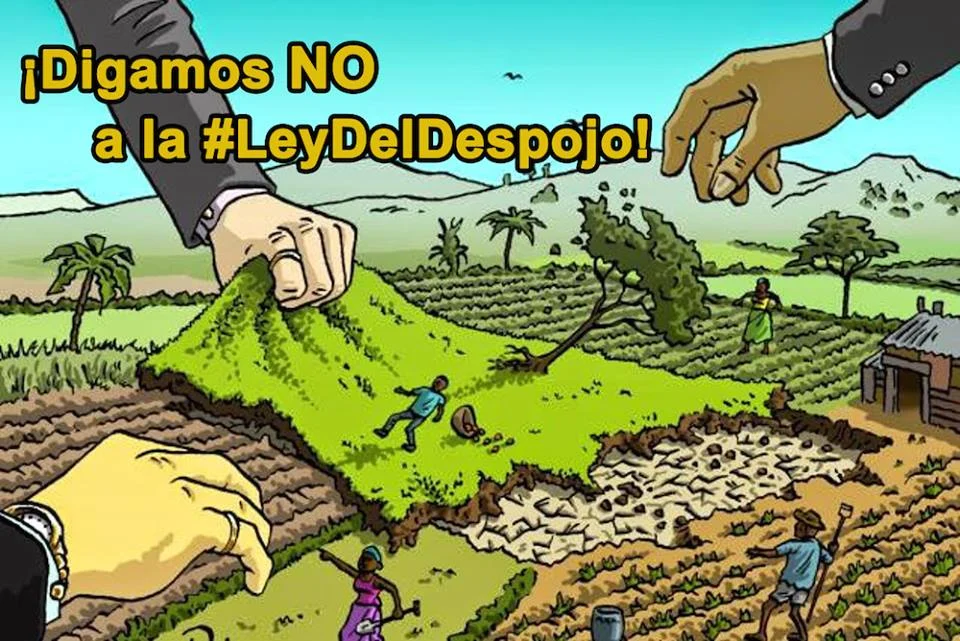
The government defined "process zero" as a purely administrative task to determine the legal status of land before any purchase or expropriation occurs. However, critics argue that the state effectively treats untitled land—or land held by indigenous communities—as state property by default. With approximately 49.6% of indigenous territories currently affected by government concessions, this policy threatens to strip communities of their ancestral land without just compensation.
The 13-Point Case for Repeal:
Legal analysts have synthesized the argument for the repeal of the decree into thirteen core points, emphasizing:
- Violation of Prior Consultation: The state failed to engage in the 120-day consultation process required by law, which includes informational workshops, internal evaluations, and good-faith dialogue.
- Judicial Vulnerability: By creating a "fast-track" for investment, the decree creates a conflict of interest, as APIP acts as judge and party in property disputes.
- Legal Immunity: The decree provides excessive protections for APIP officials, shielding them from administrative and criminal liability unless "dolo" (malicious intent) or negligence is proven, a standard that is notoriously difficult to meet in the Peruvian legal system.
Official Responses and the "Good Faith" Gap
The Ministry of Economy and Finance (MEF) has defended the decree by claiming they have "consulted" with various organizations, including the Pact of Unity (FENMUCARINAP, ONAMIAP, CNA, and CNP). However, the indigenous organizations have formally denied this. They argue that the MEF presented second-tier drafts without providing the necessary time or documentation for a proper review.

Indigenous leaders contend that the government’s approach is patronizing, treating these communities as "minors" rather than autonomous political entities. The concept of "voluntary relocation," introduced by the MEF, is particularly contentious. International legal standards prohibit the forced displacement of indigenous peoples. Critics argue that when the state offers "alternative" land to a community whose ancestral territory is being claimed by an investment project, the decision is not voluntary—it is a choice made under duress, driven by the state’s prior encroachment on their legal status.
Implications: Preventing a New "Baguazo"
The failure to repeal Decree 1333 would set a dangerous precedent for the Peruvian legislative system. If the Congress allows the Executive to "fix" an unconstitutional decree through minor, non-consulted modifications, it effectively signals that the right to prior consultation is optional rather than fundamental.
1. The Threat of Social Conflict:
The history of Peru is scarred by incidents like the "Baguazo" (the 2009 conflict in Bagua), where the lack of dialogue between the government and indigenous groups led to tragic loss of life. By ignoring the need for deep, meaningful consultation, the government risks fueling social unrest in regions where land rights remain the primary source of identity and livelihood.

2. Erosion of Checks and Balances:
The Congressional Constitution Commission’s initial recommendation for repeal was a historic exercise of legislative oversight. Should Congress back down due to pressure from the Ministry of Economy, it would reinforce a narrative of a "rubber-stamp" legislature, undermining the trust of the citizenry in democratic institutions.
3. Legal Instability:
With constitutional actions (amparos) already filed by organizations like the CNA and supported by the National Human Rights Coordinator (CNDH), the decree is already under a cloud of judicial scrutiny. A repeal by Congress would provide much-needed legal stability, whereas upholding the decree invites years of litigation and international condemnation for violating human rights treaties.
Conclusion: A Call for Civic Courage
The situation represents a critical juncture for Peru. The legislative branch holds the power to prove that the rule of law prevails over the interests of economic expediency. As noted by advocates, the myth that "prior consultation delays economic growth" is a false dichotomy. True progress is built on consensus and the recognition of intercultural rights.

The congresspeople, including Úrsula Letona Pereyra, face a defining moment. To protect the collective rights of indigenous peoples is to protect the integrity of the Peruvian state itself. The hope is that the legislative body will choose to act as a guardian of constitutional rights rather than an enabler of executive excess. Only by engaging in a genuine, good-faith, and mandatory consultation process can the government hope to achieve sustainable, peaceful, and equitable development for all its citizens.
The eyes of the nation remain fixed on the plenary session, awaiting a decision that will either secure the ancestral rights of indigenous peoples or open the door to a future defined by conflict and the erosion of fundamental human rights.