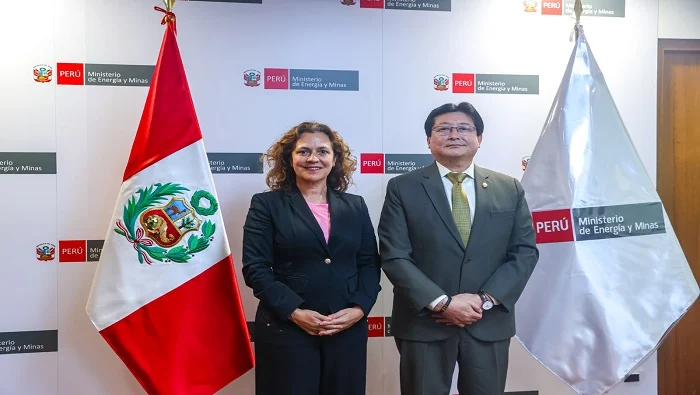
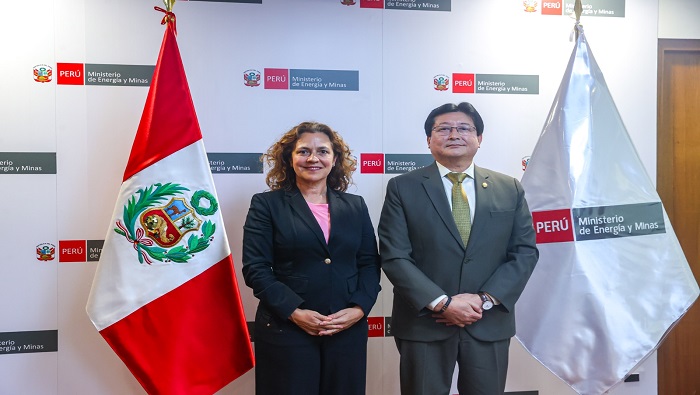
In a significant move to bolster Peru’s long-term economic stability and infrastructure resilience, the Minister of Energy and Mines, Guillermo Shinno, recently held a high-level strategic summit with Matilde Bordon, the representative of the Inter-American Development Bank (IDB) in Peru. The meeting, which included a specialized delegation from the international financial organization, focused on defining new avenues for technical and financial cooperation to catalyze the nation’s energy and mining sectors.
As Peru navigates a complex global economic landscape, this partnership with the IDB signals a shift toward more sustainable, efficient, and technologically advanced resource management. The discussions spanned a wide spectrum of critical issues, ranging from the modernization of electrical grids in the Amazon to the formalization of small-scale mining operations and the expansion of natural gas infrastructure.
I. Main Facts: The Core Pillars of the Partnership
The collaborative agenda established between the Ministry of Energy and Mines (MINEM) and the IDB is anchored in three primary pillars designed to address immediate domestic needs while laying the groundwork for long-term growth.
- Energy Reliability in the Amazon: A primary focus was placed on the city of Iquitos, where the electrical system requires urgent intervention. The proposal involves comprehensive upgrades across the generation, transmission, and distribution spectrum to ensure that Iquitos can sustain its growing agro-industrial activities and improve the quality of life for its residents.
- Mining Formalization and Environmental Stewardship: The partnership seeks to modernize the oversight of the mining sector. This includes the management of environmental liabilities and, crucially, the implementation of advanced tracking systems to ensure the traceability of mineral origins within the Artisanal and Small-Scale Mining (MAPE) segment.
- Regulatory Modernization and Natural Gas Expansion: Both parties recognized the need for a more agile regulatory framework to facilitate the masification of natural gas. By harmonizing local regulations with international best practices, the government aims to expand access to cleaner energy across more regions of the country.
II. Chronology of Cooperation: From Planning to Execution
While this recent meeting marks a milestone in current bilateral relations, it represents the continuation of a long-standing developmental partnership.
- Initial Alignment: Over the past fiscal year, MINEM and the IDB have been conducting diagnostic studies regarding the "Energy Gap" in the Amazonian provinces.
- The Strategic Meeting: The recent session served as the platform to transition from conceptual studies to concrete financial mechanisms. During this meeting, Minister Shinno emphasized that technical cooperation is no longer an "optional benefit" but a requirement for accelerating public investment.
- Future Roadmap: The agenda for the coming months includes a series of technical workshops aimed at integrating the expertise of international partners, such as South Korea and Canada, into the local planning processes for energy transition and mining safety.
III. Supporting Data: The Need for Infrastructure Transformation
The urgency behind these initiatives is supported by the reality of Peru’s energy geography. The Iquitos region, isolated from the National Interconnected Electric System (SEIN), relies on local, often aging, thermal power generation. This creates a bottleneck for regional development.
- Agro-industrial Potential: The Loreto region possesses vast potential for sustainable agro-industry, yet this sector is currently hindered by the intermittent nature of the power supply.
- MAPE Significance: The small-scale mining sector contributes significantly to the regional economy in various parts of Peru, yet it remains plagued by informality. Data suggests that without proper traceability, the environmental and economic impact of this sector remains largely unmonitored.
- Natural Gas Access: Despite Peru being a natural gas producer, a significant portion of its population lacks direct, low-cost access. The IDB’s support in the form of low-interest financing and technical design is intended to lower the "barrier to entry" for private investment in gas distribution networks.
IV. Official Responses and Institutional Vision
Minister Guillermo Shinno, in his address to the press following the meeting, highlighted that the transformation of the energy sector is not merely a technical task, but a social one.
"The energy infrastructure is the backbone of the city of Iquitos," Shinno stated. He underscored the government’s intention to tailor energy solutions to the unique environmental and logistical constraints of the Amazon. "We cannot apply a ‘one-size-fits-all’ model to the rainforest. We need specialized technology that respects the ecosystem while delivering the power required for modern industry."
Regarding the mining sector, Shinno was equally firm: "We have to ensure that the origin of the mineral is formal. Monitoring and control are basic requirements. These are not just administrative hurdles; they are strategic imperatives for our national reputation and environmental integrity."
Matilde Bordon, representing the IDB, expressed the Bank’s willingness to provide the necessary intellectual capital to assist the Peruvian government. The IDB’s commitment focuses on facilitating "smart" investments—projects that offer the highest social return and environmental sustainability.
V. Implications for the Future of Peru
The collaboration between MINEM and the IDB carries profound implications for Peru’s developmental trajectory over the next decade.
Implications for Energy Security
By focusing on regional hubs like Iquitos, the government is moving away from a centralized energy strategy. By integrating distributed generation and smarter distribution grids, Peru is effectively future-proofing its energy sector against climate-related disruptions. This, in turn, makes the regions more attractive for foreign direct investment (FDI).
Implications for the Mining Industry
The focus on the traceability of mineral origins is a proactive step toward complying with increasingly stringent global ESG (Environmental, Social, and Governance) standards. As European and North American markets demand more transparency in mineral supply chains, Peru’s effort to formalize the MAPE sector through IDB-funded technical assistance will enhance the competitive edge of its mining exports.
Implications for Public Policy and Governance
The emphasis on "tramitología" (the reduction of bureaucratic processes) is perhaps the most significant systemic change. By simplifying the regulatory environment for infrastructure projects, the government intends to reduce the "infrastructure gap." The IDB’s involvement acts as a guarantor of best practices, ensuring that these regulatory changes are transparent, efficient, and resistant to corruption.
The Global Perspective
The mention of South Korea and Canada as technical partners is particularly noteworthy. By leveraging the technological expertise of these nations—both of which have mastered high-efficiency energy grids and high-standard mining operations—Peru is positioning itself within an elite global network of energy and mining innovation.
Conclusion: A Collaborative Horizon
The meeting between Minister Shinno and the IDB delegation is more than just a bureaucratic check-in; it is a clear declaration of intent. As Peru continues to modernize, the integration of international financial support with local technical expertise will be the primary driver of its success.
The commitment to bringing reliable energy to the Amazon, the focus on sustainable mining practices, and the push for natural gas expansion all point toward a modernized, more resilient Peru. As the Ministry of Energy and Mines continues to solidify these partnerships, the outlook for the nation’s energy security and industrial capacity remains optimistic, provided that these strategic plans are translated into consistent, on-the-ground implementation.
The road ahead is complex, but the alignment between the Ministry and its strategic allies indicates that the necessary mechanisms for progress are finally being set in motion. The coming months will be critical as these technical discussions evolve into actionable public policies that will define the quality of life and the economic prosperity of the Peruvian people for generations to come.