Executive Summary: A Proactive Defense for Peru’s Environment
As Peru braces for the climatic uncertainties brought by the El Niño Phenomenon (FEN), the Organismo de Evaluación y Fiscalización Ambiental (OEFA) has launched a robust, technology-driven mobilization strategy. Under the leadership of Ítalo Díaz Horna, President of the OEFA Council, the agency is pivoting its operational focus toward high-intensity prevention and rapid response. By integrating advanced geospatial data, a decentralized national network, and a surge in field supervision, the OEFA aims to mitigate the environmental impact of extreme weather events on critical sectors, including mining, hydrocarbons, and energy.
This strategic deployment, aligned with the broader objectives of the Ministry of the Environment, represents a shift from reactive monitoring to predictive environmental management. With over 1,700 preventive alerts already processed, the OEFA is positioning itself as the primary firewall against potential environmental disasters triggered by heavy rainfall and flooding.
The Strategic Framework: Mobilizing Resources
The cornerstone of OEFA’s defense strategy lies in its logistical and technological readiness. Recognizing that traditional monitoring is insufficient against the rapid onset of El Niño, the agency has undergone a significant modernization effort.
Decentralized Operational Capacity
The OEFA has activated its 31 offices—comprising both desconcentradas (decentralized) and enlace (liaison) hubs—to serve as the frontline of its operations. These regional nodes are no longer merely administrative offices; they have been outfitted with the equipment necessary to conduct surveillance in remote and high-risk areas.
Technological Assets
The agency’s toolkit for this initiative includes:
- A Mobile Fleet: The deployment of 20 high-clearance 4×4 vehicles specifically assigned to navigate terrain likely to be affected by flooding or mudslides (huaicos).
- Aerial Surveillance: 30 drones equipped with high-precision GPS technology, allowing for the mapping of environmental changes in real-time, even in areas where physical access is hampered by infrastructure damage.
- Expert Multidisciplinary Teams: A surge capacity provided by specialized engineers, geologists, and environmental technicians tasked with rapid-response assessment.
Chronology of Action: The Path to Preparedness
The mobilization follows a systematic timeline designed to ensure that when the intensity of the El Niño reaches its peak, the regulatory and monitoring framework is already firmly in place.

- Phase I: Identification and Mapping (Pre-FEN): The OEFA utilized the "Hydrometeorological Hazard Identification Tool" within the Interactive Portal for Environmental Oversight (PIFA). This phase involved analyzing historical weather data alongside current environmental vulnerabilities in industrial zones.
- Phase II: Alert Generation: To date, the agency has successfully processed over 1,700 alerts. These alerts serve as early-warning indicators, notifying operators in extractive and productive sectors to reinforce their containment systems.
- Phase III: Operational Surge (Current): The ongoing deployment of teams across the country to conduct preemptive inspections. This phase is concurrent with the 100-day management plan, which serves as a sprint to ensure all environmental safeguards are operational before the peak of the rainy season.
- Phase IV: Constant Monitoring and Emergency Response: The permanent presence of teams on the ground, coupled with satellite and drone monitoring, ensures that any emergency—such as a tailings dam overflow or a pipeline rupture—is addressed immediately.
Supporting Data: By the Numbers
The scale of the OEFA’s intervention is evidenced by the metrics set for the upcoming months. The organization is not merely reacting but is proactively increasing its regulatory footprint:
- 1,100+ Additional Inspections: Targeted interventions across mining, hydrocarbon, electrical, and agricultural sectors.
- 226 Technical Assistance Sessions: Designed to ensure that industrial operators understand their responsibilities and possess the technical knowledge to maintain containment integrity under extreme stress.
- 26 Capacity-Building Actions: Training sessions for other Environmental Oversight Entities (EFAs) to ensure a synchronized national response.
These figures illustrate a quantitative shift toward aggressive supervision. The OEFA’s focus is not just on punishing non-compliance but on preventing it through proactive education and technical guidance.
Official Stance: Leadership and Accountability
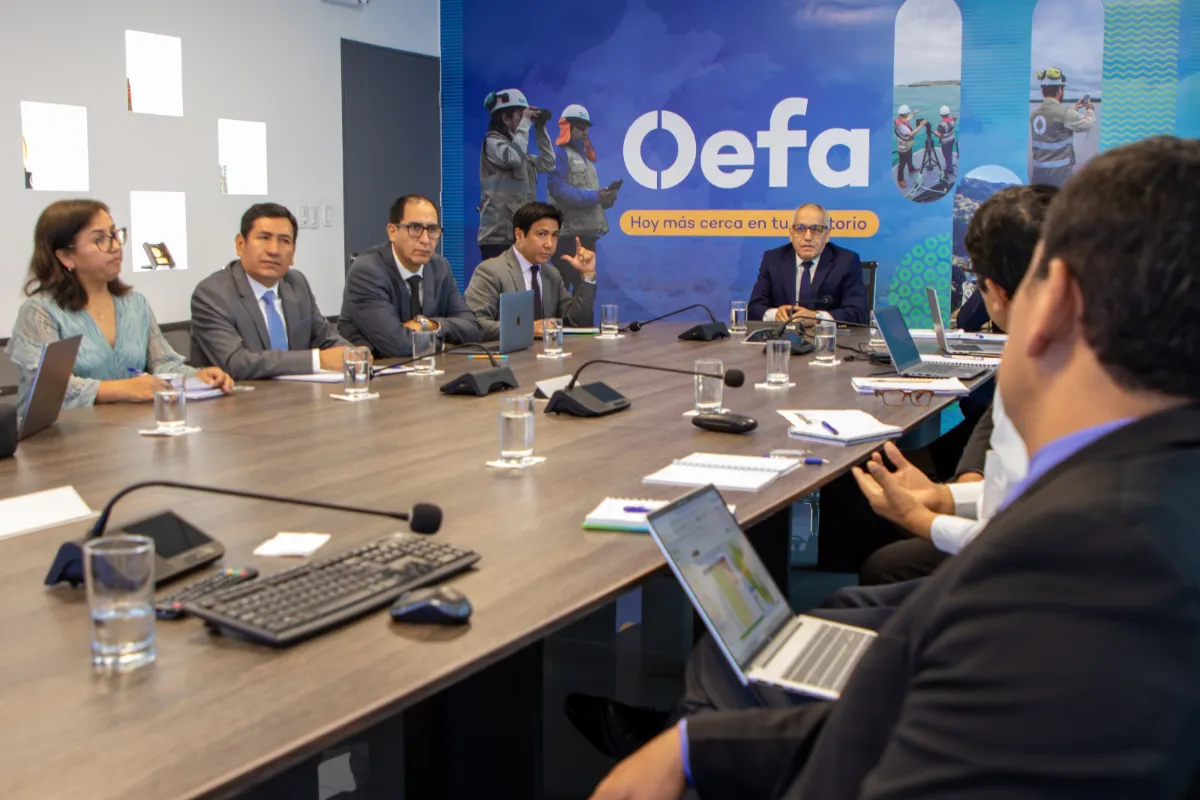
During a recent working session, Ítalo Díaz Horna underscored the agency’s commitment to environmental stability. "The OEFA has been strengthened with technological equipment and vehicles for its regional offices, which allows us to boost environmental surveillance and be prepared for emergencies such as those that summon us today," Díaz Horna stated.
The leadership emphasizes that the environment is a shared responsibility. By providing "technical orientation" to the companies it regulates, the OEFA seeks to foster a culture of compliance that prioritizes long-term environmental health over short-term industrial convenience. This is particularly vital in the context of the mining and hydrocarbon sectors, where an environmental leak during a flood could have catastrophic, irreversible consequences for local watersheds and biodiversity.
Implications for Industry and Environment
The mobilization of the OEFA has deep implications for the industrial landscape of Peru.
1. Mitigating Socio-Environmental Conflict
One of the most significant risks during environmental disasters is the erosion of trust between extractive industries and local communities. By ensuring that facilities are properly managed and that the OEFA is actively monitoring the situation, the agency aims to prevent the "conflict triggers" that often follow environmental contamination incidents.

2. Protecting Critical Infrastructure
The focus on mining and electrical sectors is not accidental. These industries are the backbone of the Peruvian economy. A failure in a hydroelectric plant or a mining tailings dam during an El Niño event would cause massive economic disruption. The OEFA’s intervention serves as a de-facto risk management program for these critical infrastructures.
3. A New Paradigm of Digital Governance
The reliance on the PIFA portal and geospatial data marks a transition toward "digital governance" in the environmental sector. The agency’s ability to overlay climate hazard maps with industrial activity maps allows for a precision that was previously unavailable. This data-driven approach is likely to become the standard for all future environmental monitoring in the region.
Challenges and Future Outlook
Despite the extensive preparations, the OEFA faces the inherent challenge of the Peruvian geography—vast, rugged, and prone to rapid topographical changes. The success of this initiative will depend on the real-time functionality of the drone fleet and the responsiveness of regional teams in the face of blocked roads and communication failures.
Furthermore, the "100-day plan" is just the beginning. The agency must sustain this level of vigilance for the entire duration of the El Niño cycle, which can last months or even years. The commitment to maintain a "permanent territorial presence" is an ambitious goal that will test the agency’s financial and logistical endurance.
Conclusion: A Foundation of Resilience
The OEFA’s current mobilization is a testament to the importance of proactive environmental policy. By leveraging technology, decentralizing power, and fostering collaboration with the industries it monitors, the agency is creating a safety net for the nation. While the climate remains unpredictable, the organized, systematic approach adopted by the OEFA provides a clear roadmap for how national institutions can—and must—adapt to the challenges posed by a changing global climate.
As the country moves forward, the success of this strategy will be measured not just in the number of inspections conducted, but in the absence of environmental disasters. The OEFA’s message is clear: through information, technology, and constant vigilance, the impact of El Niño can be managed, and the environment can be protected for future generations.