In a significant move aimed at modernizing the regulatory framework governing the Peruvian mining industry, the Ministry of Energy and Mines (MINEM) has unveiled a draft supreme decree that seeks to introduce the Environmental Affidavit for Mining Exploration (DJA). This proposed instrument is designed to function as a complementary mechanism within the existing National Environmental Impact Assessment System (SEIA), promising to transform the speed and efficiency with which low-impact exploration projects are approved.
By shifting toward a more agile, predictable, and simplified permitting process, the government aims to reinvigorate investment in mineral exploration—the vital first stage of the mining value chain.
The Core Proposal: Defining the DJA
The draft decree, published recently in the official legal gazette, outlines a shift in how the state evaluates the environmental footprint of minor exploration activities. Currently, even small-scale exploration projects are subjected to rigorous evaluation processes that can often lead to bureaucratic bottlenecks, even when the environmental risk is demonstrably low.
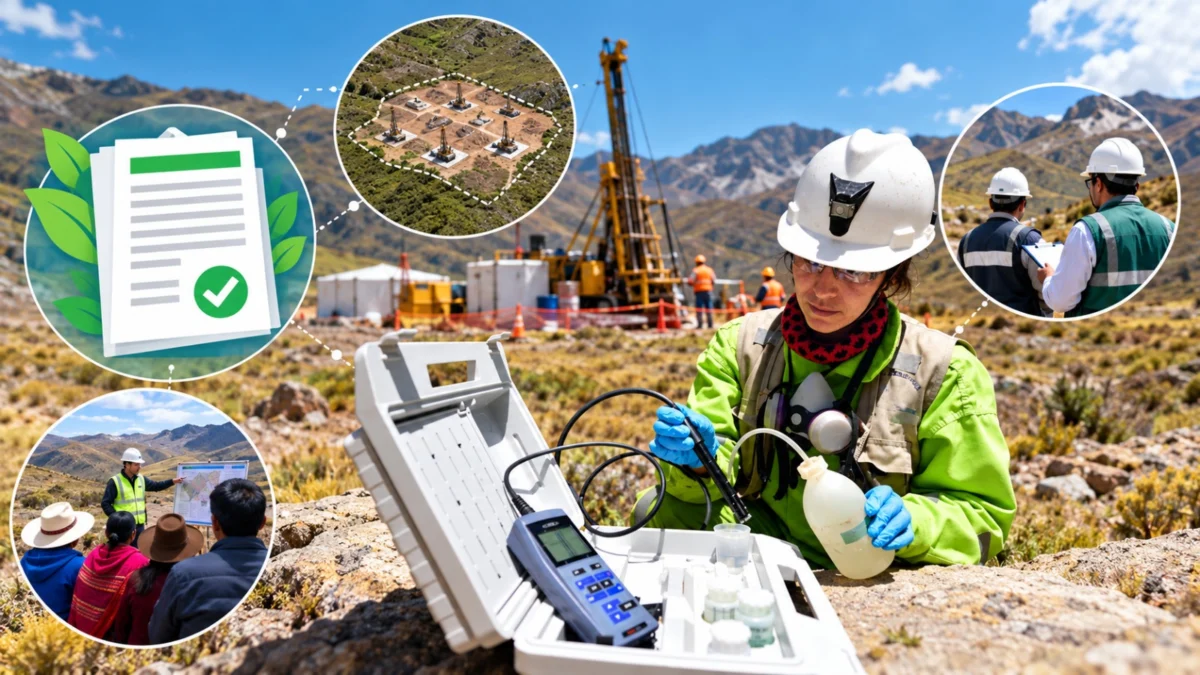
The Declaración Jurada Ambiental (DJA) is intended to streamline this process specifically for projects categorized as having "non-significant environmental impact." Under the proposed regulation, the DJA would serve as a formal commitment from the project operator, acknowledging adherence to strict environmental standards and territorial conditions.
Eligibility Criteria
Not all projects will qualify for this expedited route. The MINEM has established specific thresholds to ensure that the DJA is used only for low-impact operations:
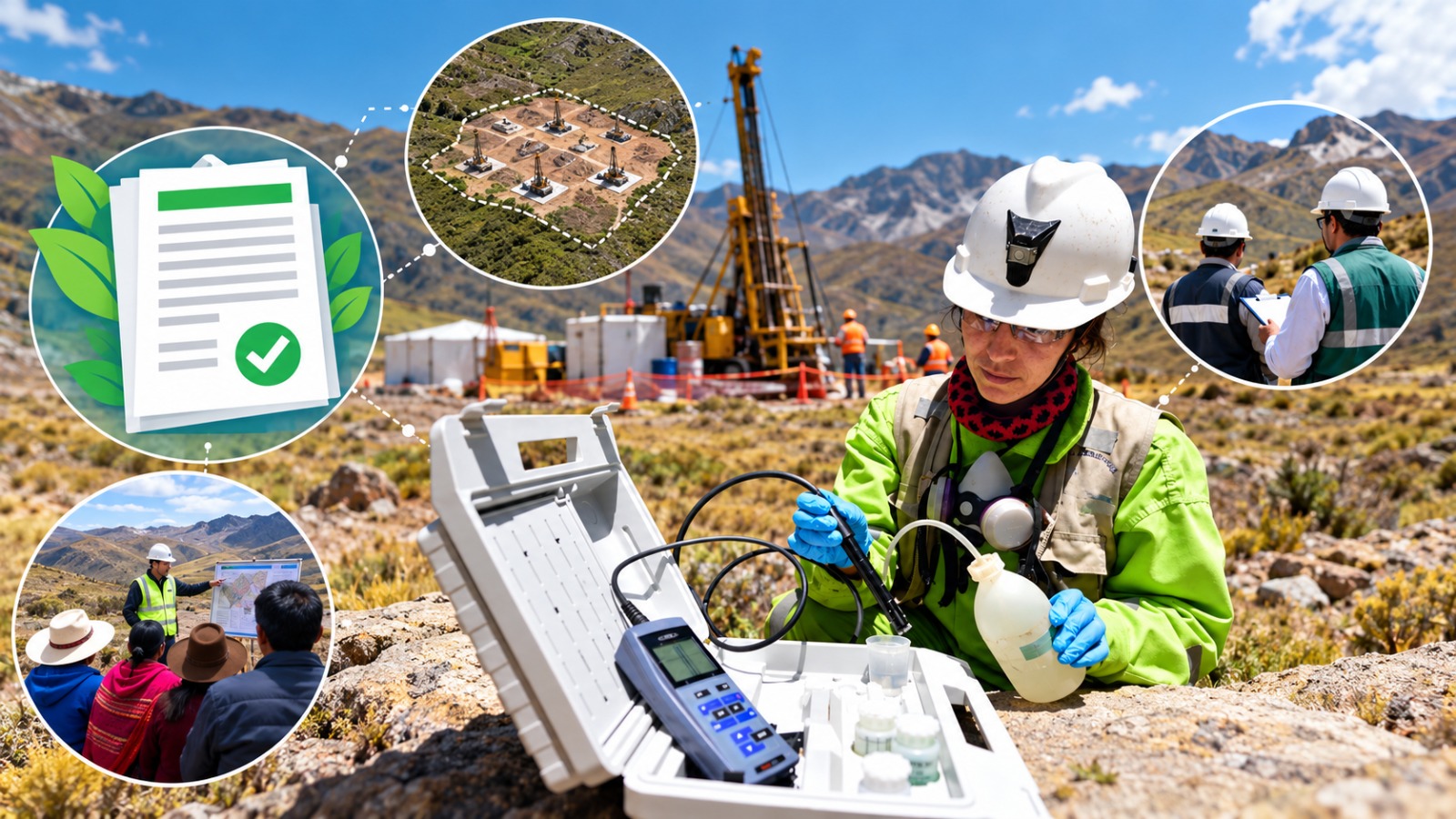
- Scale: The project must involve no more than 10 drilling platforms.
- Footprint: The total surface area affected must be less than 5 hectares.
- Compliance: The project must strictly adhere to predefined environmental and territorial criteria established by the Ministry.
Chronology of Regulatory Reform
The introduction of the DJA is not an isolated event but rather the latest step in a multi-year effort to refine environmental management in the extractive sectors.
- Pre-2024 Context: The mining sector faced increasing criticism regarding the "permitting trap," where lengthy administrative reviews delayed exploration, subsequently impacting the long-term pipeline of new mining operations.
- Policy Formulation (2025): The MINEM began conducting internal assessments of the SEIA to identify redundancies in the evaluation of low-risk activities.
- Publication of the Draft (September 2026): The official release of the draft supreme decree marked the transition from internal planning to public policy debate.
- Consultation Phase (Current): The ministry has opened a 15-day window for stakeholders—including mining companies, NGOs, and community representatives—to provide feedback on the proposal.
Supporting Data and Procedural Mechanics
The efficiency of the DJA lies in its "automatic approval" feature. According to the draft, once a project proponent submits the required documentation, the General Directorate of Environmental Mining Affairs (DGAAM) will be responsible for issuing a Certificate of Automatic Approval.
The Five-Day Rule
A cornerstone of this proposal is the administrative timeline. The DGAAM is mandated to issue the approval certificate within five business days from the date of submission. This shift from a discretionary evaluation process to an automatic, deadline-driven system is designed to provide investors with the legal certainty required to allocate capital for exploration.
Participation and Oversight
Crucially, the proposal does not abandon environmental responsibility. The MINEM has stipulated that:
- Public Participation: The DJA framework includes requirements for participatory workshops and other mechanisms, ensuring that local communities are kept informed and engaged, even for smaller projects.
- Continuous Oversight: The Environmental Evaluation and Enforcement Agency (OEFA) will maintain its mandate to oversee and audit these projects. The transition to an "automatic" permitting phase does not grant companies immunity from environmental standards; rather, it shifts the focus from "pre-approval" to "post-approval" monitoring and rigorous enforcement.
Implications for the Mining Sector
The proposal carries profound implications for Peru’s competitive standing in the global mining market.
Boosting the Exploration Pipeline
Peru possesses immense geological potential, yet exploration investment has faced stiff competition from jurisdictions like Canada, Australia, and Chile, where permitting times are often more predictable. By reducing the administrative burden on small-scale projects, the MINEM hopes to see a surge in "greenfield" exploration, which is essential to discovering the next generation of world-class copper and gold deposits.
Legal and Environmental Certainty
For mining companies, the most significant gain is the reduction of "regulatory risk." When a project is stuck in a bureaucratic loop for months or years, the cost of capital increases, and interest wanes. The DJA provides a clear, time-bound pathway that allows companies to plan drilling campaigns with greater confidence.
Environmental Stewardship
Critics of the proposal have raised concerns about whether a "sworn statement" (affidavit) model provides enough oversight. However, the MINEM argues that by delegating the oversight of low-impact projects to the OEFA—rather than burdening the DGAAM with administrative reviews of minor activities—the state can allocate its technical resources toward monitoring high-risk, large-scale mining operations more effectively.
Official Responses and Public Consultation
The Ministry has emphasized that the DJA is an "instrument of environmental management," not an environmental exemption. The government is actively seeking input from all stakeholders to ensure that the regulation is robust enough to protect the environment while being flexible enough to foster economic growth.
How to Participate
The MINEM has extended an invitation to the public and industry experts to submit their comments. Interested parties can contribute by:
- Submitting written feedback: Correspondence can be sent to the Dirección General de Asuntos Ambientales Mineros at Avenida Las Artes Sur N.° 260, San Borja, Lima.
- Digital submissions: Comments can be emailed to the ministry’s official environmental affairs address.
- Deadline: All contributions must be received within 15 calendar days from the date of publication.
Conclusion: A Balanced Approach to Development
The proposed Environmental Affidavit for Mining Exploration represents a pragmatic evolution in Peru’s mining policy. By distinguishing between high-impact, complex mining projects and small-scale, low-risk exploration, the state is adopting a risk-based regulatory approach common in mature mining jurisdictions.
If implemented successfully, this measure could serve as a catalyst for renewed investment in the Andean nation. It aligns with a broader strategy of promoting "responsible mining"—a model where environmental safeguards are rigorous, but administrative hurdles do not impede the sustainable development of the country’s natural resources.
As the 15-day consultation period concludes, the industry will be watching closely to see how the MINEM incorporates feedback and whether this decree effectively strikes the balance between industrial efficiency and environmental integrity. For a nation that relies heavily on its mineral wealth to fund social and infrastructure projects, the success of this initiative is not merely an administrative detail—it is a critical component of Peru’s future economic stability.