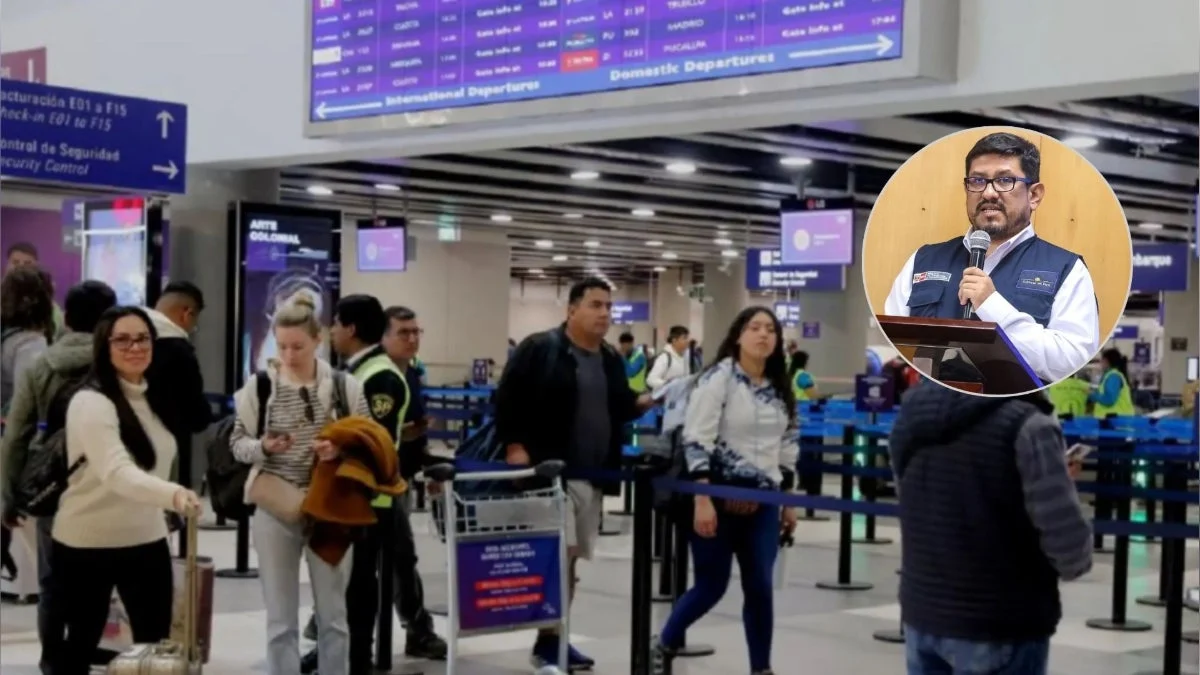
In a strategic move to bolster Peru’s aviation competitiveness and enhance the passenger experience, the Ministry of Transport and Communications (MTC) has announced it is finalizing a comprehensive proposal to restructure the Unified Airport Use Fee (TUUA) for international connecting flights at the Jorge Chávez International Airport. The initiative, which seeks to alleviate the financial burden on transit passengers, aims to modernize the current payment framework by integrating these fees directly into airline tickets, effectively eliminating the need for separate payments during transit.
Minister of Transport and Communications, José Tangherlini, recently confirmed that the government is in the advanced stages of negotiations with the airport concessionaire, Lima Airport Partners (LAP), and key airline stakeholders. While the project remains a work in progress, the objective is clear: to transform Lima into a more attractive regional hub by reducing costs and simplifying the logistics for millions of travelers passing through the Peruvian capital.
Main Facts: The Proposed Structural Shift
The core of the MTC’s proposal focuses on two pillars: a reduction in the current TUUA rate for international transfers and the integration of this fee into the base airfare.
Since December 2025, international connecting passengers have faced a specific fee structure that critics argue has dampened the airport’s competitiveness compared to other major hubs in South America, such as Bogotá or Santiago. By shifting the collection process from the airport gates to the point of ticket purchase, the government intends to streamline the passenger experience, reducing wait times and administrative friction at the terminal.
Minister Tangherlini emphasized that this is not merely a fiscal adjustment but a strategic imperative. "We are finishing up a proposal that will allow us to reduce this fee to make the international airport more competitive in terms of transfer flights. We are looking at both the reduction of the TUUA and its inclusion in air tickets, as is standard practice globally, to improve the user experience," Tangherlini stated.
Chronology of the Negotiations
The path toward this reform has been marked by differing perspectives between the airport concessionaire and the airlines.
- July 2024: Lima Airport Partners (LAP) formally introduced a proposal to reduce the TUUA from US$10.05 to US$6.40 (plus IGV), representing a roughly 36% decrease. This proposal included the shift toward integrated billing.
- Early November 2024: The General Manager of LAP, Juan José Salmón, expressed concerns, noting that the major airlines had not yet provided a favorable response to the proposal, casting doubt on the timeline for implementation.
- Mid-November 2024: Minister Tangherlini countered this narrative, asserting that recent high-level discussions with airline executives revealed a "total openness" to the plan, provided that specific conditions regarding the administrative handling of these fees are met.
- Present Day: The MTC, the Ministry of Economy and Finance (MEF), and LAP are currently finalizing the "package" of conditions that will satisfy both the financial requirements of the concession and the operational demands of the carriers.
Supporting Data and Economic Context
The significance of the TUUA reform cannot be overstated. Jorge Chávez International serves as a vital gateway for the Andean region. In the aviation industry, "transfer competitiveness" is measured by the total cost of transit for an airline and its passengers. High fees act as a deterrent for carriers to establish Lima as a primary hub for long-haul international connections.
The proposed reduction—from the current $10.05 per passenger to the suggested $6.40—represents a substantial fiscal adjustment. While the government has not yet disclosed the exact final figures, the 36% reduction proposed by LAP serves as the baseline for ongoing negotiations.
Furthermore, the integration into the ticket price is a move toward global industry standards. Modern travelers prioritize seamless transit. By removing the "extra stop" for payment at the airport, the MTC hopes to increase the volume of transit passengers, which in turn benefits the entire Peruvian tourism and logistics ecosystem.
Official Responses: A Dialogue of Diplomacy
The discourse surrounding the TUUA has been characterized by a delicate balance of public messaging. While LAP initially highlighted a lack of consensus, the MTC has taken a more optimistic stance.
"I have spoken with the airlines less than a week ago," Minister Tangherlini noted. "There is total openness from the airlines to include this in their tickets and to reach a solution."
However, the Minister acknowledged that the airlines have placed specific "exigencies" on the table. These conditions likely involve how the collected funds are reconciled, the impact on airline operating margins, and the technical integration of these fees into Global Distribution Systems (GDS). The MTC is currently acting as the mediator between LAP’s commercial objectives and the airlines’ operational requirements.
The Ministry of Economy and Finance (MEF) is also a critical player in this process, as any reduction in the TUUA impacts the broader tax and concession revenue structure of the airport. The government is currently working to ensure that this "package" benefits the country’s competitiveness without compromising the long-term financial stability of the airport’s expansion projects.
Implications for the Future of Peruvian Aviation
The implications of this potential agreement are far-reaching. If successful, the reform will:
1. Enhance Regional Hub Status
By lowering the cost of connections, Lima can compete more aggressively with other South American hubs. Increased transfer volume leads to more flights, better connectivity for Peruvian passengers, and increased revenue for local businesses within the terminal.
2. Improve Passenger Satisfaction
The transition from a manual, on-site payment process to an automated, ticket-integrated model significantly reduces the "pain points" of travel. For passengers with short connection times, this eliminates the need to visit payment counters, potentially reducing delays.
3. Strengthen Public-Private Partnership
The collaborative effort between the MTC, the MEF, LAP, and the airlines demonstrates a commitment to resolving structural inefficiencies. Should this reform pass, it will set a positive precedent for future infrastructure and policy negotiations in the transport sector.
4. Economic Stimulus
The aviation sector is a force multiplier for the economy. Lower fees encourage airlines to increase their frequency of flights to Lima. As the airport completes its recent expansion, having a competitive fee structure will be essential to ensure that the new capacity is fully utilized.
Challenges Ahead
Despite the optimism from the Ministry, several hurdles remain. The government has yet to announce a firm date for the implementation of the new fee structure. Furthermore, the "specific conditions" mentioned by the Minister remain confidential, suggesting that the final agreement may involve complex compromises.
There is also the matter of revenue loss for the concessionaire. While LAP proposed the reduction, they will be looking for guarantees that the increased volume of passengers will offset the lower per-passenger fee. The government must strike a fine balance: keeping the airport financially viable while ensuring that the cost-cutting measures are passed down to the consumer rather than being absorbed by intermediaries.
Conclusion: A Work in Progress
As the government continues to "fine-tune" the proposal, the aviation sector remains in a state of watchful anticipation. The MTC’s commitment to a "complete package" suggests that this is not a piecemeal change, but a holistic attempt to modernize the financial architecture of Peru’s primary international gateway.
While the lack of a definitive timeline or final price point keeps the industry in suspense, the public rhetoric from the Ministry of Transport signals a clear intent to prioritize the passenger experience and national competitiveness. The coming weeks will likely prove decisive as the government seeks to reconcile the interests of LAP, the major international airlines, and the national interest in maintaining a world-class, cost-efficient transit hub in Lima.
For now, travelers and industry analysts alike await the formal signing of an agreement that could fundamentally alter the landscape of travel through Peru. As Minister Tangherlini stated, the effort is ultimately "in benefit of the country’s competitiveness and in benefit of the users and the population." The success of this initiative will be a defining moment for the current administration’s transport policy.