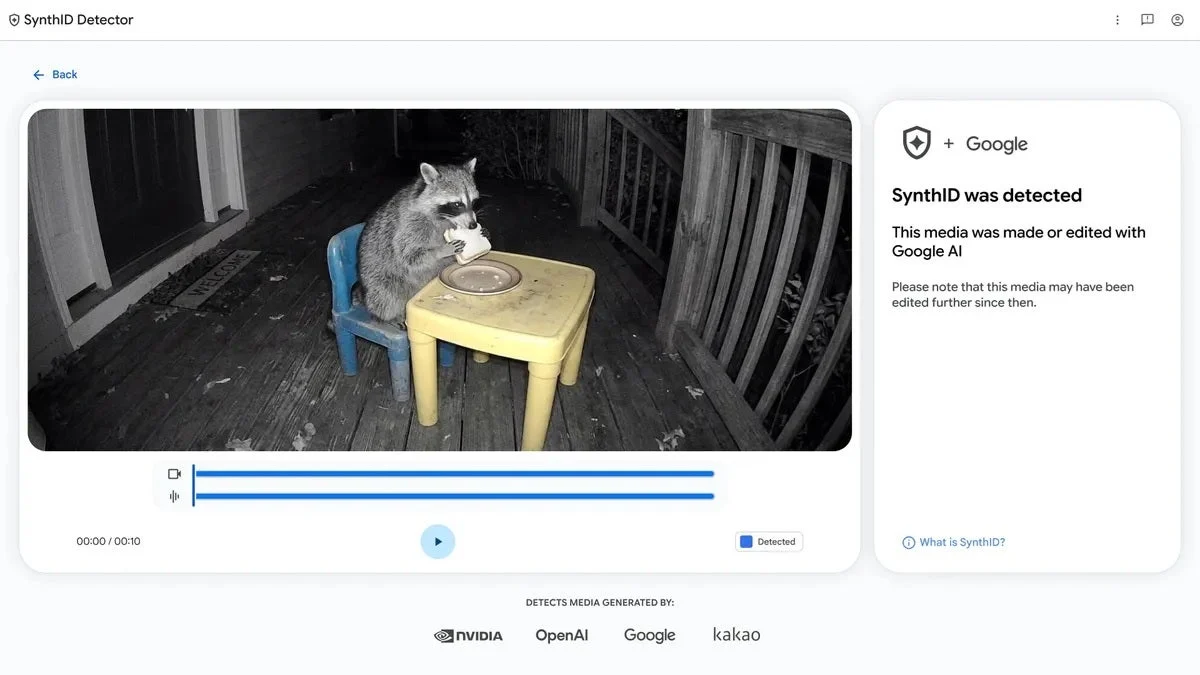
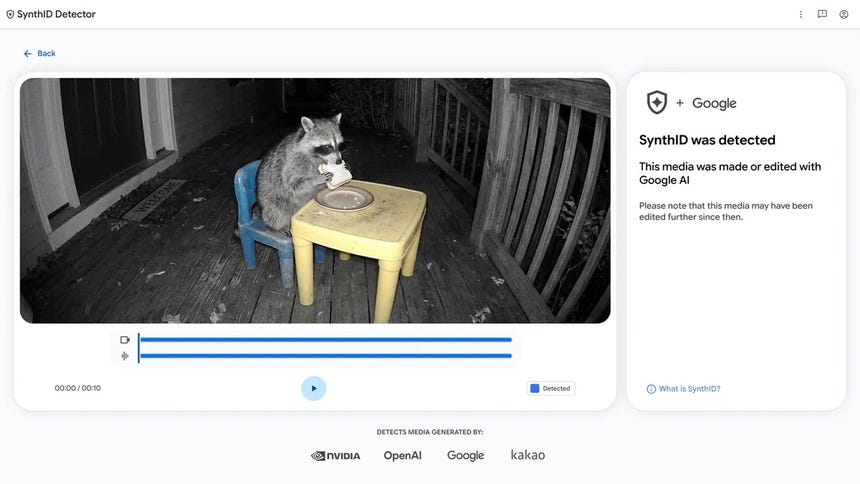
In an era where the boundary between authentic reality and synthetic generation is increasingly blurred, Google has taken a decisive step toward digital accountability. As of October 7, the technology giant has officially expanded global access to SynthID, its sophisticated digital watermarking and verification suite. Designed by the researchers at Google DeepMind, this tool allows users to scan images, videos, audio files, and even text to identify potential markers of AI-generated origin.
While the service currently operates primarily in English, its transition from an exclusive tool for media professionals to a public-facing utility marks a significant milestone in the tech industry’s attempt to address the proliferation of "deepfakes" and AI-manipulated media.
The Core Mechanics: How SynthID Operates
At its heart, SynthID is not a simple metadata tag or a visible watermark that can be easily cropped or edited out. Instead, it embeds imperceptible digital signals directly into the medium of the content itself.
For Visual and Audio Media
When a generative model produces an image or video, SynthID introduces subtle, non-distinguishable alterations to the pixel data. For audio, it embeds inaudible signals within the sound waves. These modifications are engineered for extreme resilience; they are designed to survive common manipulations, such as aggressive image cropping, the application of color filters, frame-rate adjustments, or the data loss inherent in high-compression formats like JPEG or MP3. By integrating the signal into the core structure of the file, Google aims to ensure that even if a piece of content is edited or shared across multiple social media platforms, the "DNA" of its AI origin remains intact.
For Textual Content
The implementation for text within the Gemini ecosystem is technically distinct. Instead of embedding a static watermark, SynthID subtly adjusts the probability distribution that the Large Language Model (LLM) uses when selecting the next word in a sequence. By influencing these word choices, the model creates a statistically identifiable pattern that is invisible to the human reader but detectable by verification software.
A Chronology of Trust: From Lab to Global Utility
The evolution of SynthID represents a rapid acceleration in the timeline of AI safety.
- 2023 (Launch): Google DeepMind introduces SynthID as an experimental technology integrated into its image generation models (Imagen). Initial focus was on internal testing and limited deployment to ensure the watermark’s robustness.
- Early 2024: Google begins integrating SynthID verification capabilities into its core consumer products, including Google Search, Chrome, and the Gemini chatbot interface.
- Mid-2024: The company announces strategic partnerships to standardize the C2PA (Coalition for Content Provenance and Authenticity) protocol, setting the stage for cross-platform recognition.
- October 7, 2024: Google officially lifts the gate for the general public, launching a dedicated web-based portal where users can manually upload files for verification.
- The Future: Google has confirmed that the ecosystem is expanding to include compatibility with Apple’s generative models, signaling a move toward a universal standard for media provenance.
A Growing Coalition: OpenAI, NVIDIA, and Beyond
One of the most critical aspects of this rollout is that Google is not acting in a silo. A central feature of the SynthID Detector is its capability to recognize content generated not only by Google’s own tools but also by a growing list of industry heavyweights.
By partnering with OpenAI, NVIDIA, and Kakao, Google is attempting to solve the "walled garden" problem. If every AI company developed its own proprietary, incompatible detection method, the average user would be left navigating a confusing web of verification tools. By fostering an interoperable ecosystem, these companies are acknowledging that AI safety is a shared responsibility. The upcoming integration of Apple’s generative models into the SynthID detection framework is expected to further solidify this coalition, creating a more robust "net" for identifying synthetic media.
Supporting Data: The Scale of Synthetic Production
The necessity for such a tool is underscored by the sheer volume of content currently being generated. According to internal data released by Google, the scale of synthetic media is staggering:
- Total Watermarked Assets: Since the inception of SynthID in 2023, Google has applied digital watermarks to over 180 billion images and videos.
- Audio Footprint: The company has also watermarked audio content equivalent to approximately 240,000 years of playtime.
- Verification Throughput: Google’s integrated verification systems—embedded directly into Google Search, Gemini, and the Chrome browser—now process more than one million verification requests daily.
These figures illustrate a world where synthetic media is no longer an outlier but a standard component of digital communication. The move to make these verification tools public is a recognition that users, journalists, and researchers need an automated way to process this influx of information.
Implications and Limitations: The "False Negative" Trap
While the expansion of SynthID is a positive development for digital transparency, experts urge caution regarding its limitations. It is crucial for the public to understand that SynthID is not a "truth detector."
The Non-Universality of Detection
The most significant limitation is that the detector only recognizes content marked by compatible systems. If an image is generated by an open-source model that does not utilize SynthID, or by a platform that has not opted into this verification standard, the detector will return a negative result.
A negative detection does not equal an authentic, human-made file. It simply means the file does not contain a signature that the tool is programmed to recognize. This leaves a significant gap in the ecosystem, particularly concerning bad actors who use decentralized or unregulated AI tools to create disinformation.
The Nuance of Intent
Finding a watermark is merely the first step in the investigative process. It confirms the origin of a file but says nothing about its intent. An AI-generated image can be used for harmless creative expression, educational illustration, or malicious political misinformation. The technology identifies the process of creation, but it cannot judge the truthfulness or ethical nature of the output.
The Future of Media Provenance
The democratization of SynthID represents a transition in how we consume digital information. We are moving toward a "verified internet" where the provenance of media is as important as the content itself.
Google’s strategy is clearly aimed at establishing a standard that can be adopted across the industry. By providing the tools to identify AI content, the company hopes to maintain trust in its platforms. However, the success of this initiative will depend on two factors: the adoption rate of other AI developers and the media literacy of the public.
If users treat the absence of a watermark as an absolute guarantee of reality, they remain vulnerable to deception. Instead, the industry must move toward a culture of "verified skepticism," where tools like SynthID are used as one part of a multi-layered approach to information verification, alongside fact-checking, source analysis, and contextual awareness.
As Google continues to refine the detector and expand its compatibility to include more companies and file types, the focus will likely shift from merely "identifying" AI to "contextualizing" it. For now, the global launch of the SynthID portal stands as a necessary, if preliminary, defense in an increasingly synthetic digital landscape.