The Peruvian economy, long considered one of the most resilient in the Latin American region, encountered a significant hurdle in mid-2026. According to the latest technical report on National Production released by the National Institute of Statistics and Informatics (INEI), Peru’s Gross Domestic Product (GDP) grew by a modest 1.75% in June 2026. This figure represents the slowest monthly expansion observed so far this year, marking a sharp deceleration from the performance seen in previous months and highlighting the vulnerability of the national economy to climate-driven disruptions.
The data reveals a stark contrast to the robust growth trajectory that characterized the first quarter. As the country grapples with the escalating impacts of the El Niño Costero phenomenon, key pillars of the economy—specifically the primary sectors of agriculture and fishing—have entered a period of contraction that threatens to dampen the country’s annual outlook.
The Chronology of Deceleration: A Shift in Momentum
To understand the gravity of the June result, one must view it within the context of the year’s performance to date. The first half of 2026 began with considerable optimism. The economy started the year with a strong 3.76% growth in January, followed by 3.68% in February. Despite global uncertainties, the momentum remained relatively stable through March (3.27%) and April (3.81%).
However, signs of fatigue began to manifest in May, when growth slowed to 2.18%. June’s 1.75% result confirms a downward trend that has analysts adjusting their projections for the second half of the year. Despite this monthly stagnation, the cumulative growth for the first semester of 2026 remains in positive territory at 3.05%, with a twelve-month rolling average of 3.33%. Nevertheless, the seasonally adjusted index of national production fell by 0.22% compared to May, suggesting that the underlying economic engine is losing its mechanical force.
Climate Disruption: The Agricultural and Fishing Crisis
The most dramatic narrative of the June report centers on the direct impact of climatic volatility on Peru’s primary industries.
The Agricultural Retreat
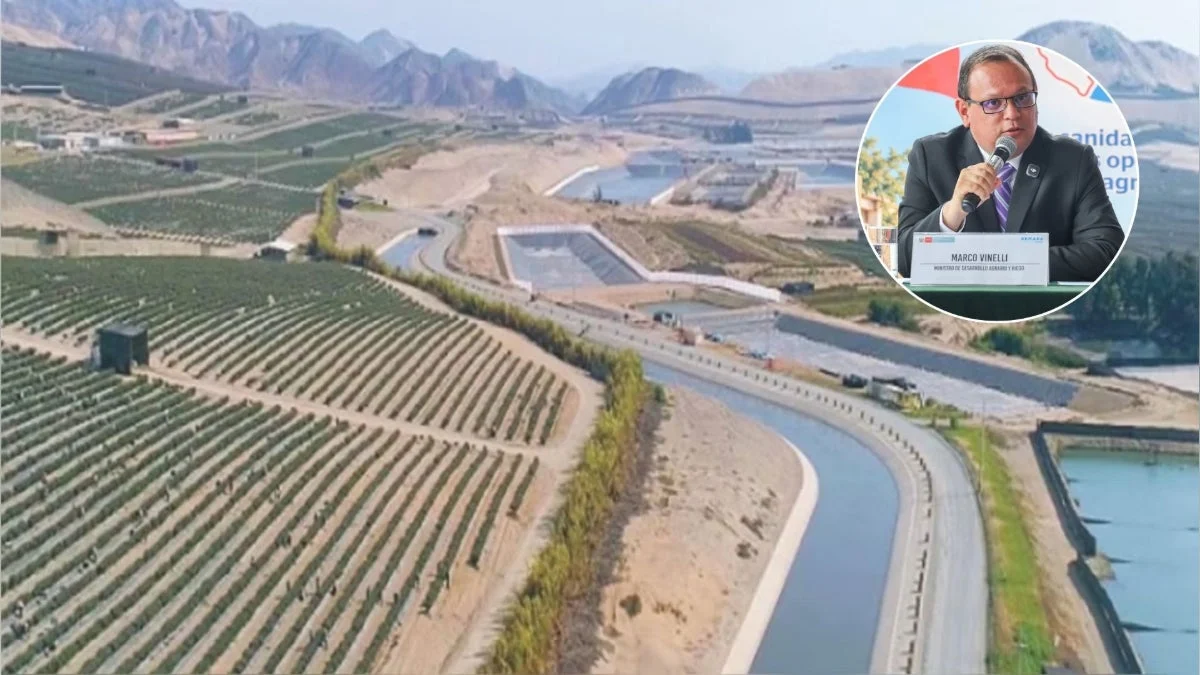
The agricultural sector recorded a sharp contraction of 8.12% in June. This was largely driven by a 11.96% decline in agricultural activity. The INEI attributed this poor performance to a combination of reduced acreage and unfavorable weather patterns. Specifically, crops vital to both domestic consumption and export—such as rice, olives, coffee, avocados, onions, wheat, barley, and corn—saw lower yields.
The climatic anomaly was two-fold: while the coast and highlands experienced excessive, unseasonal rainfall, the Amazonian region suffered from a debilitating drought. This imbalance in water resources disrupted planting cycles and harvest quality, creating a supply-side shock that has reverberated through the food value chain.
The Fishing Collapse
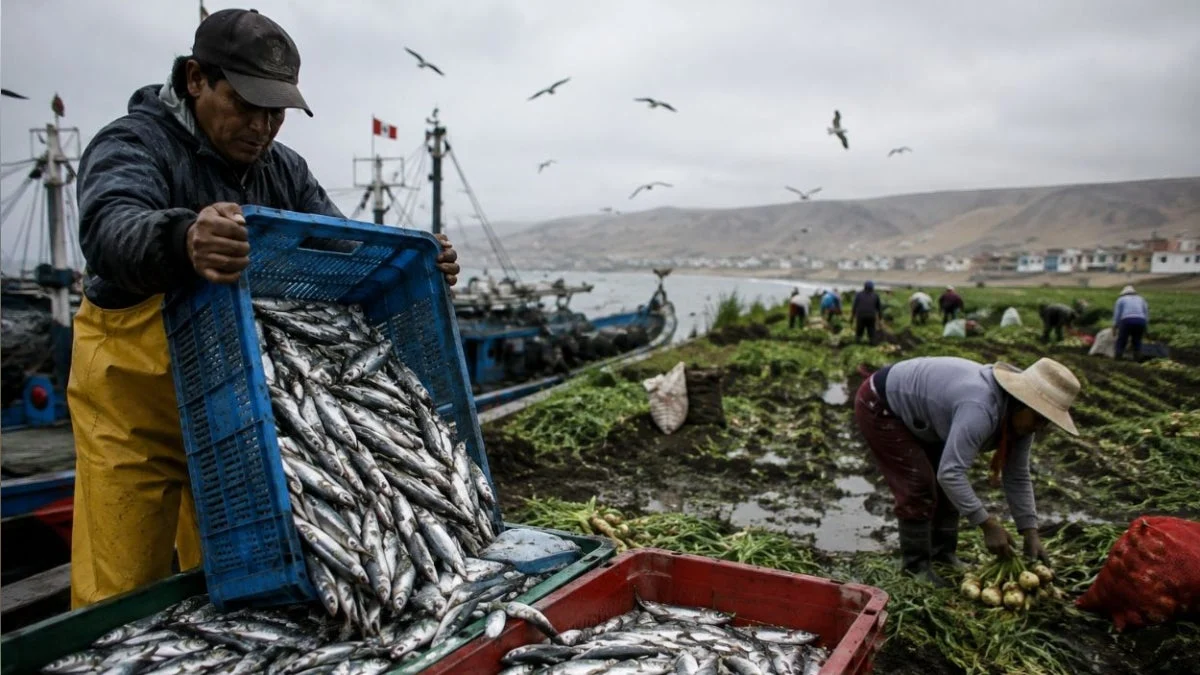
If agriculture was hampered, the fishing sector faced a catastrophe. The industry contracted by a staggering 51.94% in June, primarily due to the near-total cessation of industrial maritime fishing. The most striking indicator of this crisis is the anchoveta catch: from 462,000 tons in June 2025, the volume plummeted to a mere 629 tons in June 2026, a decline of 99.86%.
The ENFEN (Multisectoral Commission for the Study of El Niño) has confirmed that the warming of coastal waters—a hallmark of the current El Niño event—has forced the anchoveta population to migrate toward deeper, cooler waters further from the coastline. This displacement, combined with the arrival of warmer-water species typically not harvested by the industrial fleet, has paralyzed the sector and severely limited output.
Industrial and Mining Setbacks: A Multi-Sectoral Slowdown
The ripples of the climate crisis extended beyond the fields and the ocean, directly impacting the manufacturing sector, which declined by 6.19% in June.
Manufacturing and Value-Added Loss
The manufacturing decline was bifurcated into primary and non-primary industries. The primary manufacturing sector, which is deeply integrated with the fishing industry, bore the brunt of the impact, recording an 18.40% contraction. The processing of fish products, which serves as a vital economic engine in coastal hubs, saw a 54.43% reduction in activity. Furthermore, oil refining and sugar production also faltered, contributing to the broader industrial decline. The non-primary manufacturing sector was not immune, experiencing a 1.65% drop as businesses navigated lower domestic demand and supply chain constraints.
Mining and Hydrocarbons
Mining, traditionally a growth engine for Peru, also recorded a contraction of 2.18% in June. Metal mining specifically fell by 2.52%. The INEI noted that this result was due to a combination of lower extraction tonnages and, critically, lower mineral grades in the ore treated at concentrator plants. As mining companies face more complex geological challenges, the output has struggled to keep pace with historical averages, further suppressing national GDP growth.
Resilience in Construction and Commerce
Amid the bleak statistics of the primary sectors, there were pockets of resilience that prevented a more significant economic contraction.
- Construction: This sector defied the downward trend, growing by 9.04%. This was fueled by a robust 12.54% increase in the internal consumption of cement and a 1.18% rise in the physical execution of public works. This suggests that while primary production is suffering, domestic infrastructure investment remains a priority for both the state and private developers.
- Commerce and Services: The commerce sector grew by 7.81%, driven by strong performances in wholesale, retail, and automotive sales. The service sector also provided a buffer; hospitality, including hotels and restaurants, expanded by 5.04%, while business-related services grew by 3.65%.
These sectors have been the primary contributors to the 3.05% growth recorded in the first half of the year, with commerce contributing 0.69 percentage points, followed by services (0.65 points) and construction (0.64 points). Conversely, manufacturing, fishing, mining, and agriculture acted as "drags" on the economy, subtracting a combined total of 0.58 percentage points from the potential growth.
Official Outlook and Future Implications
The data for June 2026 serves as a sobering reminder of Peru’s exposure to environmental volatility. While the economy remains in positive growth territory, the loss of momentum is undeniable.
The El Niño Threat
The most pressing concern for policymakers is the lingering threat of the El Niño Costero. The ENFEN has maintained a high alert status, warning that there is a significant probability that the phenomenon will intensify between October 2026 and January 2027. If these forecasts prove accurate, the economic pressure on agriculture and fishing is expected to persist or worsen, potentially leading to food price inflation and a further reduction in export volumes.
Economic Policy Challenges
The Peruvian government faces a delicate balancing act. To mitigate the impact of El Niño, the administration must ensure that infrastructure investment—particularly in water management and disaster-resilient transport—is expedited. The growth in construction proves that domestic capital is available and active, but this must be channeled into projects that protect the economy from future climate shocks.
Furthermore, the central bank and the Ministry of Economy and Finance will likely face pressure to maintain accommodative monetary and fiscal policies to support the non-primary sectors, which have become the primary drivers of growth.
Conclusion
June 2026 will be remembered as the month where the climate crisis shifted from a looming threat to an active economic disruptor in Peru. While the resilience of the commerce and construction sectors provides a floor for the economy, the profound contraction in the fishing and agricultural industries underscores the need for a more diversified economic strategy. As the country looks toward the final quarter of the year, the priority remains clear: preparing for the potential intensification of El Niño while nurturing the sectors that have kept the national engine running during these turbulent times. The path to maintaining a 3% growth rate for the remainder of the year will depend heavily on whether the country can adapt to the "new normal" of an increasingly unpredictable climate.