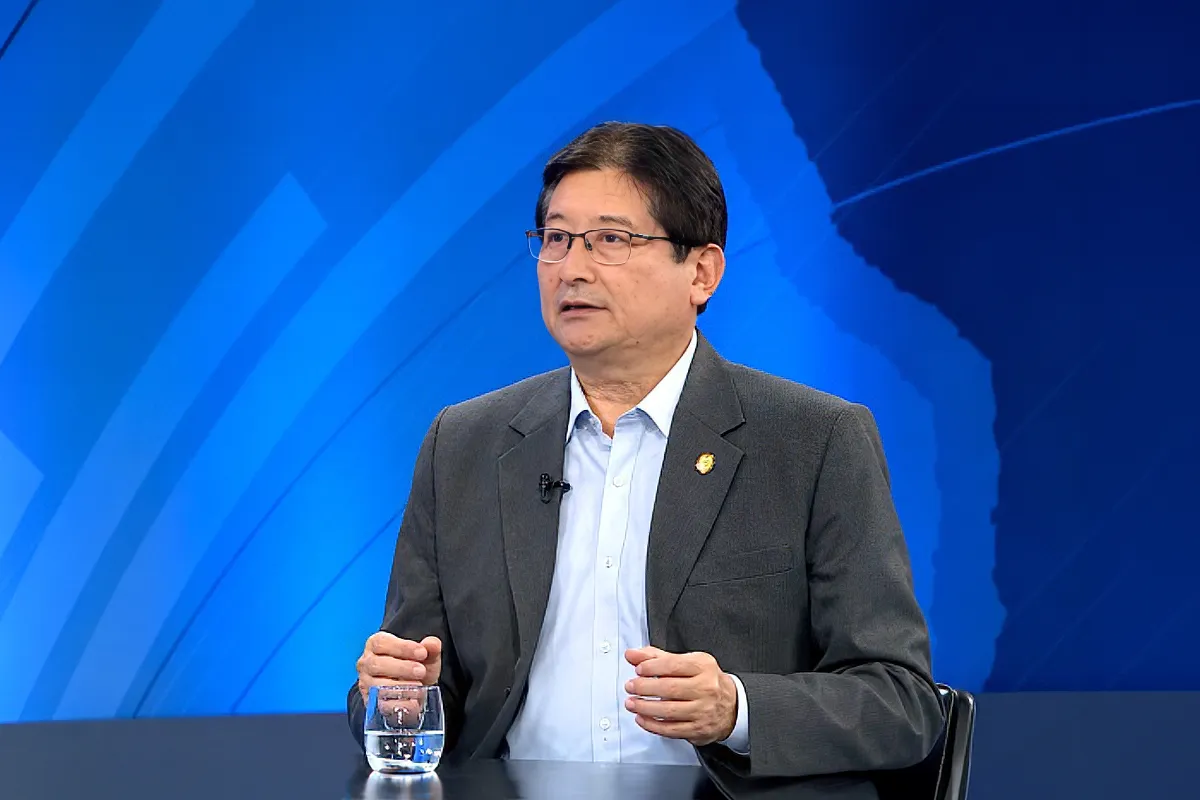
In a comprehensive outline of the current administration’s vision for the energy and mining sectors, Minister of Energy and Mines (MINEM), Guillermo Shinno, has laid out an ambitious roadmap designed to catalyze economic development. Amidst global price fluctuations and the persistent need for internal infrastructure modernization, the Ministry is focusing on three pillars: the acceleration of mining investments, the expansion of energy access, and the institutional restructuring of state-run enterprises.
Shinno’s strategy, detailed during a recent interview on the television program Sin Medias Tintas, emphasizes a dual-track approach: providing immediate relief to stabilize the fuel market while simultaneously enacting structural reforms to ensure long-term competitiveness.
Main Facts: The Pillars of Reform
The core of Minister Shinno’s agenda is the mobilization of approximately US$40 billion in mining investments over the next five years. This capital infusion is not merely a quantitative target but a qualitative shift aimed at "destocking" the sector’s stalled pipeline.
1. Mining Sector Overhaul
The Ministry has identified "permisology"—the complex, often redundant bureaucratic process for project approval—as the primary bottleneck. Shinno announced plans for a "major reform" of the permitting system to streamline project delivery. By targeting the reduction of procedural hurdles, the government aims to unlock at least 14 major mining initiatives that have historically been trapped in administrative limbo.
2. Fuel Security and Price Mitigation
To address the volatility of fuel prices, the Ministry has deployed a targeted subsidy for diesel and declared a state of emergency in the Ucayali region. This measure is intended to bolster supply chains by expanding storage capacity by up to seven days through the installation of additional tanks.
3. Institutional Restructuring
A significant component of the administration’s plan involves the professionalization and reorganization of Petroperú. Under the guidance of Proinversión, the objective is to transform the state oil company into a profitable, autonomous entity where each business line must demonstrate fiscal sustainability.
Chronology of Challenges and Interventions
The energy and mining landscape in Peru has faced several pressure points in recent months, necessitating the coordinated response currently being rolled out by the MINEM:

- Early 2026: Increased global volatility in the energy markets leads to domestic price spikes, prompting public concern over supply stability.
- Mid-2026: The government initiates a formal assessment of the "permisology" bottleneck, identifying 14 critical projects that could significantly boost national GDP if unblocked.
- Current Phase: Implementation of the Ucayali emergency storage protocols and the rollout of the refined, simplified formalization process for artisanal miners.
- Future Outlook: The upcoming five-year window is designated as the cycle for institutionalizing these reforms, with a focus on integrating community-based benefits into the mining project lifecycle.
Supporting Data: Infrastructure and Social Impact
The success of the mining and energy agenda relies heavily on data-driven policy and infrastructure investment.
Mining Formalization and Social Equity
Minister Shinno highlighted a critical shift in how mining royalties (canon) are handled. Recognizing the disconnect between national wealth generation and local development, the Ministry intends to mandate that a significant portion of the canon be invested directly into the communities within the project’s area of influence. "We are going to mandate that this is invested in these communities so that the people begin to feel that progress is effectively reaching them," Shinno stated.
Furthermore, the government is drafting a new, simplified formalization process. This initiative acknowledges that the previous regulatory framework was often ill-suited for the realities of small-scale and artisanal miners, who represent a significant portion of the workforce but have historically operated in an informal, gray zone.
Electrification and Climate Resilience
In the electrical sector, the Ministry is prioritizing rural electrification. Closing the infrastructure gap in the nation’s most remote regions is a cornerstone of the current administration’s inclusive growth strategy.
Regarding the threat of the El Niño phenomenon, the Ministry reports that power generation and distribution companies have already finalized their contingency plans. These measures are designed to ensure service continuity and, in the event of extreme weather-related disruptions, to facilitate rapid repair and restoration for the affected populations.
Official Responses and Regulatory Enforcement
A key question posed during the discussion was the government’s role in preventing price gouging. Minister Shinno confirmed that the Ministry is working in close coordination with Osinergmin (the energy regulator) and Indecopi (the competition authority) to monitor the fuel market.
"With the subsidy and these additional storage tanks, there should be no shortage," Shinno asserted. He clarified that these tools, combined with the oversight of regulatory bodies, will act as a buffer against speculative practices that tend to emerge during periods of market instability. The government’s stance is clear: while the market dictates global prices, the state will intervene to prevent artificial scarcity and anti-competitive behavior.

Implications for the Future
The implications of these policies are far-reaching. By targeting the "permisology" issue, the MINEM is attempting to change the perception of Peru as a difficult jurisdiction for investment. If successful, the US$40 billion investment pipeline will not only bolster the national economy but also provide the tax revenue necessary to fund the social and electrification programs mentioned by the Minister.
The Role of Petroperú
The pivot toward profitability for Petroperú represents a significant shift in political philosophy. By offloading the burden of inefficient business practices and moving toward a model where each unit is "profitable and self-sustaining," the government aims to reduce the fiscal pressure on the national treasury. This is likely to be a contentious process, but one that the current administration deems essential for the long-term health of the energy sector.
A Greener Energy Transition
Finally, the emphasis on the expansion of natural gas in the central and southern regions of the country aligns with broader environmental objectives. Natural gas is viewed as a bridge fuel—cheaper than many alternatives and significantly more environmentally friendly than the heavy fuels currently used in many remote areas.
Conclusion: A Balanced Approach
Minister Guillermo Shinno’s agenda reflects a pragmatic approach to governance. By balancing the need for massive capital investment with the social imperative of community-level development, the MINEM is attempting to harmonize the often-conflicting interests of industrial progress and local welfare.
As the Ministry moves forward, the success of this strategy will be measured by the speed at which the 14 identified mining projects begin construction, the stability of fuel prices during the next global shock, and the tangible improvements in energy access for Peru’s rural population. For now, the administration’s commitment remains firm: to foster a competitive, sustainable, and efficient energy and mining sector that acts as the primary engine for national development.