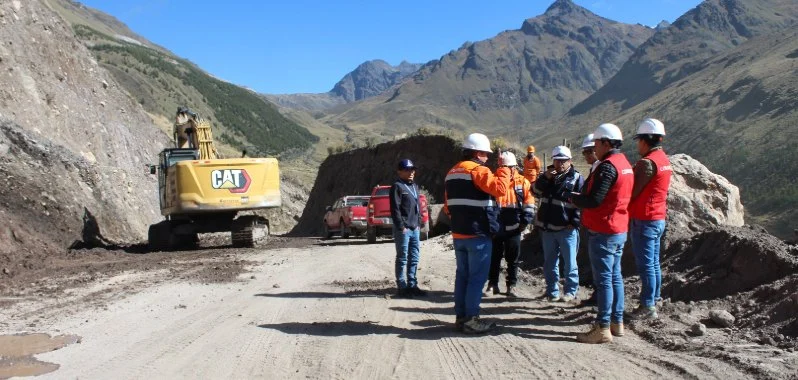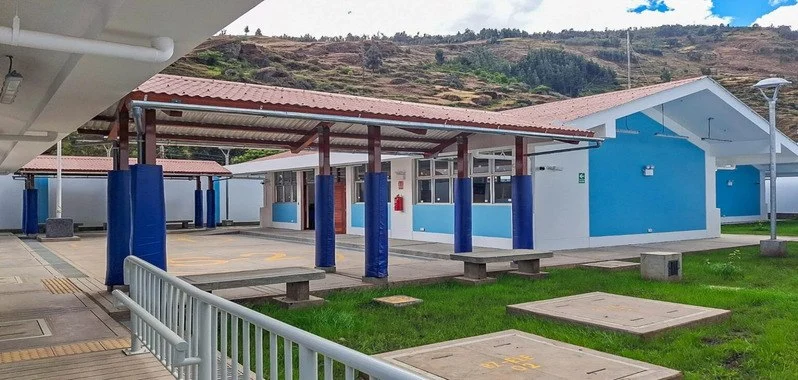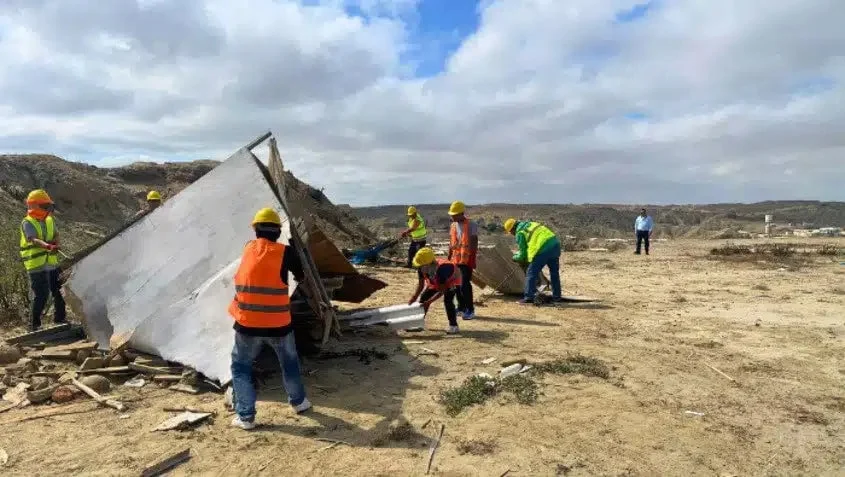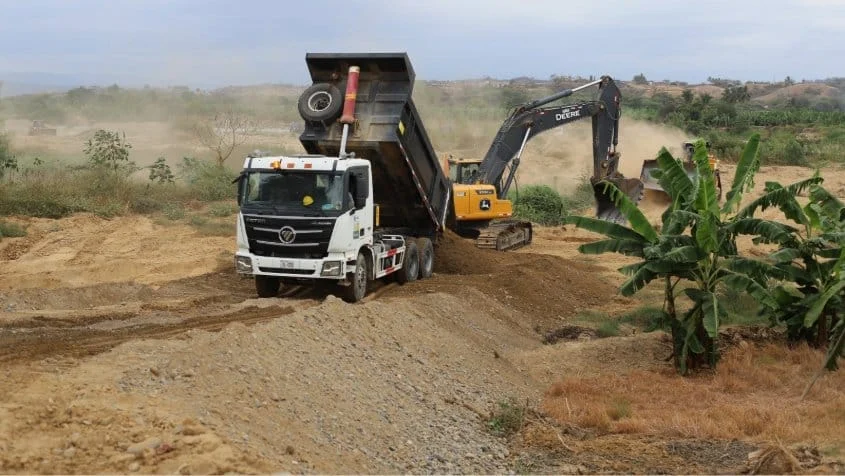
The National Authority for Infrastructure (ANIN) has sounded a high-level alarm regarding its current budgetary limitations. With twelve critical projects currently stalled, the agency is urgently requesting S/2.255 billion to finalize essential flood defense and drainage systems before the predicted intensification of the El Niño phenomenon.
Executive Summary: A Race Against Time
The Peruvian government faces a critical infrastructure bottleneck as the National Authority for Infrastructure (ANIN) confirms it requires an urgent injection of S/2.255 billion to complete twelve priority projects. These works—ranging from sophisticated urban drainage pluvial systems to riverbank reinforcements and the control of dangerous mountain ravines (quebradas)—are located in the most vulnerable regions of the country: Tumbes, Piura, Lambayeque, La Libertad, Áncash, and Ica.
The urgency stems from scientific consensus: the current El Niño phenomenon is expected to peak in intensity during the final quarter of 2026. Experts from the National Service of Meteorology and Hydrology (SENAMHI) have issued stark warnings that rainfall in the northern coastal regions is projected to exceed historical averages significantly, potentially overwhelming existing, insufficient infrastructure.
Chronology of Institutional Failure and Reform
To understand the current crisis, one must look back nearly a decade. The impetus for modern disaster-resilient infrastructure in Peru was born out of the catastrophic "Coastal El Niño" of 2017.
- 2017: The Coastal El Niño event devastated the Peruvian economy, causing losses exceeding US$ 4 billion. The destruction of bridges, roads, and urban drainage systems exposed the fragility of the national infrastructure.
- Post-2017: The government established the Autoridad para la Reconstrucción con Cambios (ARCC) with the mandate to rebuild and modernize the affected regions.
- 2023-2024: Following years of criticism regarding slow execution and bureaucratic bottlenecks, the ARCC was dissolved and absorbed into the newly created National Authority for Infrastructure (ANIN).
- August 2026: With the new administration of ANIN facing mounting pressure, it is revealed that the transition did not solve the funding gap. Twelve major projects, intended to be the backbone of national flood prevention, remain in limbo due to a lack of resources.
The Meteorological Reality: Why 2026 is Critical
The urgency is not merely fiscal; it is meteorological. According to Grinia Ávalos Roldán, Director of Meteorology and Atmospheric Environmental Assessment at SENAMHI, the current climate models indicate an atmospheric pattern that could lead to extreme precipitation.

"The rainfall patterns we are observing suggest that we will see levels far above the historical norm for the northern coast," Ávalos Roldán stated. "The trajectory of the phenomenon indicates that the greatest intensity will manifest during the final quarter of 2026, leaving us a very narrow window to complete the structural defenses that are currently in progress."
The data provided by the National Center for the Estimation, Prevention, and Reduction of Disaster Risk (CENEPRED) reinforces this anxiety. CENEPRED maps identify the northern and central coastal departments as being in a state of "very high risk." In these zones, the failure to complete the drainage and river-control projects could result in catastrophic flooding, economic paralysis, and the displacement of thousands of residents.
Supporting Data: The Infrastructure Gap
The S/2.255 billion requested by ANIN is earmarked for specific, high-impact projects that form the "last line of defense" for these communities:
- Urban Drainage Systems: Vital for preventing the flooding of city centers in Piura and Chiclayo.
- River Reinforcement: Critical to preventing the overflow of major rivers that caused massive destruction in 2017.
- Quebrada Control: Engineering works designed to channel torrential mudslides away from residential areas and agricultural zones.
Despite the transition from the ARCC to the ANIN, the underlying issue—the "execution gap"—remains. Many of these projects are partially completed. The current situation creates a "sunk cost" dilemma: if the final funding is not provided, the partial works already built will offer little to no protection, and the capital already invested will essentially be wasted as structures are damaged or destroyed by the upcoming rains.
Official Responses and Political Implications
The request for additional funds has sparked a broader debate within the Peruvian Congress and the Ministry of Economy and Finance (MEF). Critics argue that the institutional restructuring of the ARCC into the ANIN was meant to streamline processes, not merely shift the financial burden.

Government officials within ANIN maintain that their technical teams have identified the most cost-effective solutions to mitigate the impact of the predicted rains. However, they acknowledge that without the S/2.255 billion, they are forced to prioritize projects, effectively leaving some regions vulnerable to the coming season.
"We are not talking about new, luxury infrastructure," an ANIN spokesperson indicated. "We are talking about life-saving interventions that were promised to the people of the north years ago. The cost of inaction—measured in potential loss of life and property—far outweighs the fiscal cost of these investments."
Implications: The High Cost of Delay
The potential consequences of failing to fund these projects are multidimensional:
1. Human Impact
The populations in Tumbes and Piura are still suffering from the psychological and economic trauma of past events. The failure to provide promised flood defenses erodes public trust in government institutions and creates a sense of abandonment in the regions.
2. Economic Destabilization
The Peruvian economy relies heavily on the agricultural output of the north. Significant flooding would disrupt supply chains, damage export crops, and force the central government to divert massive emergency funds to disaster relief—funds that would be significantly higher than the initial cost of completing the infrastructure projects.

3. Institutional Credibility
The ANIN was presented as a more efficient, technically driven successor to the ARCC. If the ANIN fails to deliver on these twelve critical projects before the peak of the 2026 El Niño, the political cost will be severe, likely leading to further demands for bureaucratic overhaul.
Conclusion: The Path Forward
As the fourth quarter of 2026 approaches, the pressure on the Ministry of Economy to unlock the necessary resources is mounting. The situation serves as a stark reminder that infrastructure is not just a line item in a budget; it is a fundamental component of national security.
The ANIN’s plea for S/2.255 billion is a final call to action. Whether the state can mobilize these resources in time to harden the nation against the encroaching climate reality will be the ultimate test of the effectiveness of the new infrastructure agency. For the residents of the northern coast, the next few months will be a tense waiting game, as they watch the sky and wait to see if the government will act to protect their homes, their businesses, and their future.